A slab leak is a break or pinhole failure in a water supply or drain line that runs beneath the concrete foundation of your home. The leak itself is hidden — you cannot see it, and in the early stages you often cannot hear it. What you can detect are the secondary effects: a warm patch on the floor, a water bill that has quietly climbed for months, a musty smell in a room near the slab.
In Arvada, slab leaks are a genuine concern for two reasons. First, the city has a large inventory of slab-on-grade homes built in the 1950s through 1980s, many of which have original copper supply lines embedded in or just below the slab. Second, our Front Range hard water accelerates the internal corrosion of copper pipe over decades. Knowing the warning signs and catching a slab leak early can mean the difference between a repair and a major structural remediation.
The classic warning signs
An unexplained spike in your water bill is the most common first clue. If your household usage has not changed but the bill jumps 20–40% or more, water is going somewhere you are not using it. Run the mental checklist: irrigation changes? New dishwasher cycles? An outdoor faucet left on? If none of those explain it, you likely have a leak — and if it is not visible anywhere, the slab is a prime suspect.
A warm or hot patch on an otherwise cool floor is one of the most specific signs of a hot-water supply line leaking under the slab. Hot water heating the concrete around the break radiates through to the floor surface above it. In carpeted areas you may notice a damp spot or an area that feels warmer than surrounding carpet. On tile or hardwood, the warmth is more immediately perceptible. This is a call-a-plumber-today sign.
The sound of running water when all fixtures are off — a hissing or flowing sound coming from the floor or walls — indicates pressurized water escaping somewhere in the system. Shut off all fixtures, the washing machine, the dishwasher, the irrigation. Silence everything and listen near the floor. This test is imperfect but can help confirm that active water movement is happening.
- Unexplained water bill increase of 20% or more
- Warm, hot, or damp patch on floors (slab-level homes)
- Sound of running water with all fixtures off
- Cracking in foundation walls or floor tiles without a clear cause
- Musty or mildew smell in a room at floor level
- Low water pressure at a specific part of the house
- Mold or mildew growth at baseboard level
Why Arvada slab homes are at higher risk
Copper was the dominant residential supply pipe material from roughly the 1950s through the early 2000s. In Arvada's slab-on-grade construction from that era, copper supply lines were run through or just below the concrete. Over 40–60 years, Front Range hard water — which runs 15–25 grains per gallon of hardness — creates internal scale that concentrates chlorine and dissolved oxygen against the pipe wall, gradually pitting the copper interior. This is called pinhole corrosion, and it is the dominant cause of slab leaks in Arvada.
Arvada's clay soils compound the problem. Expansive clay contracts in dry weather and swells when wet, creating micro-movement in the slab year-round. Over decades, those small movements stress pipe joints and any corrosion-weakened sections. The freeze-thaw cycling that Arvada sees through fall and spring adds to the joint stress wherever a pipe transitions from below-slab to above.
Homes in Lakewood built in the same era face similar conditions — the Front Range hard water and clay-soil geology extends well into Jefferson County. If you own a slab home built before 1990 in this region and have never had the supply lines assessed, a leak detection consultation is genuine preventive maintenance, not an upsell.
How slab leaks are detected
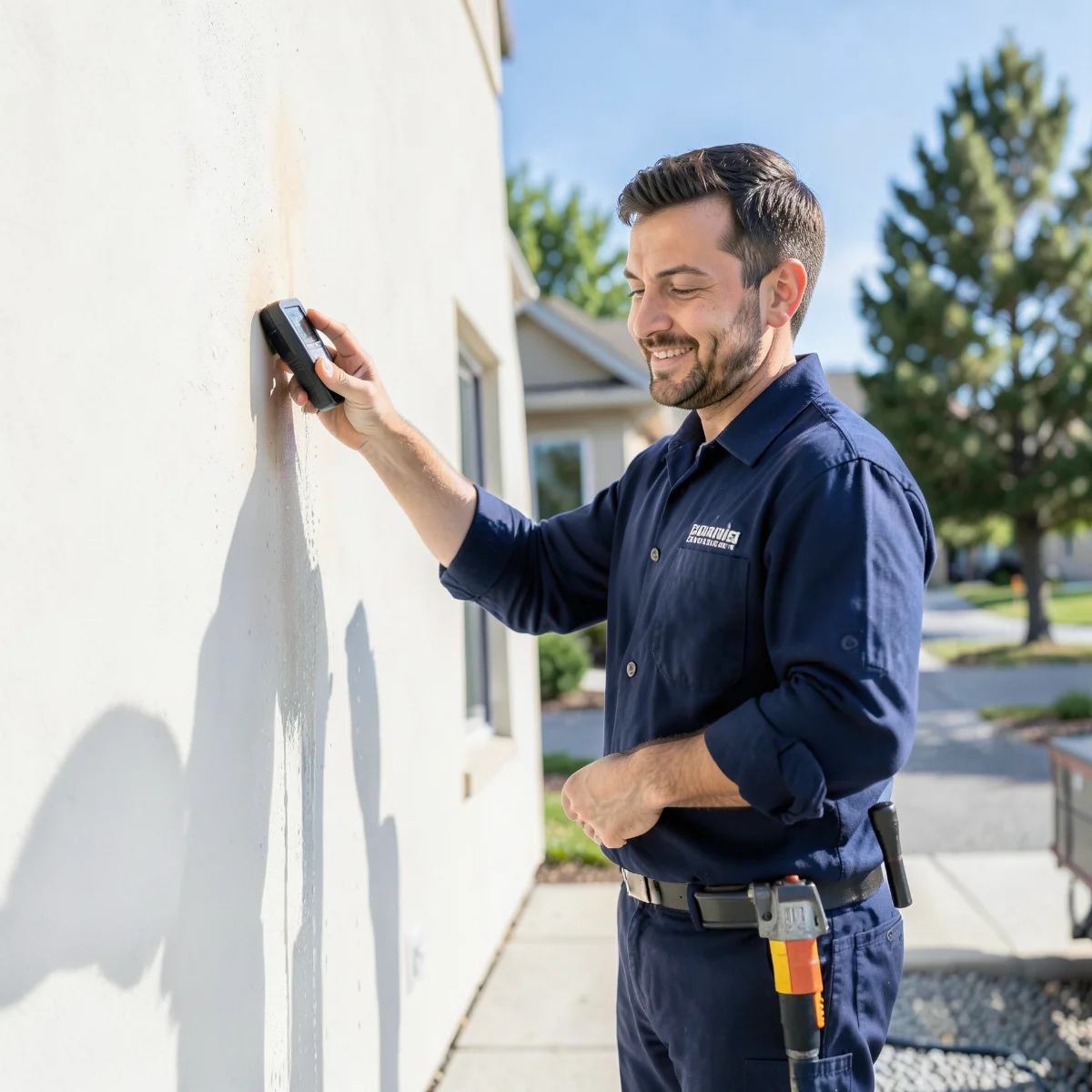
The days of breaking up concrete to find a slab leak are mostly behind us. Modern electronic leak detection uses acoustic amplification — a sensitive microphone pressed against the floor or pipe — to pinpoint the sound of water escaping under the slab. Combined with pressure testing to confirm there is an active loss, this approach localizes the break to within inches without destroying the floor.
Thermal imaging (infrared cameras) is a complementary tool for hot-water slab leaks specifically. The heat plume from a leaking hot-water line creates a detectable temperature gradient on the floor surface. A thermal camera maps that gradient and narrows the search area before any acoustic work begins.
The result is a precise repair target. A plumber with an accurate location can core-drill or jackhammer a small, targeted opening rather than demolishing an entire section of floor. This matters enormously for the repair cost and for the disruption to your home.
Repair options: spot repair, reroute, and repipe
A slab leak repair can take several forms depending on the pipe condition, the leak location, and how many leaks exist. Spot repair involves opening the slab directly above the leak, making the pipe repair, and patching the concrete and floor finish. It is the least expensive approach when the rest of the line is in good condition and the leak is truly isolated.
Rerouting bypasses the failed section entirely by running a new supply line through the walls and ceiling rather than under the slab. This approach avoids further concrete work and is often preferred when the slab location is under a finished area that would be expensive to restore. The pipe segment under the slab is abandoned in place.
Full repipe of the affected lines — rerouting all slab-embedded copper to above-slab PEX — is the right answer when multiple sections are corroding or when the copper is past its serviceable life. It is a larger investment but eliminates the category of problem rather than treating individual failures as they occur. For pre-1980 Arvada slab homes with original copper, this is a conversation worth having before the second slab leak call.
Key takeaways
- An unexplained water bill spike and warm floor patches are the two most actionable early warning signs of a slab leak.
- Arvada's hard water and clay soils make pre-1980s copper slab-embedded pipe particularly vulnerable to pinhole corrosion.
- Electronic acoustic detection pinpoints the leak before any concrete is opened — never authorize concrete work without it.
- Repair options range from spot repair (least disruptive for isolated leaks) to full repipe (permanent solution for aging copper lines).
- A slab leak detected early costs far less to repair than one discovered after months of water damage to the slab and substructure.
Frequently asked questions
Costs vary significantly by repair method and leak location. Spot repair in an accessible area might run $1,500–$3,000. A reroute (bypassing the slab section) might run $2,000–$4,500 depending on pipe length and wall access. Full repipe of slab lines into PEX runs higher — $5,000–$12,000 or more depending on home size. These are general guidance ranges; an accurate quote requires on-site assessment.
Many standard homeowner's policies cover 'sudden and accidental' water damage from a slab leak — including damage to flooring and structure — but not the pipe repair itself. Coverage depends on your specific policy and whether the damage is characterized as sudden or as gradual/progressive. Document everything before any demolition begins and contact your insurer promptly after detection.
No. Even a slow slab leak erodes the soil under the slab, which can lead to settling, slab cracking, and foundation movement. The longer it runs, the more water saturates the soil and the more the surrounding structure is affected. A slab leak that is invisible to you is not invisible to your foundation.
Local plumbing help mentioned in this article
Service areas
Need a hand from a local Arvada plumber?
Whether it is an emergency or a project you have been putting off, Arvada Pro Plumbing dispatches locally, 24/7, with upfront pricing. Call now or request service online.