Arvada basements face a particular combination of risks. Clay-heavy Front Range soil does not drain quickly — when snowmelt or a heavy rain event saturates it, hydrostatic pressure builds against foundation walls. Add a spring snowmelt event on top of a winter frost line that has been preventing deep drainage, and basements in established neighborhoods see water intrusion that has nothing to do with their drainage systems being broken — they are simply overwhelmed.
At the same time, older neighborhoods like Pomona Lakes — where homes were built in the 1970s near drainage features — face sewer-backup risk when aging laterals restrict flow or when a city main gets overwhelmed. Knowing which risk you are managing shapes the right investment.
Understanding the two flooding sources
Groundwater infiltration comes in through the foundation — wall cracks, the joint between the wall and floor slab, window wells, and the floor slab itself. The water is coming from the soil outside pushing inward under hydrostatic pressure. This is a waterproofing and drainage problem.
Sewer backup enters through floor drains, toilets, and the basement tub or shower — it comes up from the drain system when a main sewer line or city main is overwhelmed or blocked. The water has nowhere else to go but back up the lowest available drain. This is a plumbing problem.
The two can happen simultaneously in a severe storm, but they call for different fixes. No amount of interior drainage fixes a sewage backup, and no backwater valve stops groundwater intrusion through a crack. Diagnosing which you have experienced — or which you are at risk for — is the starting point.
Sump pumps: the first line of defense against groundwater
A sump pump installed in a pit at the lowest point of the basement floor collects groundwater that would otherwise build up under the slab and intercepts it before it can migrate through cracks. The pump activates on a float switch when water in the pit reaches a set level, then discharges it through a line to daylight — typically to a dry well, a downslope yard area, or a storm drain connection.
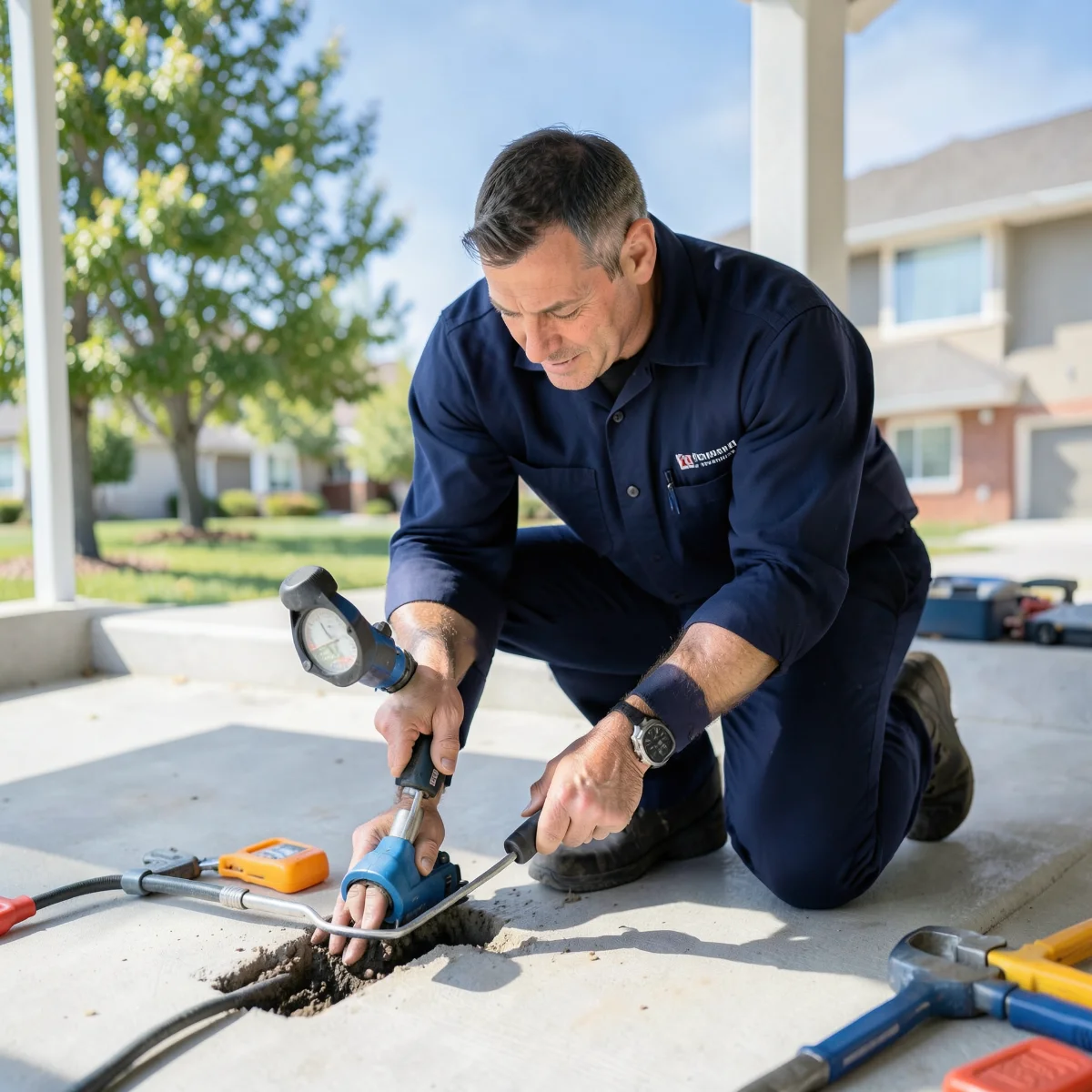
For homes in Arvada without a sump system, installation requires cutting the slab at the low point, excavating the pit, installing gravel drainage layer, inserting the basin and pump, and running the discharge line. Sump pump installation in a basement with active water intrusion history pays for itself quickly in avoided cleanup and damage costs.
The critical upgrade for Colorado's Front Range is a battery backup system. Spring snowmelt events produce the highest groundwater pressure exactly when power outages are most likely — storm events. A sump pump that loses power during the peak load event does nothing. Battery backup systems ensure the system runs through an outage. This is not optional for high-risk Arvada basements.
Backwater valves: stopping sewer backup at the source
A backwater valve installed in the sewer lateral between the house and the city main uses an automatic flapper that closes when flow reverses — sewage backing up from the city side during an overwhelm event. The valve blocks the backup from entering the home's drains.
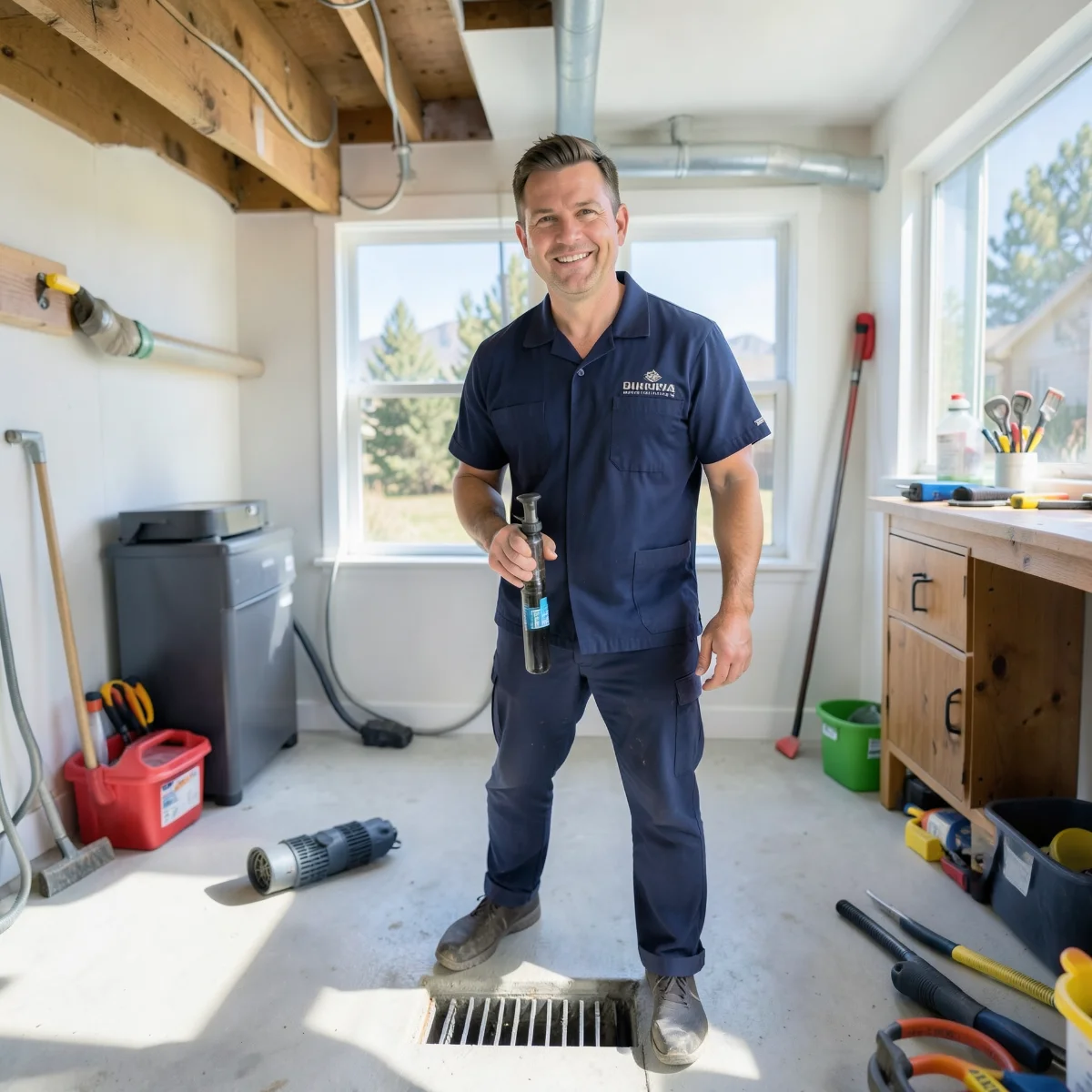
For older Arvada homes without one, installation is a basement plumbing project that involves accessing the sewer lateral in the basement or at the crawl space level, cutting in the valve body, and sealing the connection. Jefferson County inspectors must sign off on this work — it is a permit-required installation.
The limitation: a backwater valve also blocks outflow when it is closed. If a city main event causes the valve to close, you cannot use any drains in the house until city pressure normalizes and the valve reopens. For most homeowners, a few hours without drains is far preferable to a sewage flood. Households with ejector pumps or specific basement configurations should discuss the valve type and placement with a plumber before installation.
Grading, downspouts, and exterior drainage
Before any sump pump or interior drainage work, walk the perimeter of your home after a heavy rain. If water is pooling against the foundation rather than draining away from it, the grade is working against you. Soil immediately adjacent to the foundation should slope away at roughly 1 inch per foot for the first 6 feet — a simple grade correction with fill soil is inexpensive and effective.
Downspouts that terminate within 3–4 feet of the foundation direct roof runoff straight at the foundation wall. Downspout extensions that carry discharge 6–10 feet away reduce the infiltration load meaningfully. Window well covers and window well drains give accumulated water a controlled path away from the foundation rather than down against the wall.
- Grade soil away from the foundation at 1 in/ft for the first 6 feet
- Extend downspouts at least 6 feet from the foundation
- Install window well covers to keep rain and debris out
- Clear gutters twice annually — clogged gutters overflow at the foundation
- Install a sump pump with battery backup if your area has any infiltration history
- Consider a backwater valve on the sewer lateral if your neighborhood has experienced main-line backups
Key takeaways
- Basement flooding has two distinct sources — groundwater infiltration and sewer backup — and each requires different solutions.
- A sump pump with battery backup is essential for high-risk Arvada basements; the battery backup matters as much as the pump itself.
- Backwater valves stop sewage backup from entering the home during city-main overwhelm events — a permit-required installation in Jefferson County.
- Simple exterior measures — grade correction, downspout extensions, window well covers — significantly reduce infiltration load before it reaches the foundation.
- Homes near Arvada drainage features or built in the 1970s–80s carry real flood history worth investigating before purchase.
Frequently asked questions
Pour water into the pit to trigger the float at least quarterly. Also test it in early spring before snowmelt season and after any extended power outage to confirm the battery backup held charge. A sump pump that has sat idle all winter may have a failed float or a seized impeller.
Yes. The flapper inside the valve can accumulate debris and fail to seat properly over time. Annual inspection — usually accessible through a cleanout cap — ensures the valve closes and reopens freely. A valve stuck closed will prevent all drainage; one stuck open provides no protection.
Standard policies exclude flood damage from external groundwater. They typically cover sudden and accidental water damage from internal failures but not surface water intrusion or sewer backup unless you carry a specific endorsement. Sewer and water backup endorsements are relatively inexpensive and worth adding for any Arvada home with basement risk.
Local plumbing help mentioned in this article
Service areas
Need a hand from a local Arvada plumber?
Whether it is an emergency or a project you have been putting off, Arvada Pro Plumbing dispatches locally, 24/7, with upfront pricing. Call now or request service online.