Arvada's established neighborhoods — Allendale, Olde Town, Lamar Heights, Alta Vista — have housing stock built largely between 1940 and 1980. These homes are structurally sound, on good lots, and in established communities. Their plumbing, however, was designed for water use patterns that predate dishwashers, multi-head showers, and the hard-water conditions that are now well understood. The pipe is old, the pressure-reducing valves are original, and the shut-offs have not been exercised in fifteen years.
The good news: targeted plumbing upgrades in older homes deliver real, immediate improvements in daily experience and meaningful protection against future failure. Not everything needs to happen at once. This is the priority list — what pays off most, in what order, and roughly what to expect.
Replacing galvanized supply lines: the highest-impact upgrade
Galvanized steel supply lines were the standard in residential construction through the 1960s and into the early 1970s. Galvanized pipe corrodes from the inside out — the zinc coating depletes over decades, and then the steel itself begins to rust. The corrosion produces a rough, narrowed bore, brown or rust-tinted hot water, and — eventually — pinhole leaks that develop at thinned sections and fittings.
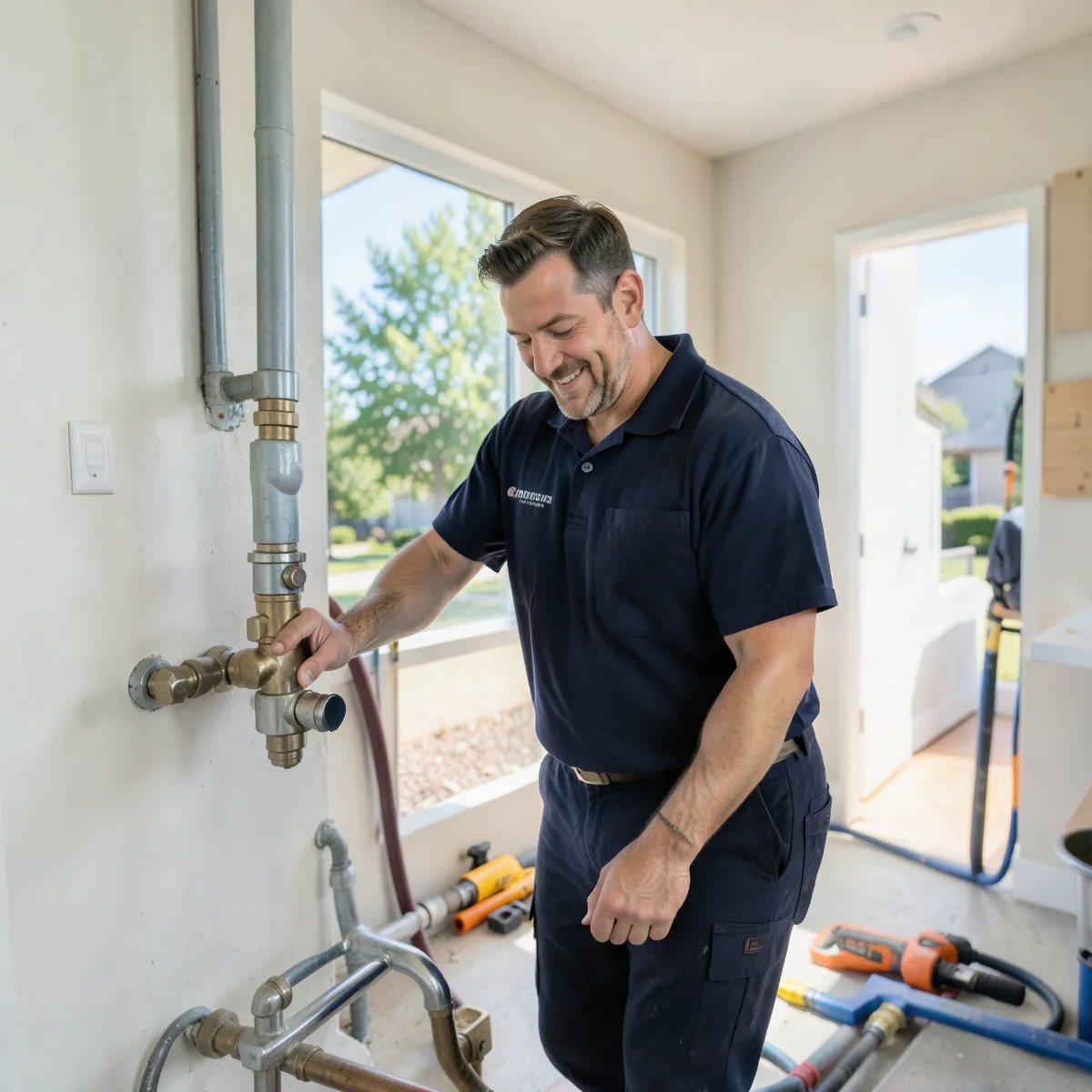
In neighborhoods like Allendale near Olde Town, galvanized supply lines installed in the 1950s are now 60–70 years old. Many are at or past the end of their reliable service life. A whole-home repipe with copper or PEX-A replaces all supply lines in the home, restores full pressure, eliminates rust-colored water, and removes the risk of multiple pinhole failures developing in quick succession.
PEX-A (cross-linked polyethylene) is the material of choice for most modern residential repipes. It is flexible, handles freeze-thaw cycles better than copper, does not corrode in hard water, and can be run in long continuous lengths that reduce the number of joints — fewer joints means fewer potential failure points. A repipe is a disruptive project, but the disruption is contained to a few days and the result is a completely new supply system with a 40–50 year expected service life.
Pressure-reducing valve replacement
Most pre-1980 homes in Arvada have original or first-generation PRVs. A PRV that has been in service for 20+ years is past its reliable lifespan — the diaphragm and internal seat wear over time, causing the valve to either restrict flow below the set point or allow pressure to climb above code limits, which stresses fixtures, connections, and supply lines.
PRV replacement is a half-day plumbing job that restores pressure to the correct set point — typically 55–65 PSI for most residential applications — and installs a new valve that will last another 10–15 years reliably. Water pressure repair that includes PRV replacement should also include a pressure test after installation to confirm the new set point is correct.
An important associated upgrade: the expansion tank. Code-compliant installations in closed plumbing systems (homes with a PRV and a backflow preventer) require a thermal expansion tank on the cold inlet to the water heater. As the tank heats water and it expands, the expansion tank absorbs the volume increase — preventing the T&P valve from weeping and protecting supply lines from pressure spikes. Many older homes have PRVs but no expansion tank; this is an easy, inexpensive add to a PRV replacement visit.
Shut-off valve replacement: often overlooked, genuinely important
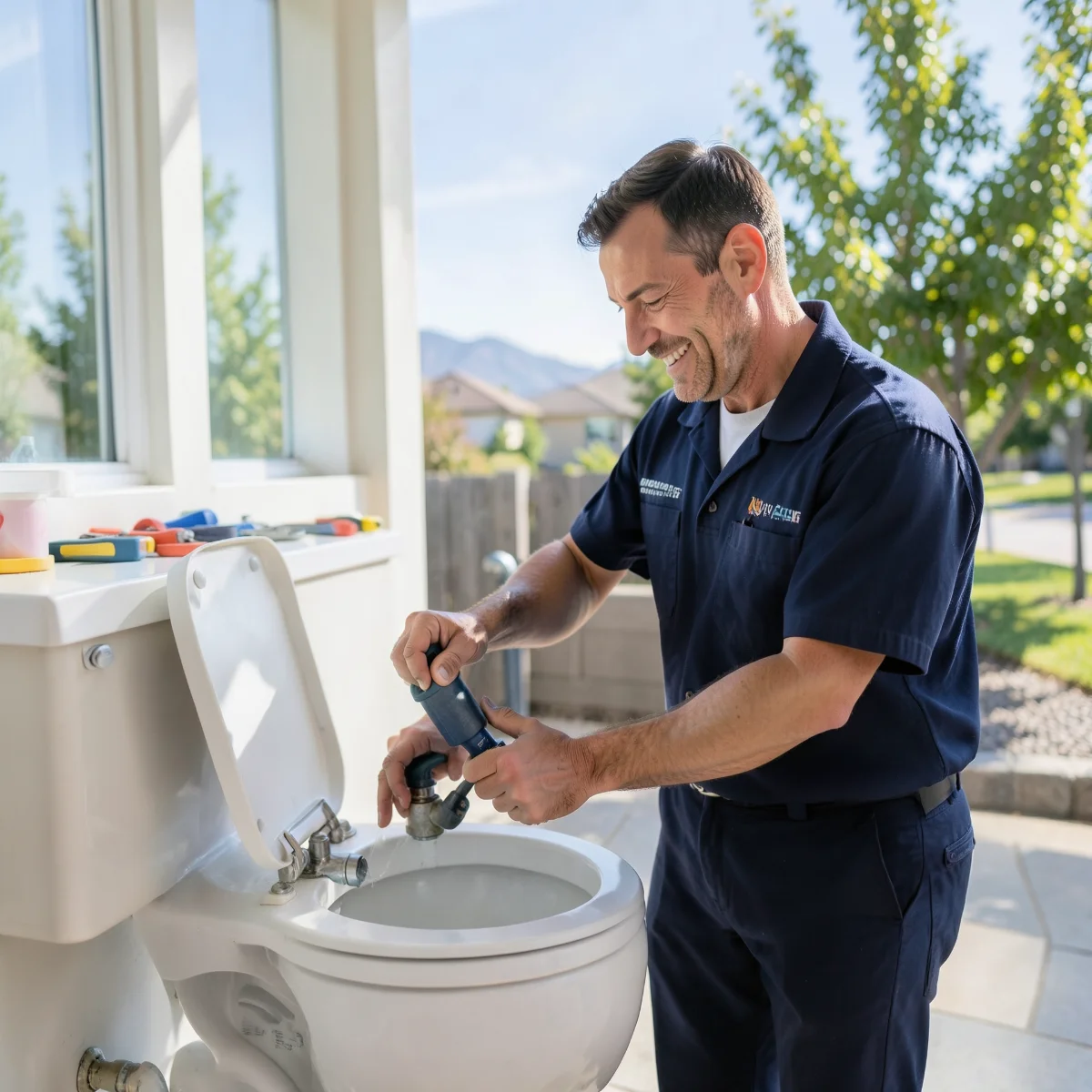
The angle-stop valves under every sink and behind every toilet in your home are there for one purpose: to isolate a fixture during a repair or emergency so you do not have to shut off water to the entire house. In hard-water homes where those valves have not been exercised in 10–15 years, they are frequently seized — they turn but do not actually close.
Finding out your fixture shut-offs do not work during a toilet supply line failure is the worst possible timing. The water goes onto the floor while you run to find the main shut-off, which you may also not have tested. Proactive replacement of failed angle stops — with modern quarter-turn ball valves that are far more reliable and durable in hard water — is a straightforward upgrade typically done in combination with a plumbing inspection or other service visit.
While you are replacing shut-offs, the supply lines connecting those valves to the fixture are worth upgrading too. Braided stainless supply lines are far more reliable than the old chrome-plated copper or plastic supply tubes that came with many original fixtures. A burst supply line under a bathroom sink is a top cause of water damage claims — the line is under constant pressure and is often the last thing anyone thinks to inspect.
- Replace angle-stop valves under sinks and behind toilets with quarter-turn ball valves
- Replace old chrome or plastic supply tubes with braided stainless flex lines
- Replace the main shut-off valve if it is a gate valve that does not fully close
- Exercise all shut-offs annually after replacement to prevent future seizing in hard water
Water-efficient fixtures: the upgrade that pays back monthly
Toilets manufactured before 1994 use 3.5–7 gallons per flush. Federal standards since 1994 require 1.6 GPF, and WaterSense-certified models use 1.28 GPF or less. In a home with 3–4 occupants, replacing two pre-1994 toilets with WaterSense models saves 10,000–15,000 gallons of water annually — a tangible reduction in both the water bill and the load on the sewer system.
Showerheads and faucet aerators have similar upgrade opportunities. Modern low-flow showerheads deliver 2.0 GPM versus the 3.0–5.0 GPM of older models, and the best designs do so without noticeably reducing the shower experience. In hard-water homes, this is also the right moment to select fixtures with hard-water-resistant finishes — brushed nickel and matte black hold up far better to mineral deposits than polished chrome.
The combination of a whole-home repipe, PRV replacement, and water-efficient fixture upgrades transforms the daily experience of an older Arvada home's plumbing system — better pressure, cleaner water, lower bills, and a supply infrastructure that is reliable rather than on borrowed time. Call (207) 419-2600 to discuss which upgrades make sense for your home's specific age, condition, and budget. Financing through programs like GreenSky or Wisetack is available for larger projects.
Key takeaways
- Galvanized supply lines in pre-1970s Arvada homes are typically past their reliable service life — repiping with copper or PEX-A is the highest-impact plumbing upgrade available.
- PRV replacement restores correct pressure and should include an expansion tank installation to bring the system up to current code.
- Angle-stop shut-off valves that have not been exercised in years are frequently seized in hard-water homes — proactive replacement with ball valves prevents emergency failures.
- Braided stainless supply lines replacing old chrome or plastic tubes eliminate one of the most common sources of under-sink water damage.
- WaterSense fixtures deliver measurable water and utility bill savings, especially in homes with pre-1994 toilets and older showerheads.
Frequently asked questions
Most single-family home repipes take 2–4 days depending on home size, the number of bathrooms, and access conditions. The home is livable during the project, though water is shut off for portions of each day while connections are made. Drywall patch and paint are typically a separate subsequent step — the plumbing crew cuts what needs to be cut to access the lines, but cosmetic repair is usually not included in plumbing scope.
Yes. Whole-home repiping requires a Jefferson County plumbing permit, and the work must be inspected. Unpermitted supply line work creates disclosure problems when you sell, can void homeowner's insurance coverage for related losses, and may require correction by a future buyer's lender.
Both are excellent choices with decades of track record. PEX-A is more flexible, handles freeze-thaw cycles better, and is generally less expensive in materials and labor because of fewer fittings and faster installation. Copper is rigid, proven, and preferred in some applications near fixtures for a cleaner finish. Ask your plumber which they recommend for your home's specific layout and conditions — there is no universally wrong answer.
Local plumbing help mentioned in this article
Service areas
Need a hand from a local Arvada plumber?
Whether it is an emergency or a project you have been putting off, Arvada Pro Plumbing dispatches locally, 24/7, with upfront pricing. Call now or request service online.