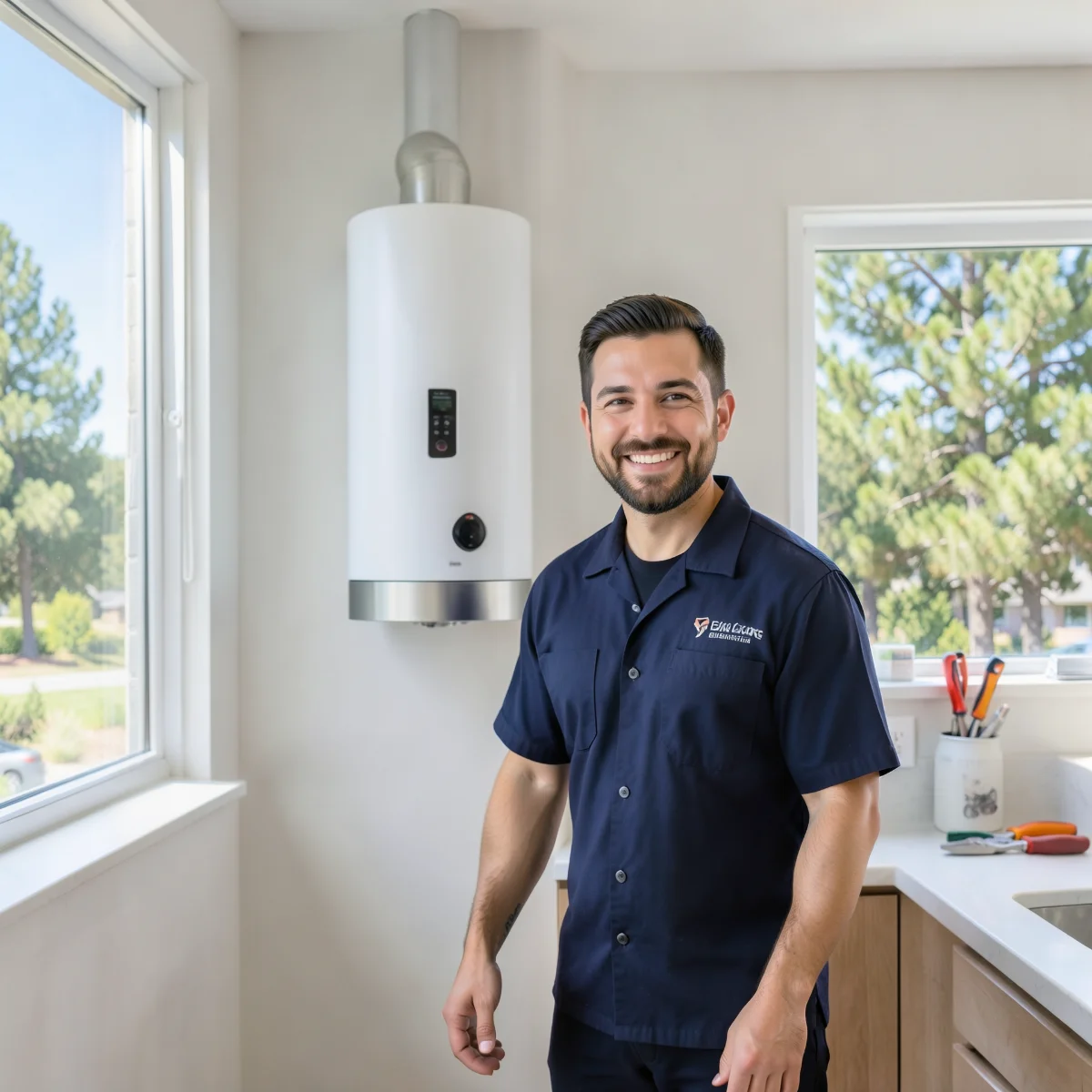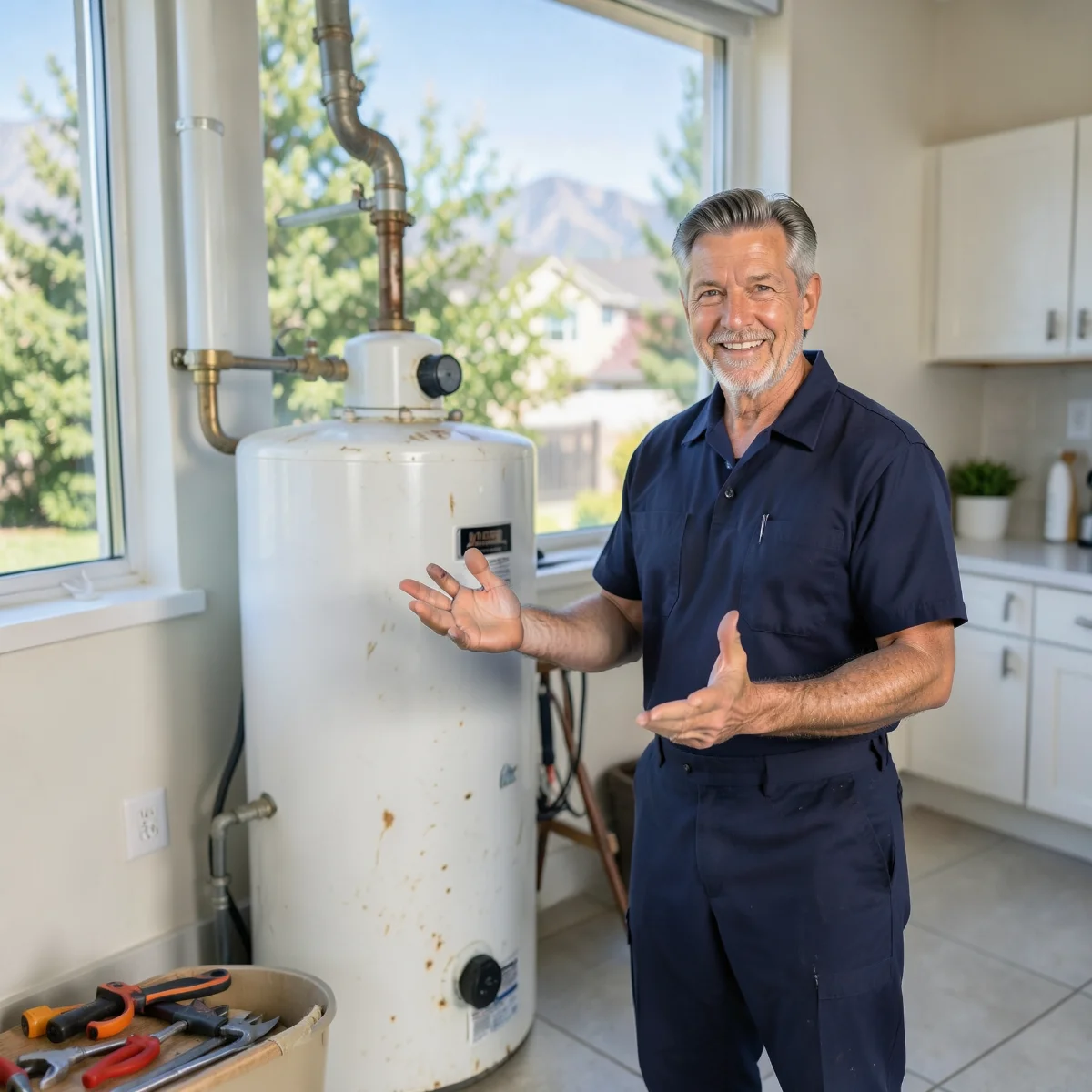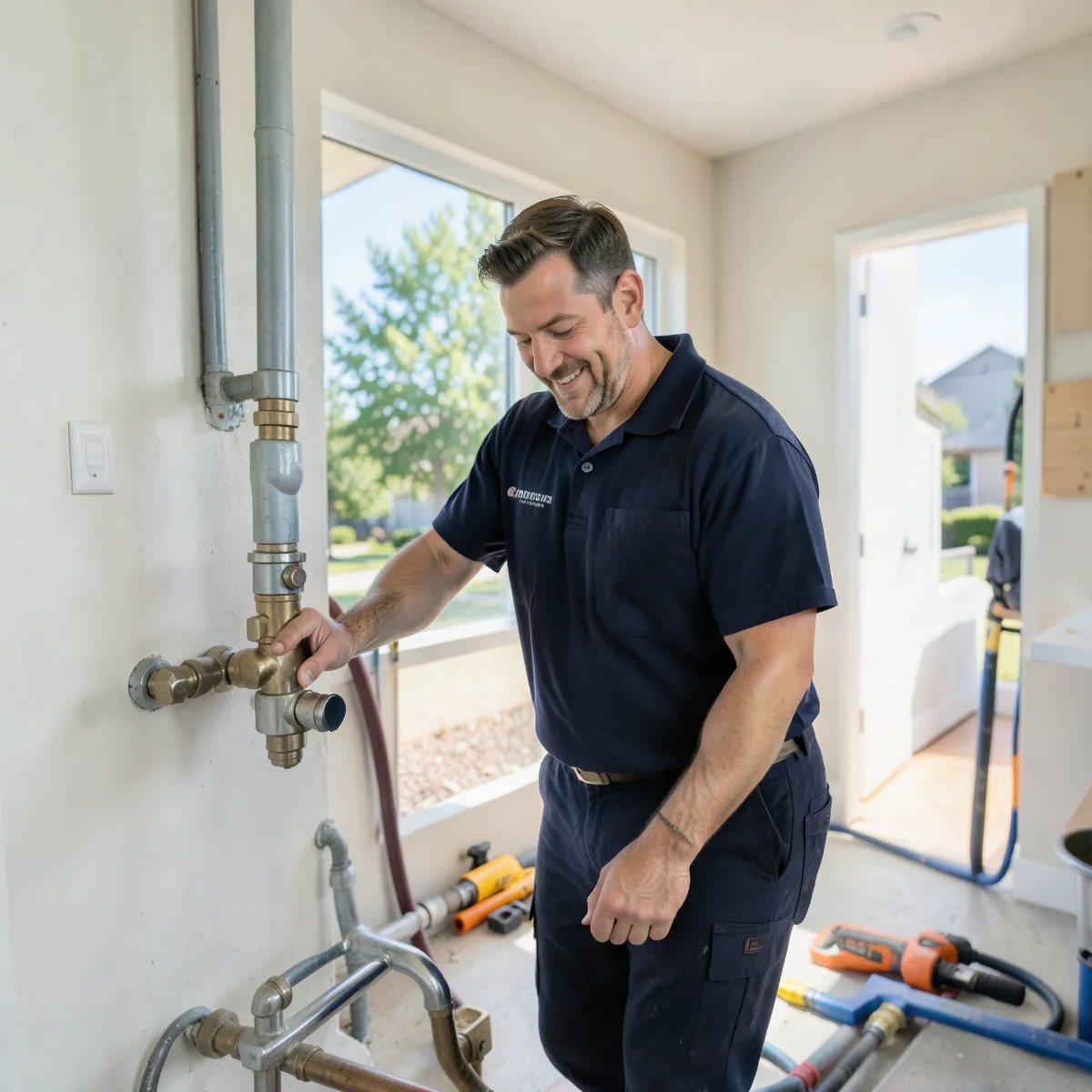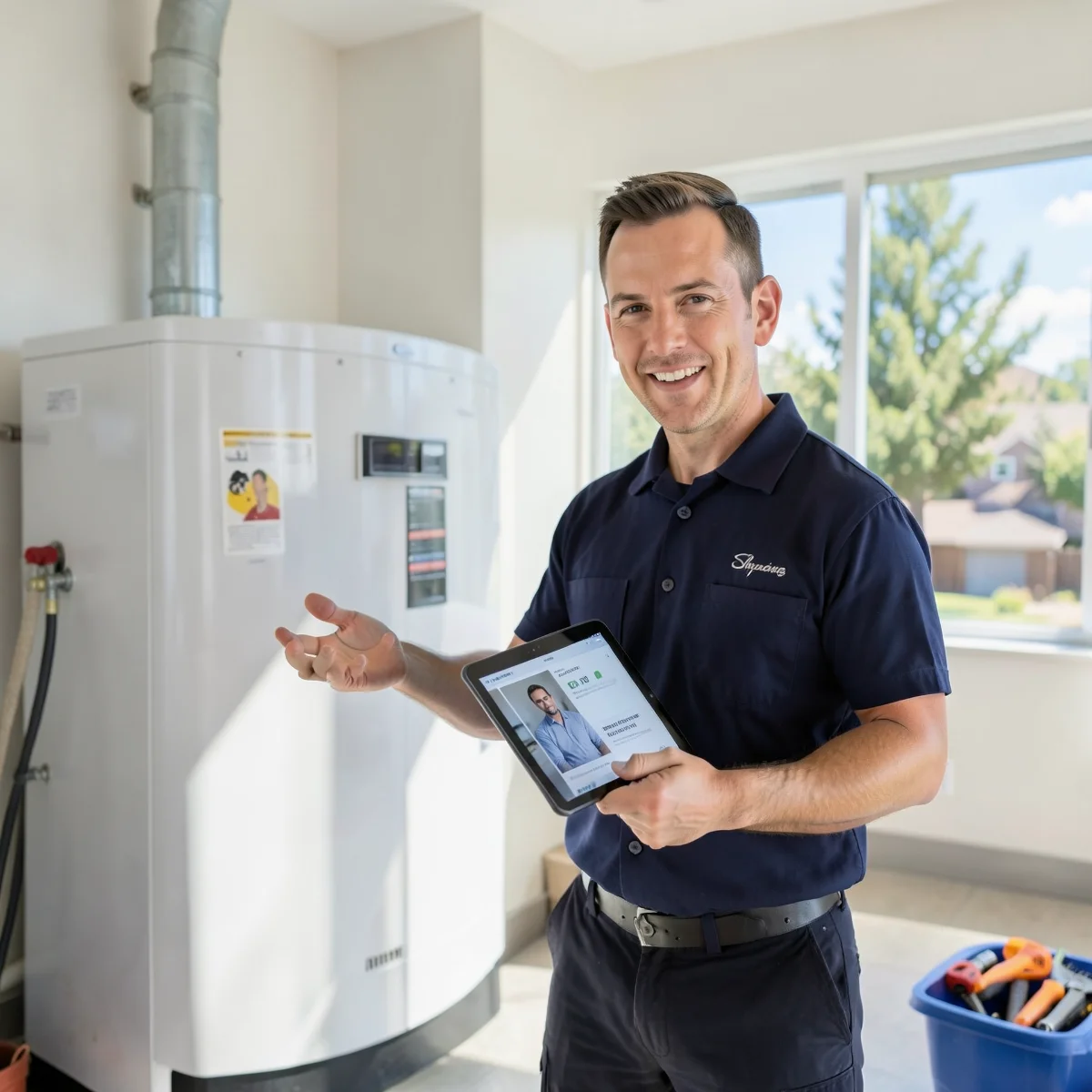
When a water heater fails — or when you can see the end coming and want to replace it on your schedule rather than at 6 a.m. on a Sunday — the cost question is usually the first one. What is a fair price for a water heater replacement in Arvada? What drives the cost up or down? Is tankless worth the premium for a Colorado home at 5,300 feet?
These are the right questions, and this post answers them honestly. Costs given here are general guidance ranges based on typical Arvada conditions and current market pricing. Your actual cost depends on your specific unit, your home's infrastructure, and whether any additional work is needed. For an accurate number, call for an on-site estimate — that is always the only truly reliable figure.
Standard tank water heater replacement: what it costs
A standard gas tank water heater replacement in Arvada — removing the old unit, installing a new 40–50 gallon gas unit, reconnecting the supply, gas, and flue, and pulling the required permit — broadly runs $1,000–$2,000 for most homes. The middle of that range, around $1,200–$1,500, is common for a straightforward replacement in an accessible mechanical room where the existing infrastructure (gas line, flue, supply connections) is adequate.
What pushes cost toward the top of the range: a heater in a tight or difficult-access location like a crawl space or a closet with limited working clearance; an upgrade in tank size (from 40 to 50 gallons); a flue or venting change required by current code; a gas line that needs to be extended or upsized; or hard-water damage to the supply line connections that requires replacing them while the unit is disconnected.
Electric tank water heater replacement runs roughly $900–$1,700 for a comparable size unit. Electric installation is often simpler on the venting side (no flue required), but if the circuit requires upgrading — older homes sometimes have undersized circuits where a modern unit requires appropriate wire gauge — that adds cost. Jefferson County permit fees apply to both gas and electric replacement.
Lifespan in Arvada: what to expect with hard water
The national average lifespan for a gas tank water heater is 8–12 years. In Arvada's hard-water environment — Front Range water commonly runs 15–25 grains per gallon — sediment accumulation shortens that range for homes without a water softener or regular maintenance. Homeowners who flush their tank annually and have a water softener installed routinely get 12–15 years from a tank unit. Those who do neither often see failures at 7–9 years.
In Candelas and other newer Arvada developments, homes often have larger households with higher hot-water demand and newer infrastructure that allows right-sizing at installation. In older established neighborhoods, tank units have sometimes been replaced with an identical size that was already marginal for the household — a replacement is the right moment to right-size the unit.
Tankless units carry manufacturer-rated lifespans of 15–20 years and generally live up to that with proper maintenance. 'Proper maintenance' in Arvada means annual descaling — a vinegar flush through the heat exchanger — to remove mineral scale that otherwise reduces heat-transfer efficiency and can void the warranty. At our altitude (5,300 ft), tankless units are already derated from their sea-level BTU ratings; scale on the heat exchanger compounds the efficiency loss.
Tankless water heater replacement cost in Arvada
A tankless water heater installation in Arvada runs $2,500–$5,500 for most residential installations, and can exceed that range for complex infrastructure situations. The higher cost reflects: the unit itself (condensing tankless units are more expensive than tank units of comparable capacity), the labor intensity of a first-time installation or a significant configuration change, and frequently a gas line upgrade.
Gas line sizing is the most common additional cost in Arvada tankless installations. A full-size condensing tankless unit may require 200,000+ BTU/hr of gas supply at peak demand — more than the 1/2-inch gas lines in most pre-1990s Arvada homes were designed to deliver. Upgrading to a 3/4-inch or 1-inch gas line from the meter adds $300–$1,200 or more depending on line length and routing. This cost must be on the table before you commit to a specific unit.
Venting is the other variable. Condensing tankless units vent with PVC pipe rather than the metal B-vent used by conventional tank heaters. If your existing flue cannot be adapted, new venting needs to be run — through walls, floor, or roof depending on the unit location. Budget this as part of the total project cost, not an afterthought.
Tank vs. tankless: the honest financial comparison
The energy-savings pitch for tankless is real but often overstated for Colorado conditions. The Department of Energy estimates 24–34% savings on water heating energy costs, based on national averages. In Arvada, actual savings depend on household demand, current fuel costs, and how well the unit is maintained. With proper sizing and annual descaling, a tankless unit does use less energy than a tank. The payback period compared to a new, high-efficiency tank unit is typically 8–15 years — not a fast return on investment.
Water heater installation decisions should weigh total project cost, expected tenure in the home, and household hot-water demand. Tankless makes the strongest financial case for large households with high simultaneous demand (multiple simultaneous showers, a hot tub, continuous hot water use), homeowners planning to stay 15+ years, and those who value the smaller footprint and essentially endless hot water supply.
For most replacement situations — a homeowner replacing a failed 10-year-old unit, with a typical 2–4-person household — a modern high-efficiency gas tank heater (0.70+ UEF) is a financially sensible choice that performs reliably in Arvada's hard-water environment when flushed annually. It is not a step backward from tankless; it is a well-matched, cost-effective solution. Call (207) 419-2600 and describe your household size, existing infrastructure, and priorities — that conversation takes 10 minutes and produces a recommendation, not a pitch.
Financing and timing: what to know
Water heater replacement planned on your schedule (rather than as an emergency) has real advantages. You shop for the best quote, you choose the right unit and size, you schedule at a convenient time. Emergency replacements — on a weekend, when the tank is actively leaking — eliminate those options and typically cost $200–$500 more than scheduled work.
Financing for water heater replacement is available through programs like GreenSky and Wisetack. For a tankless installation that runs $3,500–$5,000, financing at a manageable monthly rate over 24 months is often more practical than paying out of pocket. Ask about financing options when you call for your estimate — it is a standard offering for major equipment replacements, not a last-resort option.
For homes in Candelas and other newer Arvada neighborhoods, infrastructure is typically well-suited for either tank or tankless. For homes in central and east Arvada with older gas and venting infrastructure, have the conversation with the plumber before buying the unit — the infrastructure assessment is what makes or breaks the installation experience.
Key takeaways
- Standard gas tank water heater replacement in Arvada broadly runs $1,000–$2,000; tankless runs $2,500–$5,500 or more.
- Hard water shortens tank heater life to 7–9 years without maintenance; annual flushing and a water softener can extend it to 12+ years.
- Tankless requires a gas line capacity check and venting assessment before committing to a unit — these are additional costs that must be in the project budget.
- A high-efficiency tank unit is a financially sound choice for most Arvada replacement situations; tankless excels for high-demand households staying long-term.
- Planned replacement (before failure) is always less expensive and allows more choice than emergency replacement.
Frequently asked questions
Jefferson County permit fees for a water heater replacement typically run $75–$200 depending on the scope. The permit is required by code and triggers an inspection that confirms safe, code-compliant installation. The fee is a small fraction of the installation cost and is always worth pulling.
Homeowners can pull a permit and do their own water heater replacement in Jefferson County. However, gas connections require a gas-work permit and typically an inspection by both the county and the gas utility. Errors in gas connections are life-safety issues. For most homeowners, a licensed plumber installation is the practical and safe choice — both for the quality of the installation and for warranty on parts and labor.
A 3-bedroom home with 2–4 occupants typically uses a 40–50 gallon gas tank unit or a mid-range tankless unit (around 150,000–180,000 BTU, altitude-adjusted). The right size depends on actual usage patterns, number of bathrooms, and whether a dishwasher or jetted tub adds significant demand. A plumber can calculate the first-hour rating your household needs and match it to available units.
Xcel Energy and other Front Range utilities periodically offer rebates for ENERGY STAR or high-UEF water heaters, including heat-pump water heaters. Federal tax credits also apply to qualifying efficient water heater installations — check current IRS guidance for applicable years. Ask your plumber whether the unit they are recommending qualifies for any current incentives.
Local plumbing help mentioned in this article
Need a hand from a local Arvada plumber?
Whether it is an emergency or a project you have been putting off, Arvada Pro Plumbing dispatches locally, 24/7, with upfront pricing. Call now or request service online.