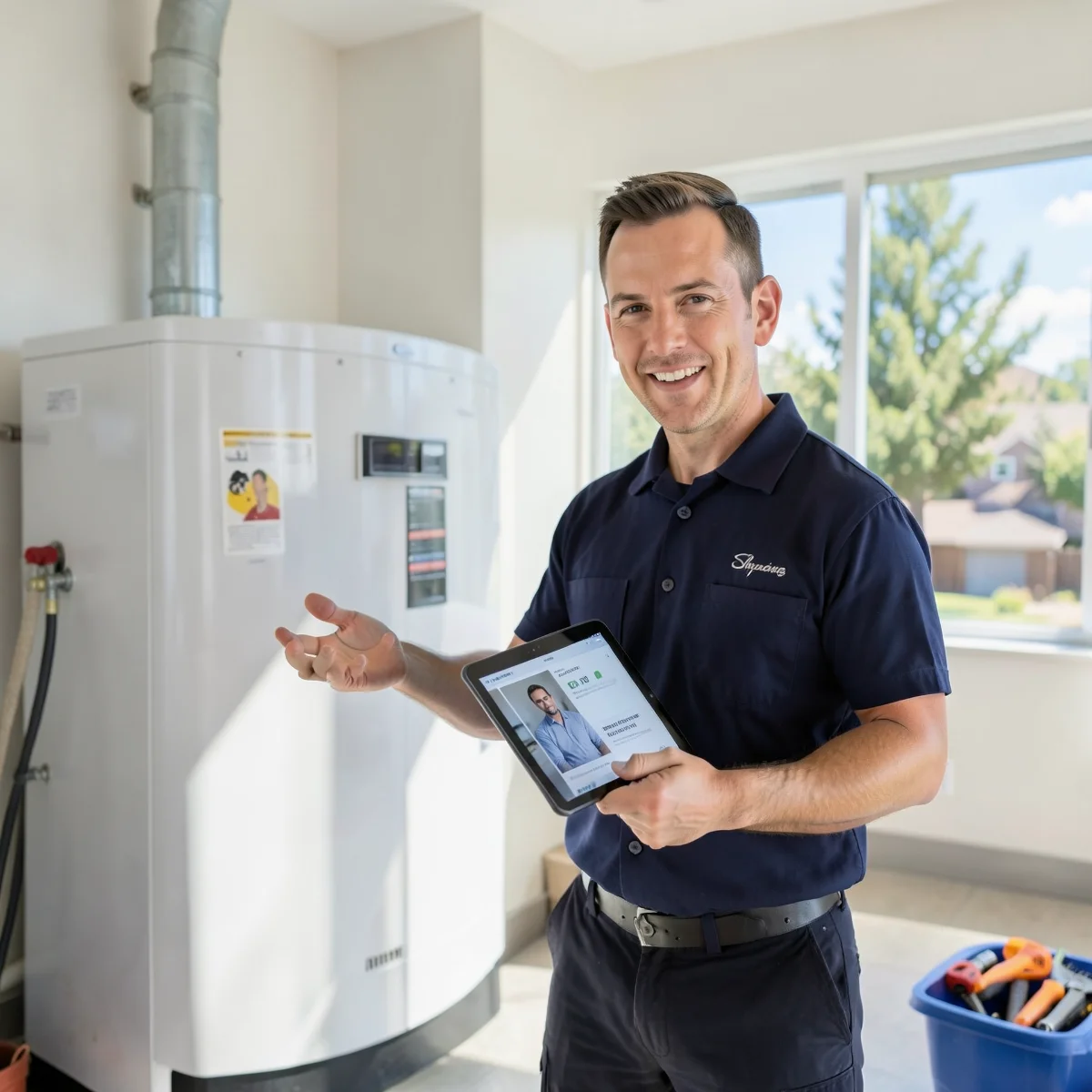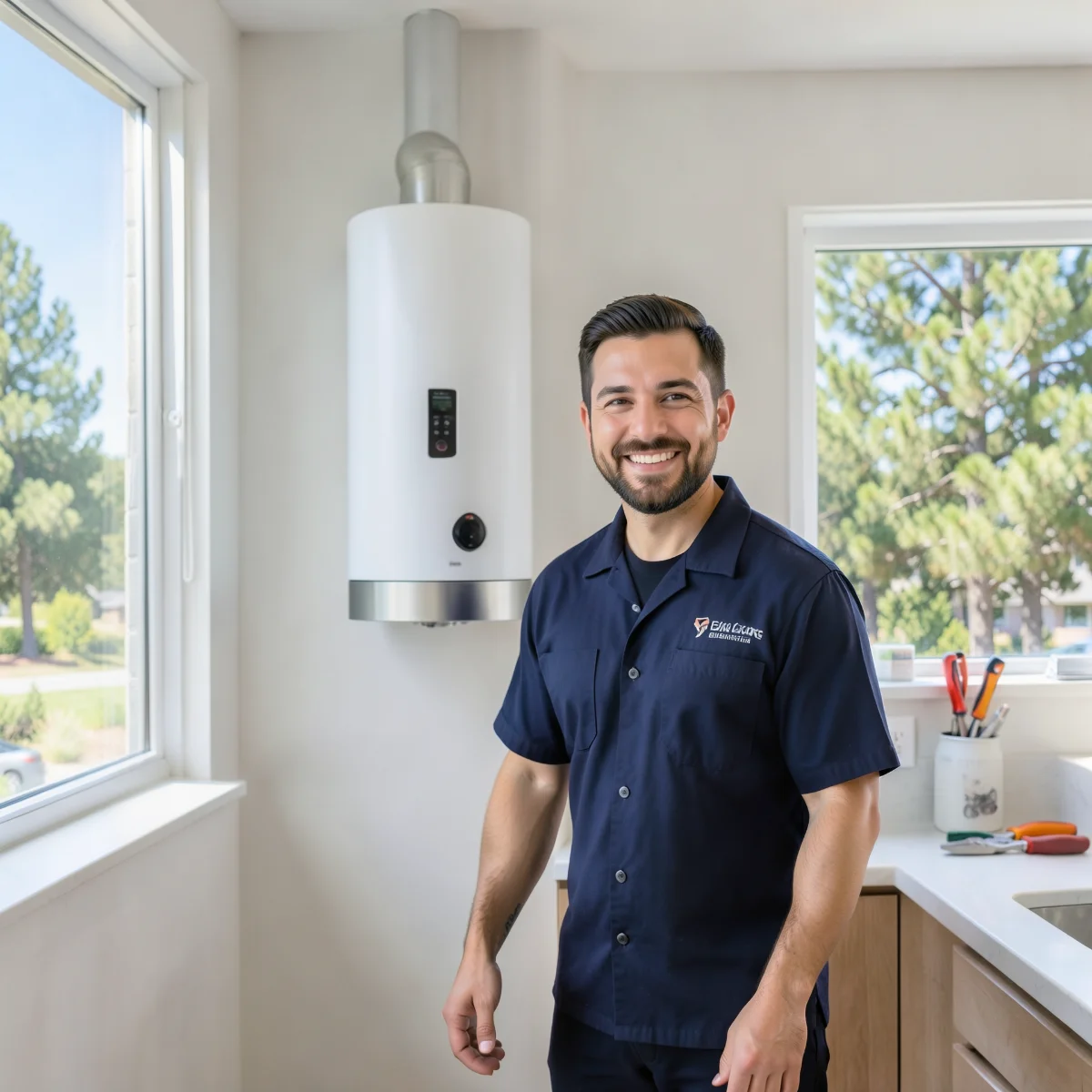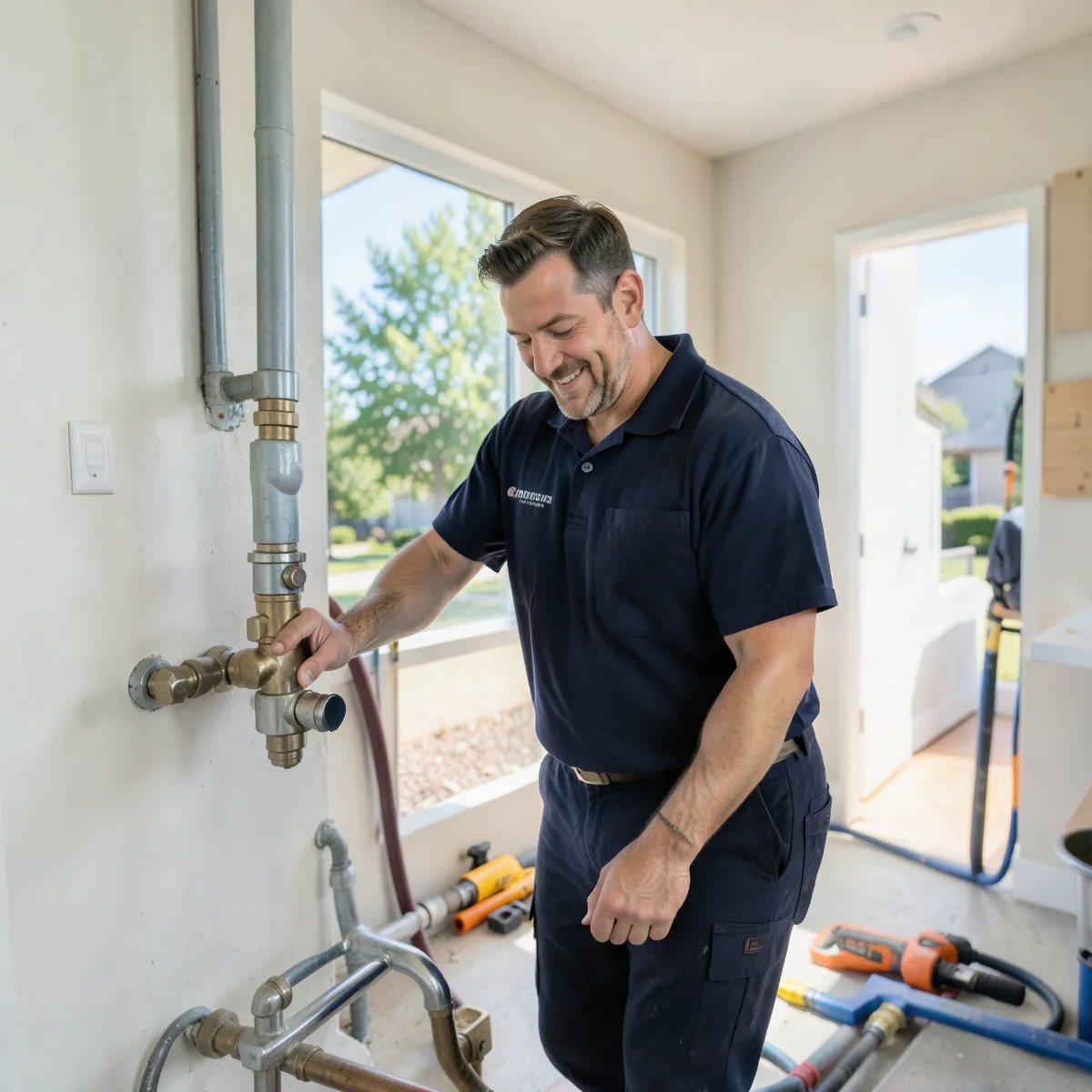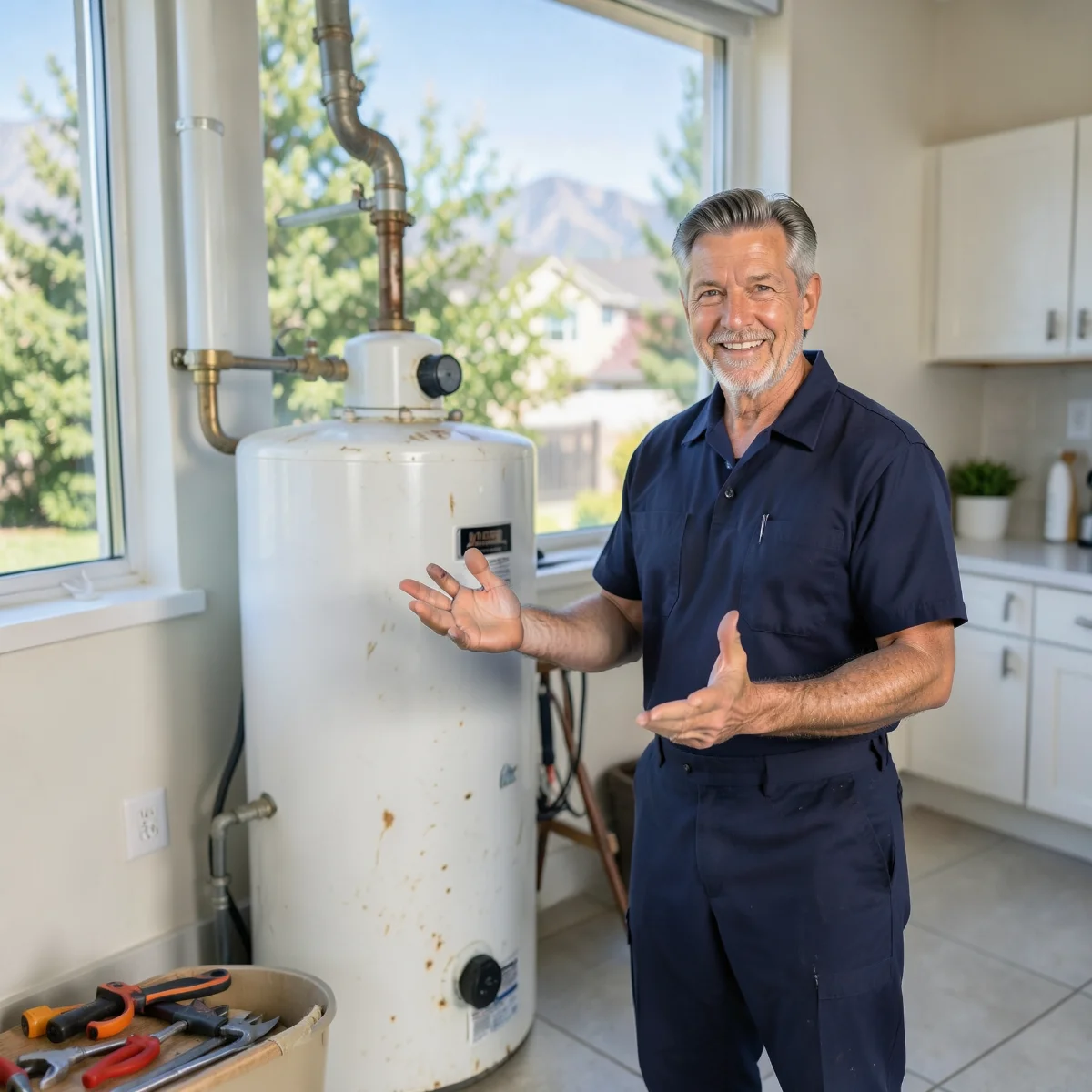
Most homeowners do not think about their water heater until it fails. That is understandable — the heater sits in a utility room, does its job quietly, and never asks for anything until it can't anymore. The problem is that an emergency replacement (Saturday morning, family visiting, no hot water) always costs more and limits your choices compared to a planned one.
In Arvada, hard water genuinely shortens water heater lifespan. Understanding where your unit sits in its lifecycle — and reading the warning signs — puts you in control of the decision rather than your water heater making it for you.
How long should a water heater last in Arvada?
The national average for a tank water heater is 8–12 years. In Arvada's hard-water environment, without annual flushing or a water softener, expect the lower end — sometimes 7–9 years before sediment damage degrades efficiency enough to warrant replacement. Homes with a properly sized softener and annual maintenance routinely get 12+ years from a tank heater.
Tankless water heaters carry longer rated lifespans — 15–20 years from manufacturers — and they generally live up to that if maintained. At 5,300-ft altitude they are already derated from rated BTU output, and scale on the heat exchanger compounds efficiency loss. Annual descaling is not a recommendation for tankless owners in Arvada; it is a necessity.
Electric tank heaters tend to show sediment damage earlier than gas units because the lower element sits directly in the sediment layer and burns out. If you have had repeated element replacements in an electric heater older than 8 years, the sediment damage is already done — replacement typically makes more financial sense than continued repair.
Signs the heater needs replacement, not repair
Rust-colored hot water is a serious sign. Some discoloration immediately after a flush or after the heater sits inactive for weeks can be sediment, not corrosion. Persistent rust in the hot water at every faucet while cold water runs clear points to the tank itself corroding internally — a condition that cannot be repaired.
Water pooling at the base of the tank — not from the T&P valve, not from a fitting above the tank, but from the tank body itself — means the liner has failed. Tank body leaks do not get smaller. Replace the unit before the failure becomes a flood. Similarly, a T&P valve that is repeatedly weeping or has been manually triggered is a sign of excessive pressure or temperature — which a new heater installation and proper code-compliant setup can address.
Significant loss of hot water capacity in a heater under 10 years old is often sediment, not the end of life. An annual flush sometimes restores capacity meaningfully. But if flushing doesn't help — or if the unit has never been flushed and is past 8 years — the sediment is probably fused to the tank bottom and professional assessment makes sense.
- Rust-colored hot water not resolving after flushing
- Water pooling at the tank base (from the tank body, not fittings)
- Loud popping, rumbling, or knocking during heating cycles
- Running out of hot water faster than the unit is rated for
- Repeated T&P valve weeping or tripping
- Unit is 10+ years old with no maintenance history
Repair vs. replace: the honest breakdown
Repairs make sense when the unit is under 6–7 years old and the component is clearly isolated: a failed thermocouple, a burned-out element, a bad anode rod, a faulty thermostat. These are parts that cost $20–$150 with labor and restore a functionally sound tank.
Replacement makes sense when: the tank body is corroding, the unit is past its expected lifespan, you have had multiple repairs in the past two years, or energy costs have noticeably increased from a heater that runs constantly. The math shifts decisively toward replacement when repair cost approaches 50% of a new unit's installed price.
For homes in Lake Arbor and similar 1970s–80s neighborhoods, water heaters that are original or have only been replaced once are likely approaching the end of their second service life. Proactive replacement during a planned project — a bathroom remodel, a basement finish — is far more convenient than emergency replacement on a weeknight.
Planning and cost expectations
Water heater replacement in Arvada runs broadly in the $1,000–$2,000 range for a standard gas tank replacement including parts and labor, depending on unit size, access, venting work required, and whether permits are pulled. Permit requirements under Jefferson County code apply to water heater replacements — any contractor skipping a permit is cutting a corner that leaves you holding the risk.
Tankless replacement and first-time tankless installation run higher — typically $2,500–$5,000 or more depending on gas line sizing, venting, and whether the existing infrastructure supports the unit. These are general guidance ranges; an on-site estimate with your actual situation is the only reliable figure.
Financing through programs like GreenSky or Wisetack is available for major replacements. Call today for service availability and upfront estimate options.
Key takeaways
- Arvada's hard water shortens tank heater life to 7–10 years without maintenance — annual flushing adds real years.
- Rust-colored hot water or a leaking tank body are replace-now signals, not repair candidates.
- Repair makes economic sense for isolated component failures in units under 7 years old.
- Right-sizing the replacement tank for your household demand is as important as the brand selection.
- Jefferson County requires permits for water heater replacements — always verify your contractor is pulling one.
Frequently asked questions
Look at the serial number on the label near the top of the tank. Most manufacturers encode the manufacture date in the first four characters — the format varies by brand, but many use a letter for the month (A=January, B=February) and two digits for the year. Search the brand name plus "serial number date" to decode yours.
A basic flush is a DIY-friendly task if your drain valve is in good condition. The risk: drain valves that have never been opened on older tanks sometimes won't fully close afterward. If your heater is over 10 years old or has never been flushed, have a plumber do it — they can replace the valve if needed on the same visit.
Modern units — especially ENERGY STAR rated — are meaningfully more efficient than heaters from the 2000s or earlier. A sediment-laden old unit running constantly may be consuming 20–30% more energy than a new one. The savings offset part of the replacement cost over 3–5 years.
Local plumbing help mentioned in this article
Need a hand from a local Arvada plumber?
Whether it is an emergency or a project you have been putting off, Arvada Pro Plumbing dispatches locally, 24/7, with upfront pricing. Call now or request service online.