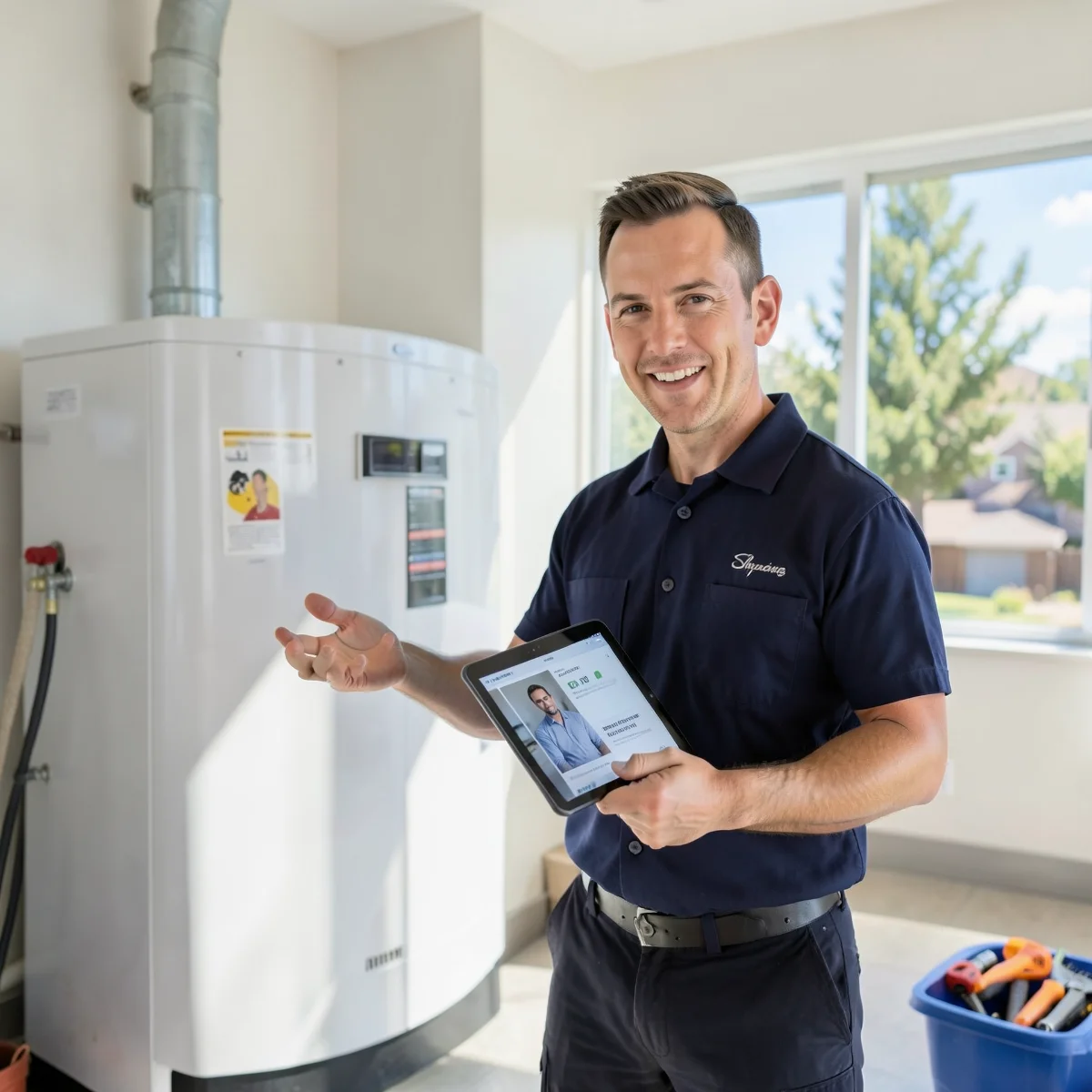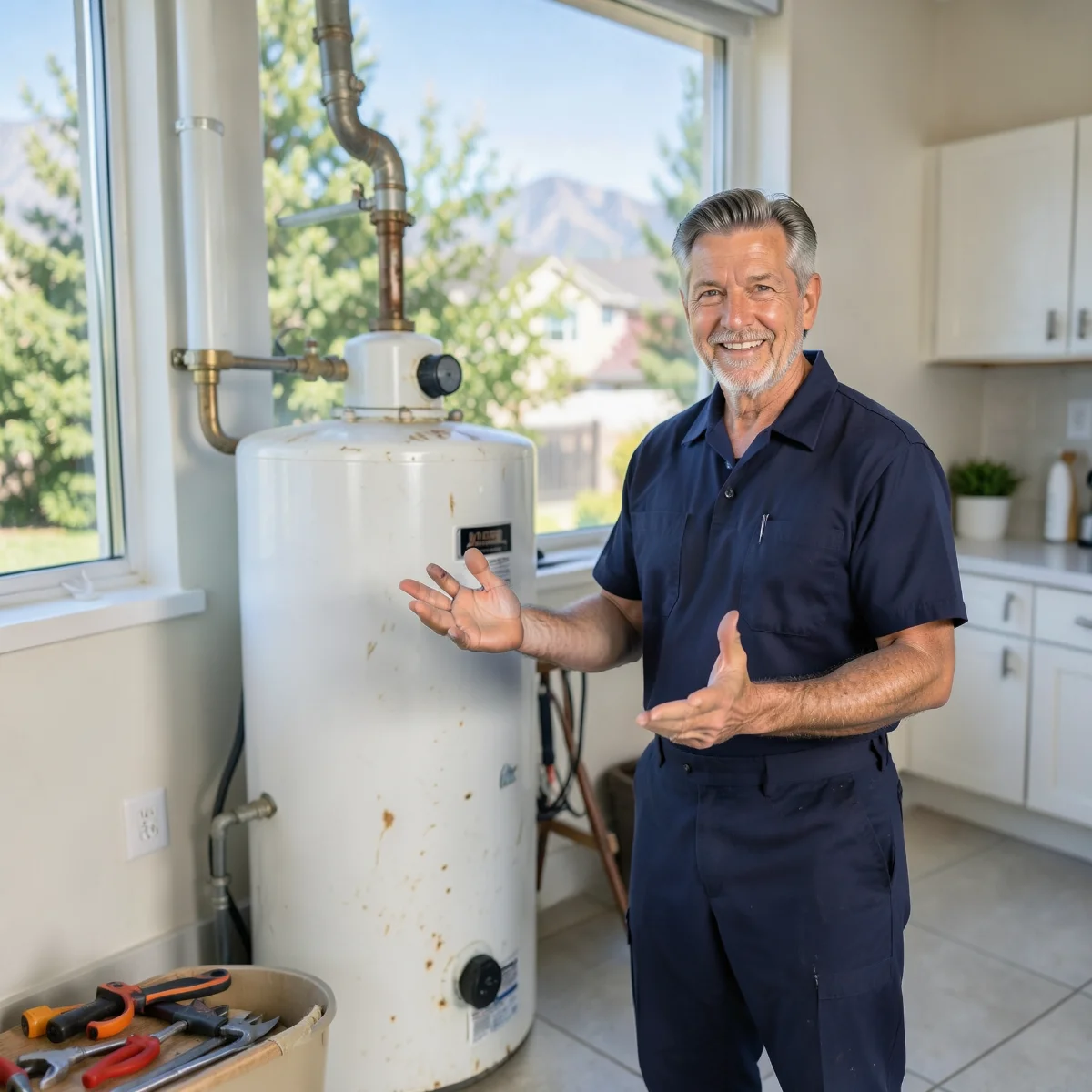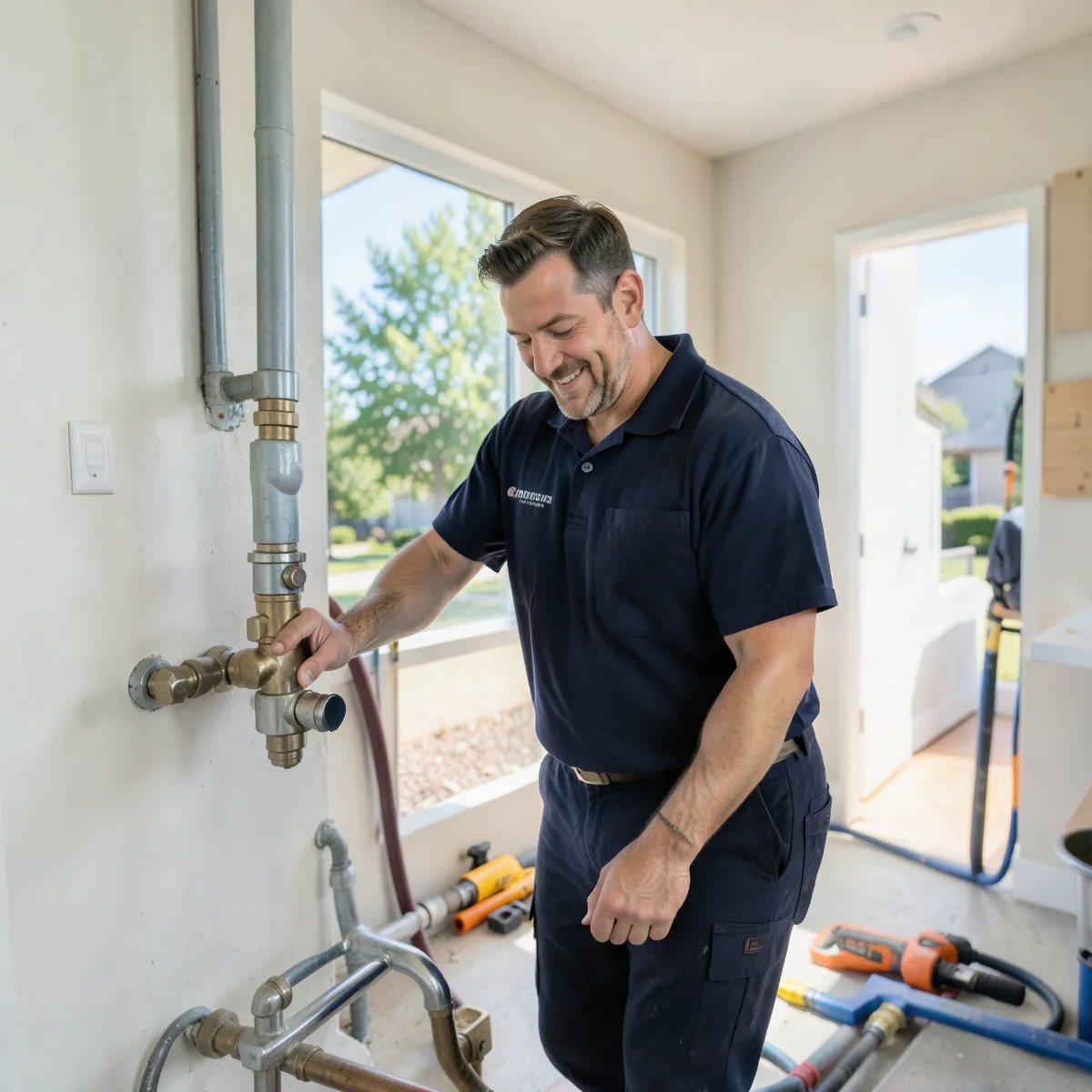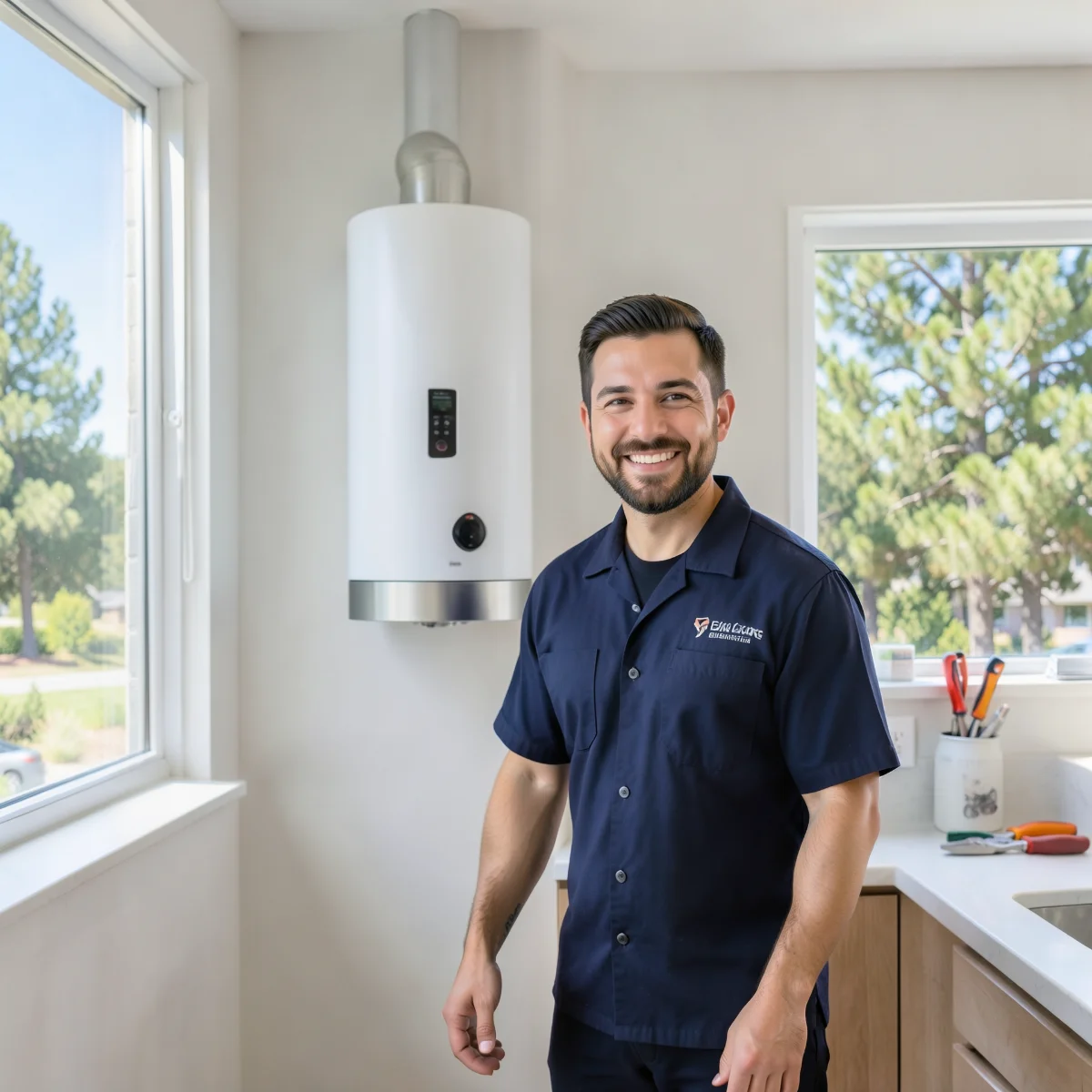
Tankless water heaters have earned their popularity. The promise — endless hot water, 20-year lifespan, significant energy savings — is real under the right conditions. But at 5,300 feet in Arvada, with Front Range hard water and often existing 1/2-inch gas lines, the conditions matter a lot more than the manufacturer's spec sheet suggests.
This is not an argument against tankless units — they are genuinely excellent for the right home. It is an argument for going in with accurate expectations, because several Arvada homeowners have paid for a premium installation and been frustrated when reality did not match the showroom pitch. Here is the honest version.
Altitude derating: the factor nobody mentions
Natural gas combustion requires oxygen, and at 5,300 feet there is roughly 15% less oxygen in a given volume of air than at sea level. Tankless water heaters compensate by adjusting their air-to-fuel mixture, but the result is reduced maximum BTU output — typically 10–20% below the rated capacity on the spec sheet.
In practical terms: a unit rated at 180,000 BTU/hr at sea level may deliver 150,000–160,000 BTU/hr in Arvada. This matters when the spec sheet says the unit can supply two simultaneous showers at 40°F groundwater — because at altitude, it may struggle to maintain temperature at that demand. A unit that is right-sized for Denver may be undersized for the same fixture load in Arvada.
The fix is correct sizing at installation. An experienced installer accounts for altitude derating in the BTU calculation. A spec-sheet-only approach gets you a unit that works fine alone in the shower but loses temperature when the kitchen sink is also running hot.
Gas line sizing: the most common installation problem
Tankless heaters demand fuel in short, intense bursts rather than the low sustained draw of a tank heater. A full-size condensing tankless unit at peak demand may require 200,000+ BTU/hr of gas supply — more than most residential gas lines were sized to deliver. A 1/2-inch gas line serving a 40-gallon tank heater is almost certainly too small for a full-size tankless unit.
Upgrading to a 3/4-inch or 1-inch line from the meter is a standard part of a proper tankless installation. Some homes have adequate capacity on existing infrastructure; many do not. This is a cost that needs to be on the table before the install decision is made, not discovered partway through.
In newer Arvada developments like Candelas, gas line infrastructure may or may not be sized for tankless demand depending on builder spec. In older parts of the city, 1/2-inch runs are the norm. A plumber should check the existing line before quoting the installation.
Hard water and tankless: the maintenance equation
Scale on the heat exchanger is the primary maintenance concern for tankless units in Arvada. Unlike a tank heater where sediment falls to the bottom, in a tankless unit the scale deposits directly on the heat exchanger coils — the critical component. Scale insulates the coils, reduces heat transfer efficiency, triggers error codes, and eventually requires expensive heat exchanger cleaning or replacement.
Most tankless manufacturers require annual descaling (vinegar flush through the heat exchanger) to keep the warranty valid. In Arvada's hard-water conditions, this is genuinely annual work, not a "when you get around to it" item. Some manufacturers recommend even more frequent service at hardness levels above 10–15 GPG.
A whole-home water softener is a significant protective investment for a tankless heater in Arvada. The combination extends heat exchanger life substantially and reduces the frequency and complexity of descaling. The ongoing salt cost is real but compares favorably to a heat exchanger replacement.
The real payback period at Colorado conditions
Tankless units are advertised as saving 24–34% on water heating energy costs versus tank heaters. That figure comes from the Department of Energy based on national average conditions. In Arvada, the actual savings depend on: household hot water demand, existing fuel costs, the efficiency of the unit replaced, and whether you actually maintain the unit annually.
A tankless installation in Arvada — including gas line upgrade, venting, code-compliant installation, and permit — typically runs in the range of $2,500–$5,000 or more. A straight tank replacement with a new unit runs considerably less. The energy savings at current gas rates generally produce a payback period of 7–15 years compared to a new tank heater — not a slam-dunk financial case, especially if you plan to sell within a decade.
Where tankless excels in Colorado: large households that run hot water continuously, homes adding a bathroom or hot tub and needing capacity a tank cannot provide, or homeowners staying long-term who value the 20-year equipment lifespan and the freeing up of mechanical room space. These are genuine advantages.
Tank vs. tankless: the honest summary
A modern high-efficiency tank heater — 0.67+ UEF — installed correctly with the right size for your household is a reliable, cost-effective choice in Arvada. It is not a step backward. For most households replacing a failed unit, it is the financially sensible decision.
Tankless makes genuine sense when: you have high simultaneous hot water demand, you plan to stay in the home for many years, you are willing to maintain it annually, and your gas infrastructure can handle the upgrade without a major line replacement — or you are doing the gas line work anyway as part of a remodel. Call (207) 419-2600 to discuss what fits your specific situation.
Key takeaways
- At 5,300 feet, tankless units deliver 10–20% less BTU than their sea-level ratings — sizing must account for altitude.
- Most older Arvada homes need a gas line upgrade for a full-size tankless unit — this cost must be part of the decision.
- Annual descaling is required, not optional, for tankless units in Arvada's hard-water conditions.
- Payback periods of 7–15 years are realistic for tankless vs. a new tank — the financial case is long-term.
- A high-efficiency tank heater is a legitimate, smart choice for most replacement situations in Arvada.
Frequently asked questions
Sometimes, but not always. The venting requirements differ — most condensing tankless units vent with PVC rather than the metal B-vent a gas tank uses. Gas line size needs to be checked. And a tankless unit needs a dedicated electrical outlet for the control board. An on-site assessment before purchasing the unit is the right sequence.
Yes, in a pre-heat configuration. The solar collector heats water in a storage tank, and the tankless heater tops it up to temperature on demand. This combination can meaningfully reduce the tankless unit's workload and improve efficiency. It is a more complex installation but works well.
Gas tankless heaters require electricity for the control board and ignition. Without power, they will not fire. In a significant outage, a standard gas tank heater — which holds pre-heated water — continues providing hot water until the tank cools, giving you a buffer that tankless cannot offer.
Local plumbing help mentioned in this article
Need a hand from a local Arvada plumber?
Whether it is an emergency or a project you have been putting off, Arvada Pro Plumbing dispatches locally, 24/7, with upfront pricing. Call now or request service online.