Arvada homes face a predictable set of plumbing stresses through the year: freeze-thaw stress in fall and winter, snowmelt groundwater pressure in spring, and hard-water accumulation year-round. None of these are surprises — they are the known conditions of living at 5,300 feet on the Front Range. The question is whether you are ahead of them or behind them.
This checklist is organized by season because timing matters. A water heater flush in February catches sediment before the spring hot-water demand peak. Disconnecting hoses in September rather than November avoids the one cold snap that catches everyone off guard. The tasks take minutes individually; together they take a few hours spread over a year and protect systems worth tens of thousands of dollars.
Spring checklist: after melt, before summer
Spring is inspection season. Walk the perimeter of the house after the snow is off the ground and look for ground settling, wet patches, or soil that has shifted. These can indicate pipe movement from freeze-thaw stress or a slow leak in a yard line. Inside, check exposed pipes in the basement and crawl space for hairline cracks or weeping at joints that developed over winter.
Test the sump pump before snowmelt peaks. Pour water into the pit to verify the float triggers, the pump activates, and the discharge line is clear and terminating correctly. Replace the battery backup if it is more than 3 years old or if you do not know its history. This is the single most valuable spring plumbing task for any Arvada home with a basement.
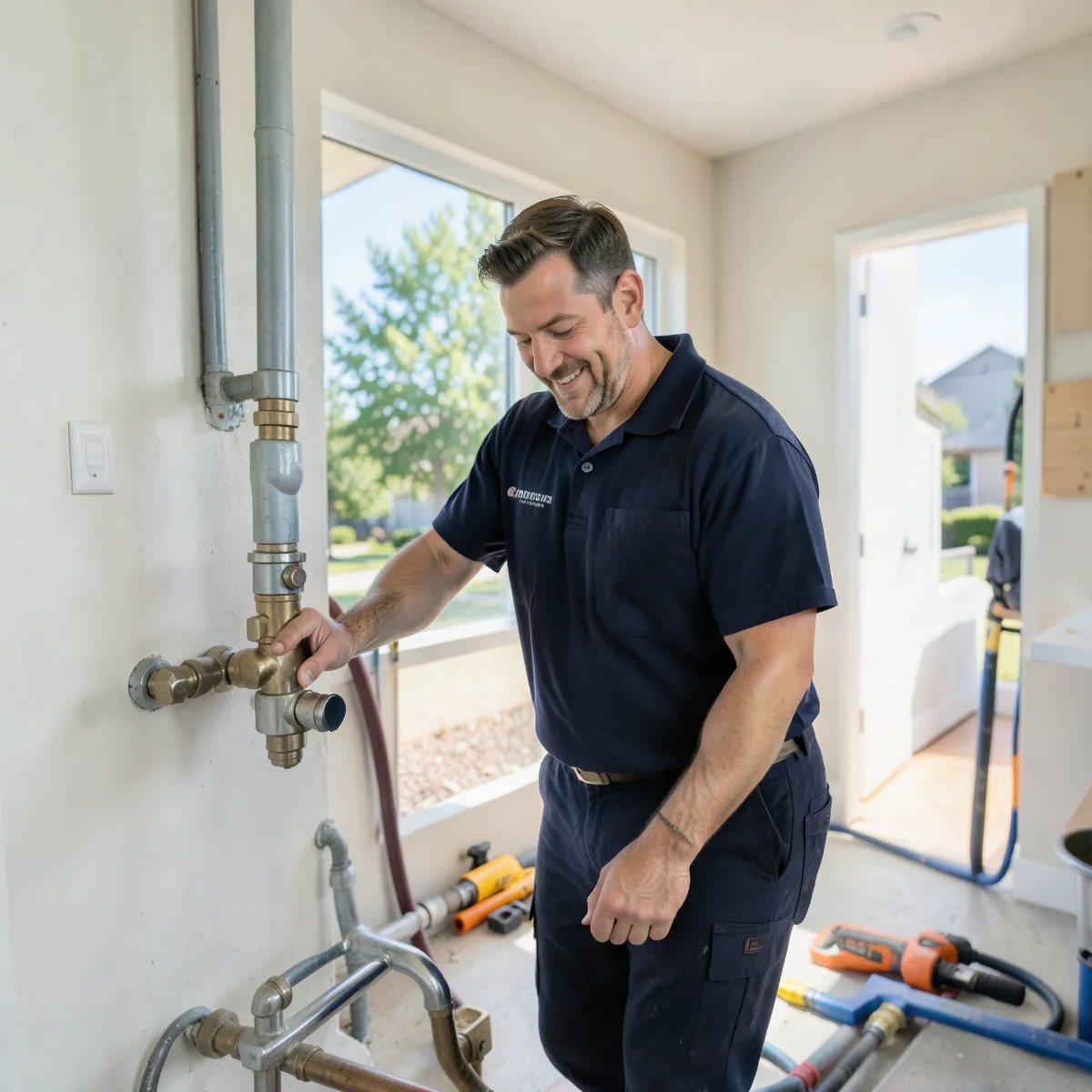
Check shut-off valves under sinks, behind toilets, and at the washing machine. These should turn freely through their full range. A valve that is stuck or that will not fully close is a liability — find out now, not when you need it in an emergency. In hard-water homes, shut-off valves that have not been operated in a year or more are frequently seized.
- Walk the perimeter for settling, wet patches, or soil movement
- Test sump pump float, activation, and discharge
- Check battery backup charge — replace if over 3 years or unknown age
- Exercise all shut-off valves under sinks, toilets, and washing machine
- Inspect visible basement and crawl space pipes for winter stress damage
- Soak aerators and showerheads in white vinegar to dissolve mineral buildup
Summer checklist: outdoor systems and water quality
Summer is a good time to attend to outdoor plumbing while the weather cooperates. Inspect hose bibs for drips or weeping at the packing nut — a dripping hose bib wastes water and signals a failing washer or seat. Check irrigation lines for visible cracks or spray-head misalignment that causes water to pool near the foundation.
If you have not had a plumbing maintenance visit recently, summer is a comfortable time to schedule one that includes a water heater assessment, visible pipe inspection, and water pressure check. Catching a failing PRV in July is a routine repair; catching it when it finally lets go in the middle of winter is an emergency call.
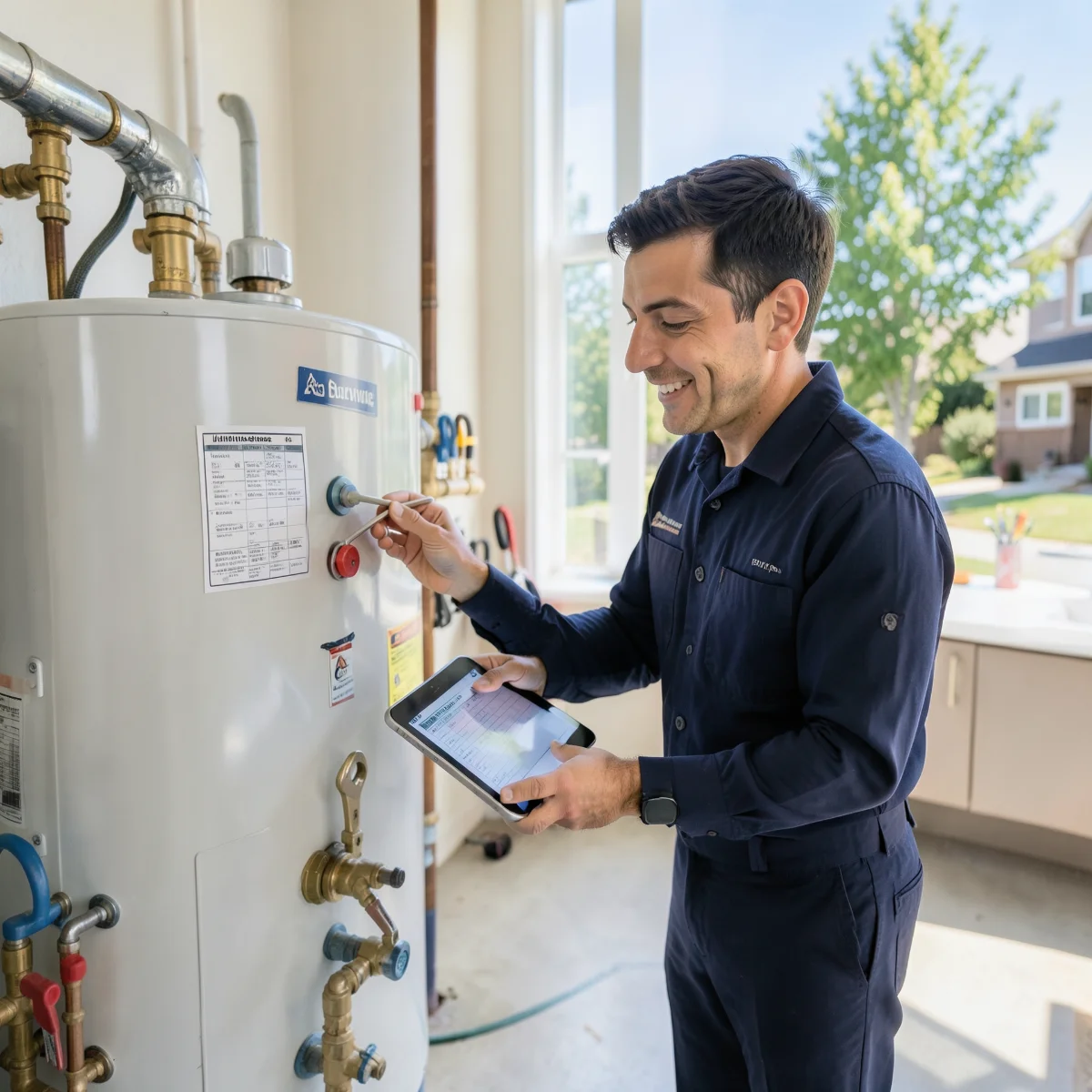
Test the water temperature at the heater. The T&P (temperature and pressure relief) valve is set to open if the tank overheats — the standard setting is 120°F for safety and energy efficiency. If the T&P valve has been weeping or discharging intermittently, that is a sign the tank is experiencing pressure or temperature events it should not be, and it warrants professional evaluation.
- Inspect and repair dripping hose bibs
- Check irrigation heads and lines for damage or foundation-proximate discharge
- Test backflow preventer — required annually for irrigation connections
- Confirm water heater temperature setting is at 120°F
- Check T&P valve for weeping — a weeping valve needs professional assessment
- Schedule a professional plumbing maintenance visit if overdue
Fall checklist: freeze preparation before winter hits
This is the highest-stakes seasonal window for Arvada homeowners. The first hard freeze catches people off guard every year, and most frozen-pipe calls come from situations that were preventable with a September or October task.
Disconnect and drain all garden hoses by mid-October — even if the forecast looks mild. Frost-free hose bibs freeze when a hose is left attached because the hose traps water in the vacuum breaker. Shut off any dedicated hose-bib supply valves inside the house and open the exterior bib to drain. For non-frost-free bibs, this step is not optional.
Insulate exposed pipes in unconditioned spaces: the basement rim joist area, crawl space supply lines, and any pipe running through a garage or exterior wall cabinet. Split-foam pipe insulation is inexpensive and installs in minutes. Seal the gaps at the rim joist with spray foam before adding pipe insulation — stopping cold air infiltration is more effective than insulating over it.
- Disconnect and drain all garden hoses by mid-October
- Shut off and drain hose bib supply valves inside the house
- Insulate exposed pipes at rim joists, crawl spaces, and exterior walls
- Seal rim joist gaps with spray foam before adding pipe insulation
- Confirm garage supply lines are protected or have a dedicated shut-off
- Locate and test the main water shut-off — confirm it fully closes
- Set heating system no lower than 55°F even when leaving for extended travel
Year-round: water heater, drains, and monitoring
Flush the water heater annually. Connect a garden hose to the drain valve, open a hot-water tap in the house to prevent a vacuum, and drain until the water runs clear. This removes accumulated sediment that reduces efficiency and accelerates corrosion. In Arvada's hard-water environment, skipping this task shortens water heater life measurably — sometimes by years.
Check the anode rod every 2–3 years. The anode rod is a sacrificial magnesium or aluminum rod inside the tank that corrodes instead of the tank lining. When it is depleted, the tank itself begins to corrode. If the rod is depleted in a unit under 5 years old, the water chemistry or heater configuration is causing faster-than-normal consumption — worth a plumber's evaluation.
Consider installing a smart leak sensor in the mechanical room and under the kitchen and laundry sinks. Devices like the Moen Flo or Phyn Plus monitor flow and detect both sudden breaks and slow leaks. A plumbing inspection can identify the highest-risk locations for sensor placement in your specific home. Call (207) 419-2600 to ask about annual maintenance membership options.
Key takeaways
- Disconnect garden hoses before mid-October every year — this alone prevents most frozen hose-bib calls in Arvada winters.
- Flush the water heater annually to remove sediment that shortens the unit's life in Arvada's hard-water environment.
- Test the sump pump float and battery backup in spring, before snowmelt season peaks.
- Exercise shut-off valves yearly — seized valves in a hard-water home are a hidden emergency risk.
- Smart leak sensors in high-risk locations give early warning before a pinhole leak becomes a structural event.
Frequently asked questions
For homes under 15 years old with no known issues, every 2–3 years is a reasonable interval. For older homes — especially pre-1980s construction with galvanized pipe or known sewer history — annual professional inspection paired with a sewer camera scope every 3–5 years is the right investment level.
Yes. Sediment accumulates invisibly and does not cause symptoms until it has already degraded efficiency and accelerated corrosion. Waiting for symptoms means you are flushing a heater that is already damaged. Annual flushing is maintenance, not a response to failure.
Turn the valve to the fully closed position, then back to fully open. If it moves smoothly through the full range and stops cleanly at both ends, it is functional. If it requires unusual force, makes grinding sounds, or does not return cleanly to the open position, it is suspect and worth replacing on a non-emergency visit.
Local plumbing help mentioned in this article
Need a hand from a local Arvada plumber?
Whether it is an emergency or a project you have been putting off, Arvada Pro Plumbing dispatches locally, 24/7, with upfront pricing. Call now or request service online.