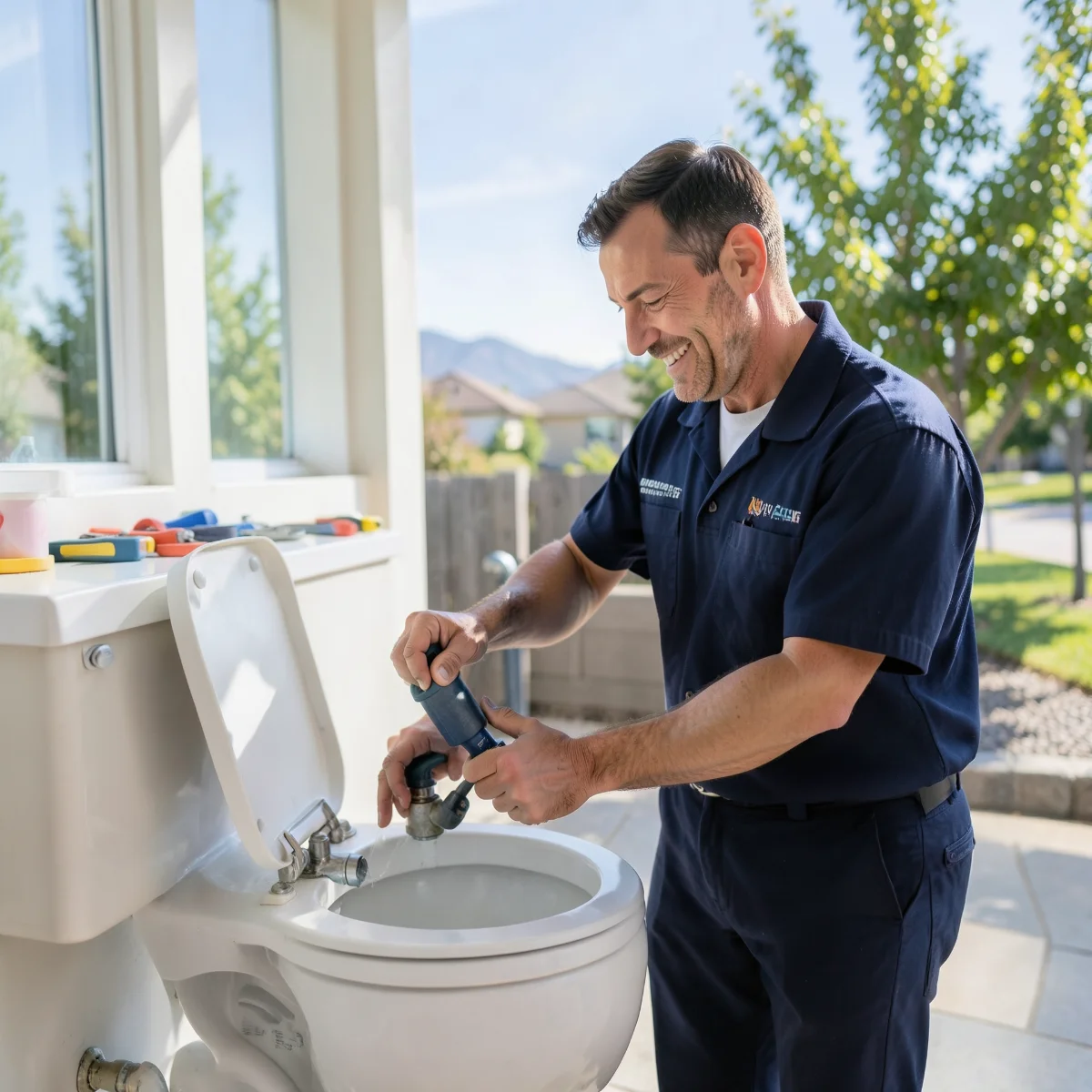
A toilet that runs continuously — the sound of water trickling or the intermittent refill cycle kicking on every few minutes — is one of those household nuisances that is easy to delay fixing. It is not dramatic. It is just money and water going down the drain. A running toilet can waste 200 gallons or more per day, which in Arvada shows up as a noticeably higher water bill over a billing cycle or two.
The good news is that most running toilets have one of three causes: a faulty flapper, a misadjusted fill valve, or a chain that is the wrong length. All of these are inexpensive parts and DIY-friendly repairs. This guide walks you through diagnosing which problem you have, fixing it, and recognizing the point where the job is better handed to a plumber.
How a toilet tank works (the short version)
When you flush, a flapper at the bottom of the tank lifts and lets water rush into the bowl. Once the tank empties, the flapper drops and seals the drain opening, and the fill valve refills the tank with fresh water. When the float — part of the fill valve — rises to the set water level, it shuts the fill valve off. That is the complete cycle. A running toilet means something in that sequence is not completing properly.
The two most common failures are: water leaking past the flapper (so the tank never reaches full and the fill valve runs intermittently to compensate), or the fill valve not shutting off because the float is set too high or the valve itself has failed. A third, less common cause is a chain that is too long — it gets caught under the flapper and prevents a complete seal.
Diagnosing the flapper
The flapper test: remove the tank lid and add a few drops of food coloring to the tank water. Wait 15 minutes without flushing. Check the bowl. If the colored water appears in the bowl without flushing, your flapper is leaking. Water is passing through the flapper seal into the bowl continuously.
Flappers in Arvada homes wear out faster than the national average due to hard water. The mineral content in Front Range water degrades rubber over time, leading to a flapper that no longer seats firmly. The part costs $5–$15 at any hardware store and takes about 10 minutes to replace. Turn off the water supply valve behind the toilet, flush to empty the tank, unhook the old flapper from the overflow tube, unclip the chain, and clip in the new one.
Match the replacement flapper to your toilet brand if possible — Kohler, American Standard, and Toto all use slightly different flapper geometries. A universal flapper usually works but brand-specific is better if available. If the flapper was replaced within the last year and is already leaking, the seat (the surface the flapper seals against) may be damaged — that is a toilet repair call.
The fill valve and float
If the food coloring test shows no bowl leak, but the toilet still runs, the fill valve is the suspect. Two checks: first, look at the water level in the tank. The water should sit about an inch below the top of the overflow tube — the vertical tube in the center of the tank. If water is at or above that level and spilling into the tube, the fill valve is overfilling and the toilet is essentially continuously flushing. Adjust the float downward (the adjustment mechanism varies by fill-valve style — there is usually a screw or a clip on the float arm) until the water settles at the correct level.
If the water level is correct but the fill valve is still running, the valve itself has failed and needs replacement. A fill valve replacement costs $10–$25 in parts and 30–45 minutes of work. Turn off the supply valve, flush to empty the tank, unscrew the supply line from the bottom of the fill valve, remove the locknut, and swap in the new valve. Most modern fill valves use a universal mounting that fits standard tank openings.
For bathroom plumbing work that goes beyond basic parts swaps — especially in 80003-area homes where older toilet models may have non-standard components — calling a plumber saves the frustration of mismatched parts.
The chain: the overlooked fix
A chain that is too long gets folded under the flapper when it closes, creating a gap that lets water leak through. A chain that is too short holds the flapper slightly open permanently. The correct length leaves about half an inch of slack when the flapper is fully seated.
Check the chain while the tank is full: look at how the chain drapes. If it has significant excess and tends to fall toward the flapper opening, shorten it by clipping it at a different link. If the toilet runs only occasionally and only right after a flush, the chain catching under the flapper is the most likely explanation.
Chain adjustments take 30 seconds and cost nothing. Start here before buying any parts.
When to stop and call a plumber
Call a plumber when: the flapper has been replaced and it is still leaking — the flush valve seat may be pitted or corroded, requiring a full flush-valve replacement. When the toilet runs but neither the flapper nor fill valve appears to be the issue — intermittent phantom flushing can indicate a cracked tank, a hairline crack in the flush valve, or an installation error. When the toilet is old enough (15+ years) that the smart financial move is replacement rather than continued repair.
Also call when a toilet that has been running is accompanied by water on the floor, any wobble in the fixture, or a sewer-gas smell. These are different problems from a simple internal leak and need professional evaluation.
A plumber can replace a complete toilet — remove the old unit, reset with a new wax ring, install and test the new toilet, and dispose of the old one — typically for $300–$600 depending on the fixture selected. If you are replacing an aging toilet anyway, now is the time to choose a WaterSense-certified model that uses 1.28 gallons per flush or less, versus the 3.5–7 gallons older toilets used.
Key takeaways
- The food coloring test is the fastest way to confirm a flapper leak — colored water in the bowl without flushing means the flapper is the problem.
- Arvada's hard water degrades rubber flappers faster than average — plan to replace yours every 3–5 years proactively.
- Check water level before buying parts — if water is running into the overflow tube, a float adjustment may be all you need.
- A chain that is too long is the easiest fix of all; check it before assuming you need parts.
- A running toilet wastes 200+ gallons per day — the repair cost pays back in water savings within the first billing cycle.
Frequently asked questions
It depends on the severity of the leak. A slow flapper drip might waste 30–50 gallons per day. A fill valve that never shuts off can waste 200+ gallons. Over a month, a continuously running toilet can add $30–$100 or more to a water bill. Denver Water's tiered pricing makes heavy usage increasingly expensive.
A 20–30-second fill cycle after a flush is entirely normal. The tank is simply refilling. What is not normal: the toilet running continuously without a flush, running for several minutes after a flush, or running intermittently throughout the night without anyone using it. Those all indicate a leak.
Gurgling without running is usually a venting issue rather than a tank problem. The drain system is not getting adequate air, and the resulting pressure fluctuation produces the gurgle. If the gurgle occurs when another fixture runs (dishwasher, washing machine), a partial main-line blockage is possible. This is not a tank fix — it is a drain or vent diagnosis.
Local plumbing help mentioned in this article
Service areas
Need a hand from a local Arvada plumber?
Whether it is an emergency or a project you have been putting off, Arvada Pro Plumbing dispatches locally, 24/7, with upfront pricing. Call now or request service online.