A failing sewer lateral is not a repair you can put off indefinitely. When a sewer line has collapsed, deteriorated beyond the point where repair is viable, or is causing repeated backups despite regular cleaning, replacement is the right answer. It is also a significant project — one where understanding what drives cost helps you evaluate quotes and plan without being caught flat-footed.
Sewer line replacement in Arvada runs a wide range depending on line length, pipe material, depth, access, the presence of obstacles like driveways or concrete, and whether trenchless or open-cut excavation is used. These are general guidance figures, not quotes. The only accurate price for your specific situation is an on-site assessment after a camera inspection of the failing line.
Why sewer lines need full replacement
Not every sewer problem requires full replacement — spot repairs handle isolated cracks or offset joints, and CIPP lining rehabilitates lines that are structurally sound but have root intrusion and joint gaps. Replacement becomes the answer when the pipe has collapsed, is severely deteriorated across most of its length, or has failed in ways that trenchless rehabilitation cannot address.
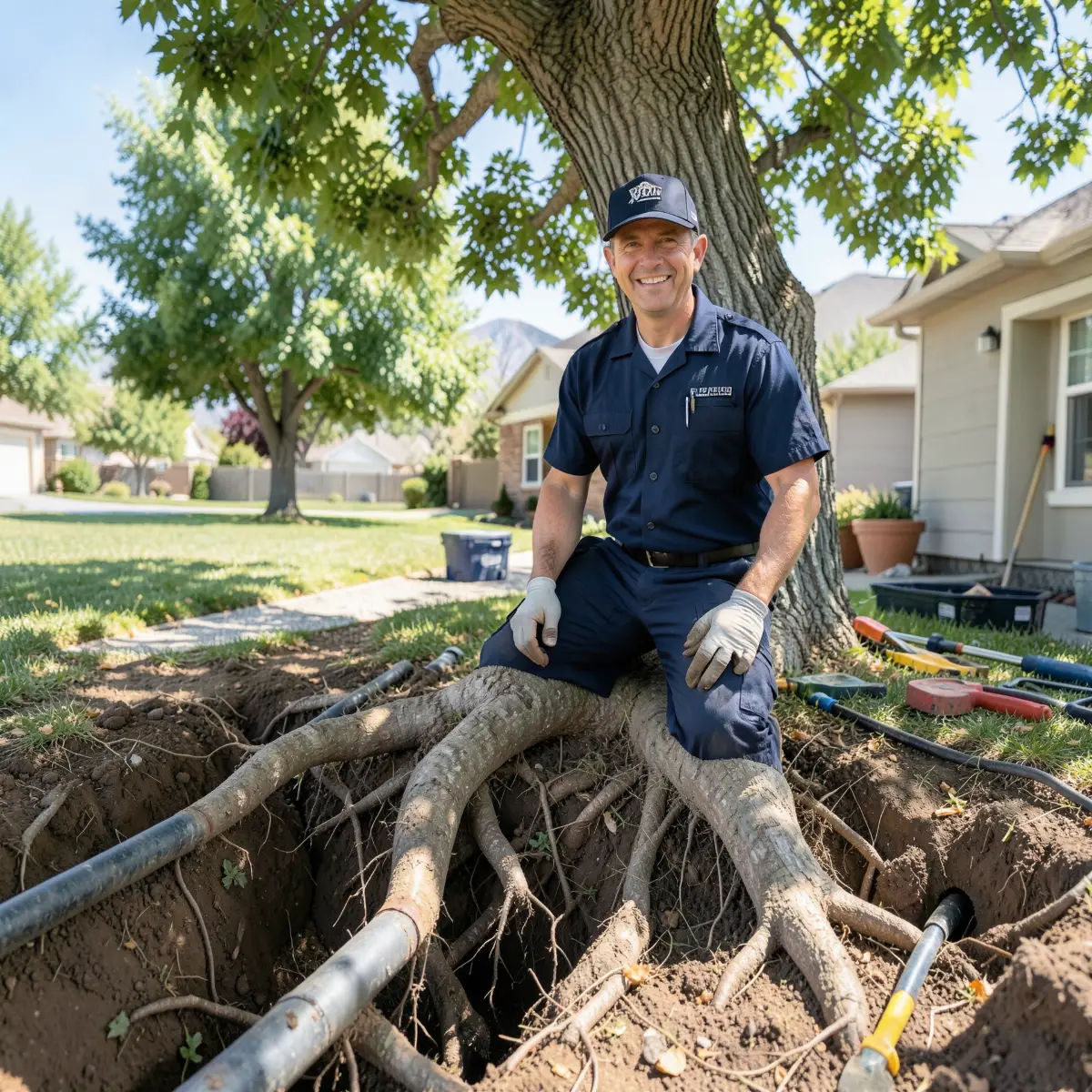
In Ralston Valley and other established Arvada neighborhoods, clay tile laterals from the 1950s and 60s and Orangeburg pipe from the postwar period are the materials most likely to require replacement rather than repair. Clay that has bellied, cracked longitudinally, or been invaded by roots at multiple joints along its length is often at the end of its viable service life. Orangeburg that has softened and deformed to half its original bore cannot be rehabilitated — it needs to come out.
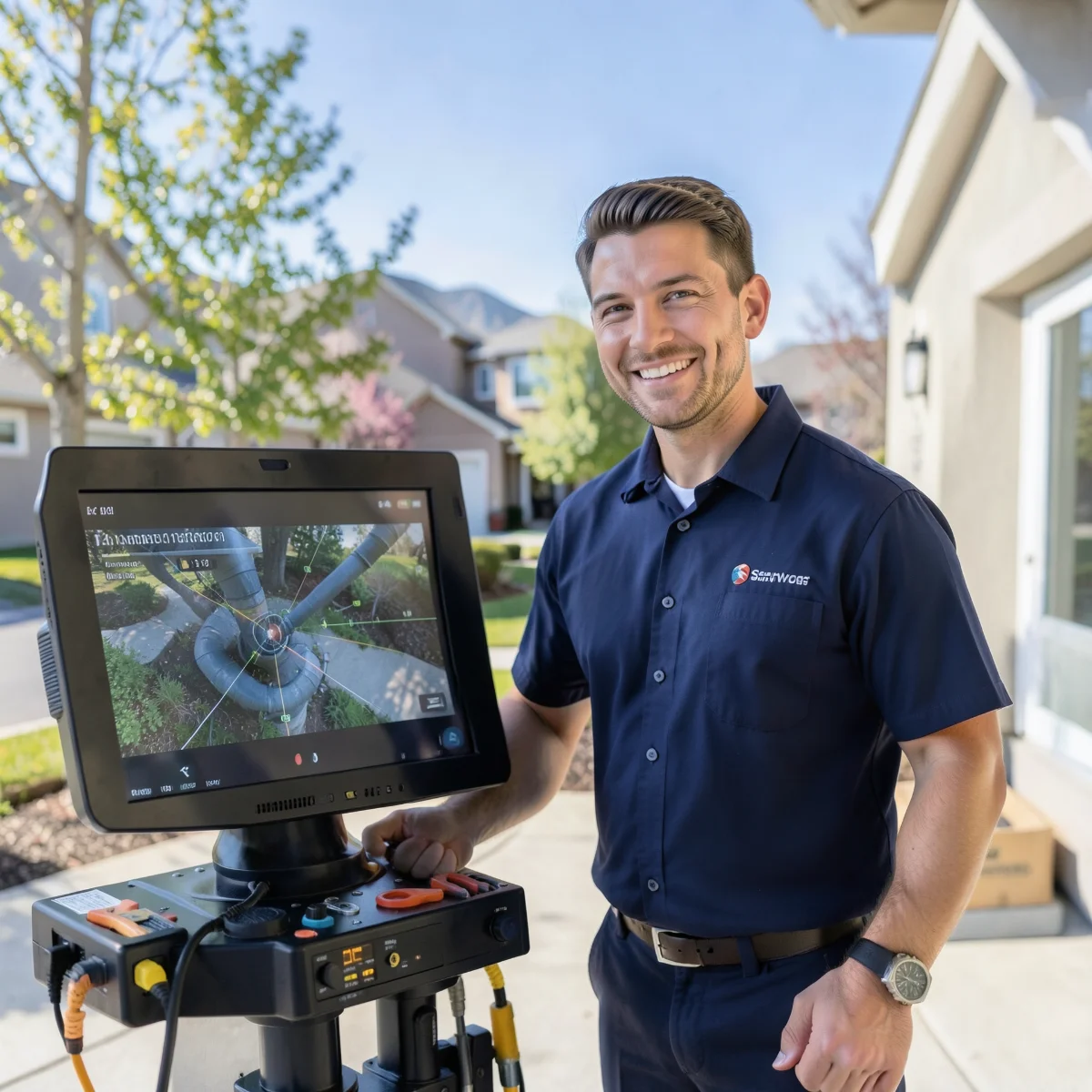
A camera inspection is always the starting point. It tells you definitively whether you are dealing with a repair candidate or a replacement candidate. Any contractor recommending replacement without scoping the line first is guessing at the most expensive possible answer.
Trenchless vs. open-cut: the key trade-offs
Trenchless sewer repair methods — specifically pipe bursting for replacement — pull a new HDPE pipe through the failing old one while fracturing the old pipe outward. The result is a new pipe in the same location without needing to excavate the entire lateral. Entry and exit pits are dug at each end of the replaced section, but the soil between them is not disturbed. Your landscaping, driveway, and concrete flatwork remain intact.
Pipe bursting works well when the old pipe has consistent enough internal geometry to pull a new pipe through it. Severe collapses, sections where the pipe has completely flattened, or lines with significant offset can prevent the bursting head from passing. This is determined before proceeding — another reason camera inspection is the essential first step.
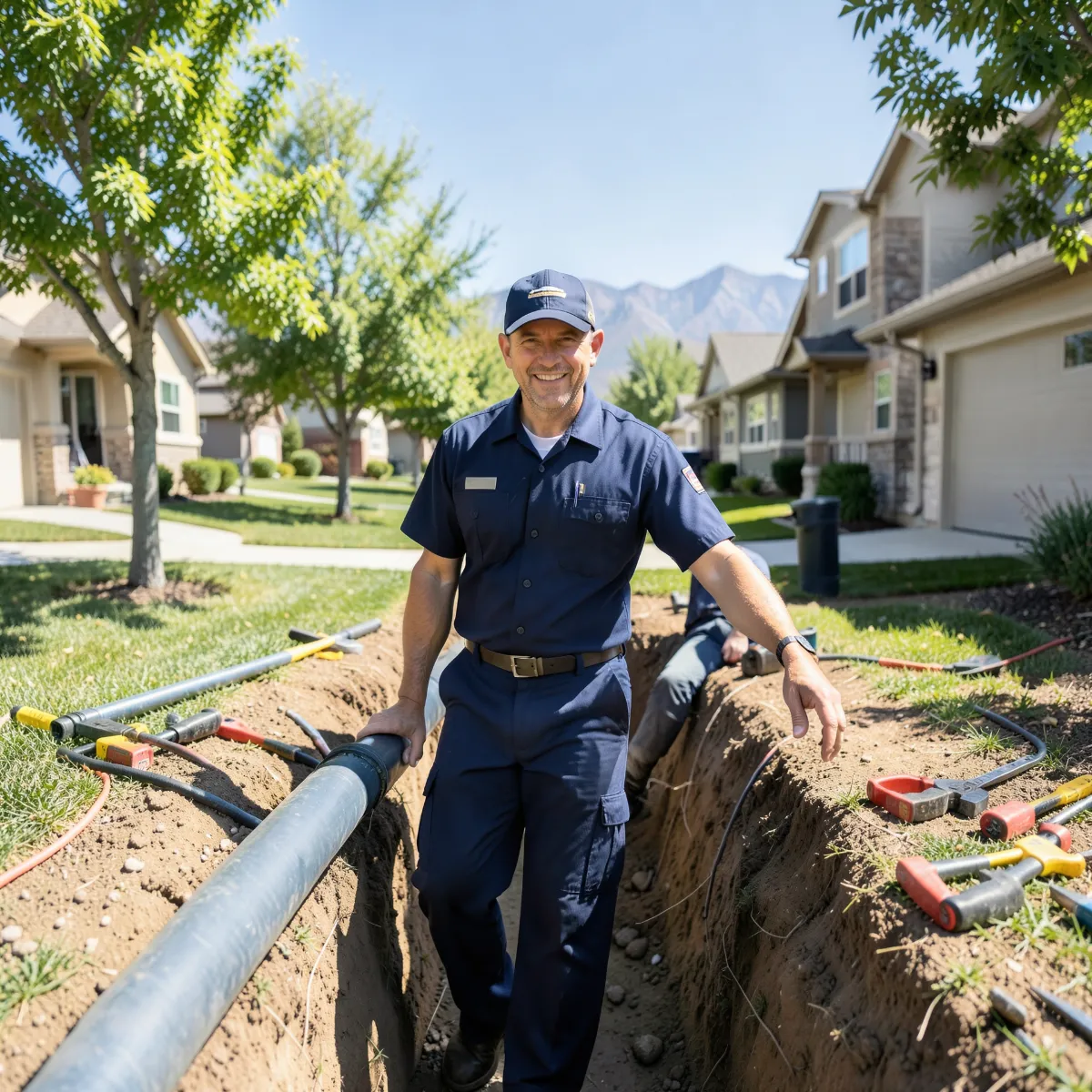
Traditional open-cut excavation is still the right method in some situations: when the old pipe has collapsed in a way that blocks trenchless access, when the line needs to be rerouted rather than replaced in-kind, when the ground has obstacles a bursting head cannot pass through, or when the line is shallow enough that open-cut is nearly as fast and significantly less expensive. The 'trenchless is always better' assumption is not always accurate — the right method depends on your specific conditions.
- Trenchless pipe bursting: minimal surface disruption, higher equipment cost, works in most soil types
- Open-cut excavation: appropriate for collapsed/deformed pipe, reroutes, or shallow lines in open yard
- CIPP lining: for rehabilitation of structurally sound lines — not full replacement, but restores interior
- Spot repair: for isolated damage in otherwise sound pipe
Cost ranges for sewer line replacement in Arvada
These are general guidance ranges for Arvada and Jefferson County. Actual costs depend on line length, depth, pipe material, access constraints, surface restoration, and permit fees. Use these as a planning baseline only — get an on-site quote for your specific situation.
Open-cut sewer lateral replacement: broadly $5,000–$15,000 for a typical residential lateral (50–100 feet). Shorter, shallower, open-yard lines with no surface obstructions land at the lower end. Lines under driveways, concrete, or with significant depth due to basement connection or grade fall at the higher end.
Trenchless pipe bursting for sewer line replacement: broadly $6,000–$18,000 for the same typical lateral length range. The equipment and setup cost is higher, but surface restoration cost is minimal. For a line running under a landscaped yard or under a concrete driveway that would cost $3,000–$6,000 to restore after open-cut, trenchless frequently produces a lower total-project cost despite the higher per-foot installation price. Additional cost factors: Jefferson County permit fees (typically $200–$500+ depending on scope), traffic control if work is near the street, dewatering if the excavation encounters groundwater, and any emergency measures needed to manage sewage during replacement.
Permits, inspections, and why they matter
Sewer lateral replacement in Jefferson County and the City of Arvada requires a permit. This is not optional, and any contractor who suggests skipping it is leaving you with an unpermitted modification to a critical health system — one that will surface as a problem at resale and may not be covered by any subsequent warranty or insurance claim.
The permit process triggers a municipal inspection, typically after backfill and before full surface restoration. The inspector confirms the pipe material, slope, cleanout placement, and connection to the city main are all code-compliant. This protects you and the neighborhood's shared sewer infrastructure.
Ask any contractor you quote: 'Will you pull the permit?' and 'Will you schedule and manage the inspection?' A contractor who handles permitting stands behind the work. One who asks you to pull the permit, or who says permits are not necessary, is a contractor to cross off the list.
Planning for a sewer replacement: the sequence
Start with a camera inspection to confirm replacement is needed and document the pipe condition. Get two or three quotes from licensed contractors — ensure each quote specifies trenchless vs. open-cut, pipe material, lateral length being replaced, permit inclusion, and surface restoration scope. Compare the total-project cost, not just the installation line.
Financing is available for major sewer work through programs like GreenSky or Wisetack. For projects in the $8,000–$18,000 range, spreading payments over 12–36 months at a manageable rate is often a better financial decision than depleting emergency savings for a project that is not optional. Ask about financing when you call for your estimate.
Call (207) 419-2600 for service availability, camera inspection scheduling, and upfront estimate options. The camera is always the first step — no responsible contractor skips it.
Key takeaways
- Sewer line replacement in Arvada broadly runs $5,000–$18,000 for a typical lateral, depending on method, length, and surface restoration.
- Camera inspection before any replacement quote is non-negotiable — it confirms whether replacement is actually needed.
- Trenchless pipe bursting preserves landscaping and hardscaping at a higher per-foot cost; total-project cost is often competitive when surface restoration is factored in.
- Jefferson County permits are required for sewer replacement — any contractor skipping this step is a liability risk.
- Get surface restoration scope in writing; it is one of the largest cost variables between competing quotes.
Frequently asked questions
Standard homeowner's policies generally exclude gradual sewer line deterioration. If the line failed due to a covered sudden event (e.g., a tree falling and physically breaking the line), there may be coverage. A sewer line endorsement or service line protection add-on covers the line itself for a relatively low annual premium — worth reviewing if you own an older home in Arvada.
A typical residential lateral replacement takes 1–3 days for the active work, not counting permitting lead time. Trenchless work is often faster than open-cut on the installation side. Permit scheduling adds variable time depending on the jurisdiction's current inspection queue.
The sewer lateral is the pipe running from your house to the city's sewer main in the street — it is your responsibility and your cost. The city main runs under the street and is the city's responsibility. The connection point between the two (the tap or wye) may have shared responsibility depending on local code — clarify with your contractor during scoping.
Most contractors work in a way that allows minimal-to-moderate water use during the project, then require a complete shutdown during the actual connection and testing phase (typically a few hours). Your contractor should give you specific guidance on scheduling and temporary restrictions when work starts.
Local plumbing help mentioned in this article
Need a hand from a local Arvada plumber?
Whether it is an emergency or a project you have been putting off, Arvada Pro Plumbing dispatches locally, 24/7, with upfront pricing. Call now or request service online.