Every plumber has a version of the same story: a homeowner snaked a recurring backup three times in two years, spent a few hundred dollars each time, and then finally agreed to a camera scope — which revealed a collapsed clay section that no amount of snaking would ever resolve. The camera cost a fraction of what the repeated service calls added up to, and it pointed to the actual repair.
In Olde Town Arvada and surrounding established neighborhoods, where sewer laterals were laid 60–80 years ago, a camera inspection is one of the most valuable diagnostic tools an owner or buyer can deploy. It tells you what you have — before you spend money on a fix that does not address the real condition.
What a camera inspection actually shows
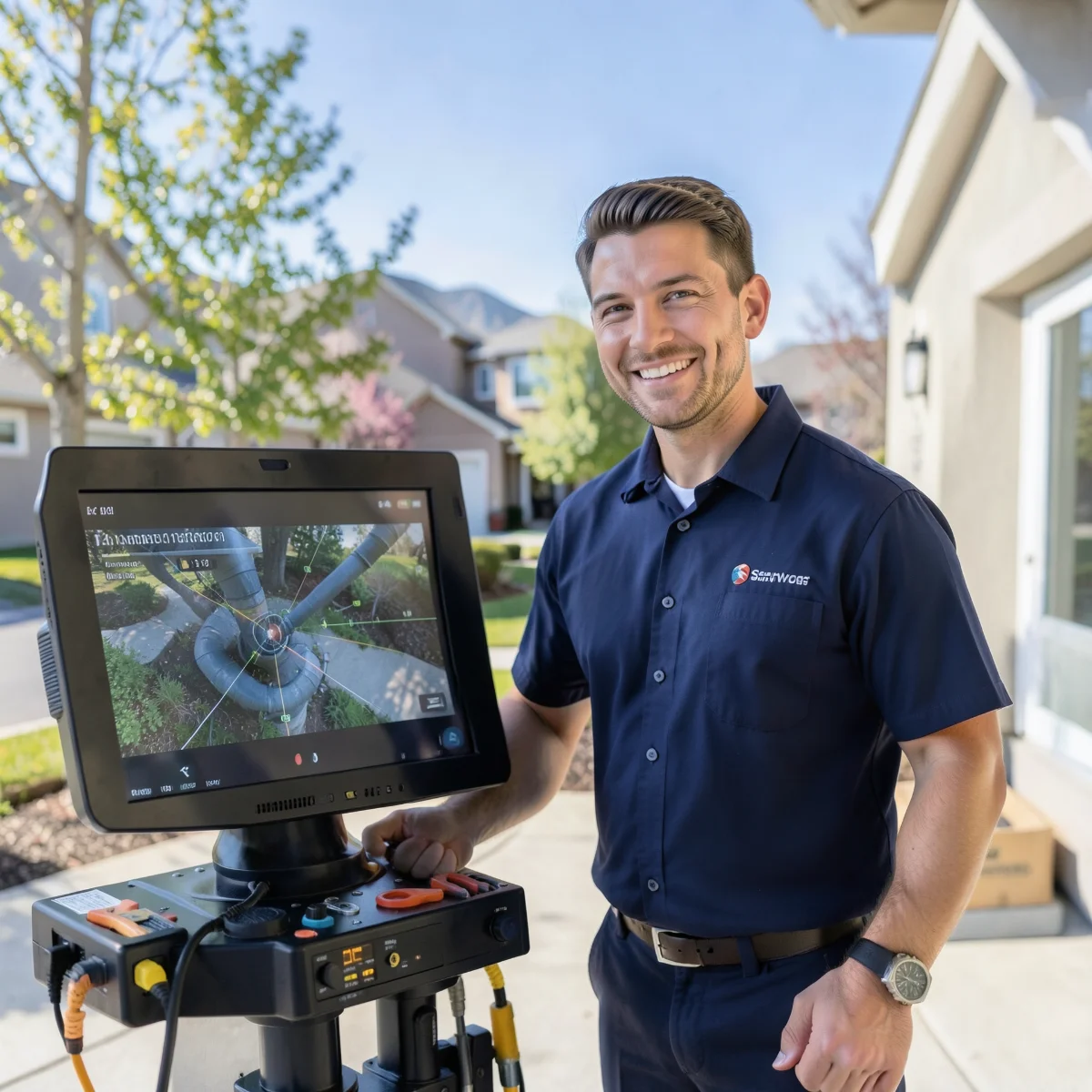
A modern sewer camera is a flexible fiber-optic cable with a high-resolution camera head and integrated locator technology. It travels from a cleanout access point into the sewer lateral and transmits real-time video to a monitor above ground. The technician watches as the camera moves through the line, narrating and marking what the camera sees.
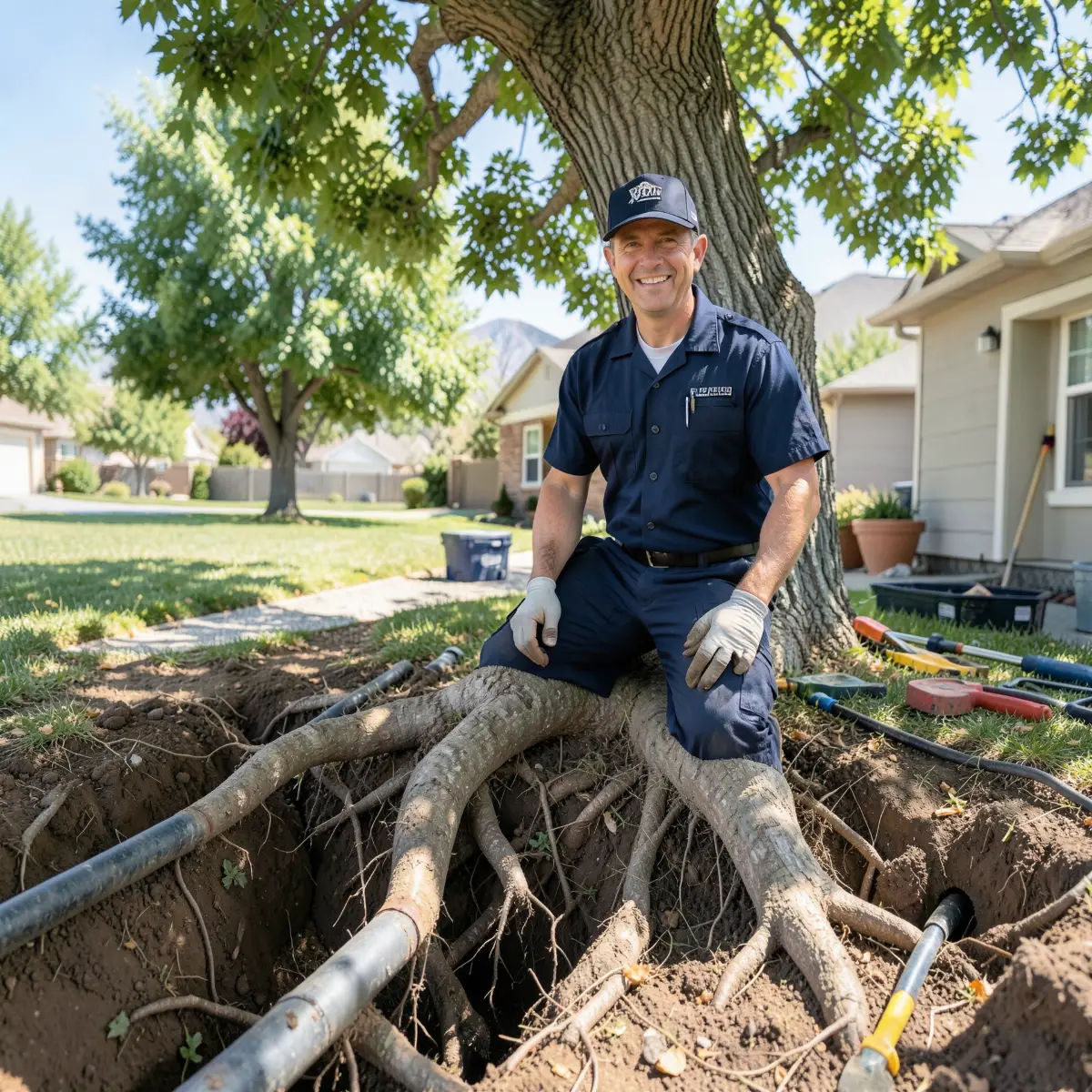
A camera scope reveals pipe material, joint condition, root intrusion (and at what stage), grease or scale buildup, offsets where pipe sections have shifted out of alignment, bellies where waste pools instead of flowing, cracks, and partial or complete collapses. It also records the footage for a permanent reference — useful for insurance claims, real estate transactions, and comparing condition over time.
What it does not show is pressure or flow capacity directly — those require separate testing. And it cannot see through severe root masses that block the camera's passage entirely. But for most diagnostic purposes, a clear camera run gives you more usable information than any other single test in sewer work.
Before buying an older home in Arvada
Standard home inspections do not include sewer scope. An inspector walking through a house notes what is visible — they cannot see inside a pipe. In Arvada, where a significant portion of the housing stock was built between 1940 and 1980 with clay tile or Orangeburg sewer pipe, buying without a sewer scope is accepting an unknown with a potentially large price tag.
A collapsed or deteriorated sewer lateral costs $5,000–$15,000 or more to repair or replace depending on line length, access, and method. Catching that before closing gives a buyer leverage to negotiate a price adjustment or credit, or to simply walk away from a deal that looks less favorable once the full picture is known.
Sewer camera inspection as part of a pre-purchase plumbing inspection is the right sequence. The camera scopes the sewer; the plumber checks the visible plumbing inside the house. Together they give a complete picture of the plumbing system's condition that a general home inspection cannot provide.
Diagnosing recurring drain problems
If the same drain or the same set of drains is slow or backing up repeatedly — and clearing it only buys a few months of improvement — you have a recurring problem, not a one-time event. Snaking a recurring issue without first scoping it is treating a symptom without knowing the cause.
A camera scope on a recurring backup distinguishes between: a grease-and-scale buildup that responds well to hydro jetting, a root intrusion that requires jetting with a root cutter and then ongoing annual maintenance, a pipe offset or belly that traps waste and will always re-clog unless repaired, or a partial collapse that needs repair regardless of what clearing method you apply.
Each of those diagnoses calls for a different treatment. A camera inspection closes the loop between symptom and cause. Call (207) 419-2600 to schedule a scope before your next recurring backup becomes an emergency.
What a camera inspection costs and when it pays for itself
A residential sewer camera inspection in Arvada typically runs in the range of $150–$350 depending on access, line length, and whether the footage is recorded and provided to you. Many plumbers include a camera run as part of a hydro jetting or drain-cleaning job. If it is offered as an add-on during service, take it — the incremental cost at that point is often minimal.
The math on value: if you have snaked the same line twice in the past 18 months at $150–$250 each, you have spent $300–$500 on temporary fixes. A $250 camera scope that reveals a root intrusion leads to a targeted hydro-jetting treatment that resolves it for 2–3 years rather than 3–6 months. Over that cycle, the scope pays for itself in the first year.
For pre-purchase decisions, the value is asymmetric: a $250 scope that reveals a $10,000 lateral replacement need is a 40-to-1 return on information. A scope that comes back clean gives a buyer confidence that is genuinely hard to put a price on.
Key takeaways
- A sewer camera inspection is the only reliable diagnostic for what is actually inside a sewer lateral — it distinguishes roots from collapse from offset, which matters for treatment choice.
- Pre-purchase camera scopes for older Arvada homes are one of the highest-value inspections a buyer can commission.
- Recurring drain problems that keep coming back after snaking are exactly the situation where a camera scope stops the repeat-service-call cycle.
- The cost of a scope is almost always recovered by avoiding a wrong treatment or catching a major repair issue before it becomes an emergency.
- Ask for recorded footage — it is your documentation for future reference, negotiations, and insurance purposes.
Frequently asked questions
Most residential sewer lateral scopes take 30–60 minutes including setup and any cleanout access work. Complex situations — long lines, multiple cleanouts, severe blockages that limit camera travel — can take longer. The footage review and discussion with the homeowner adds time but is part of the service.
For homes more than 30 years old with no known scope history, yes. You are paying a small amount for information that could reveal a major issue before it fails. In established Arvada neighborhoods, proactive scoping every 5–7 years is reasonable preventive practice for homes with clay tile laterals.
Yes, if there is no accessible cleanout. The camera can be deployed through a toilet by removing the fixture temporarily. It is more cumbersome than cleanout access but works. If your home lacks a main cleanout, a plumber can install one — which makes future scopes and hydro jetting significantly easier.
Local plumbing help mentioned in this article
Need a hand from a local Arvada plumber?
Whether it is an emergency or a project you have been putting off, Arvada Pro Plumbing dispatches locally, 24/7, with upfront pricing. Call now or request service online.