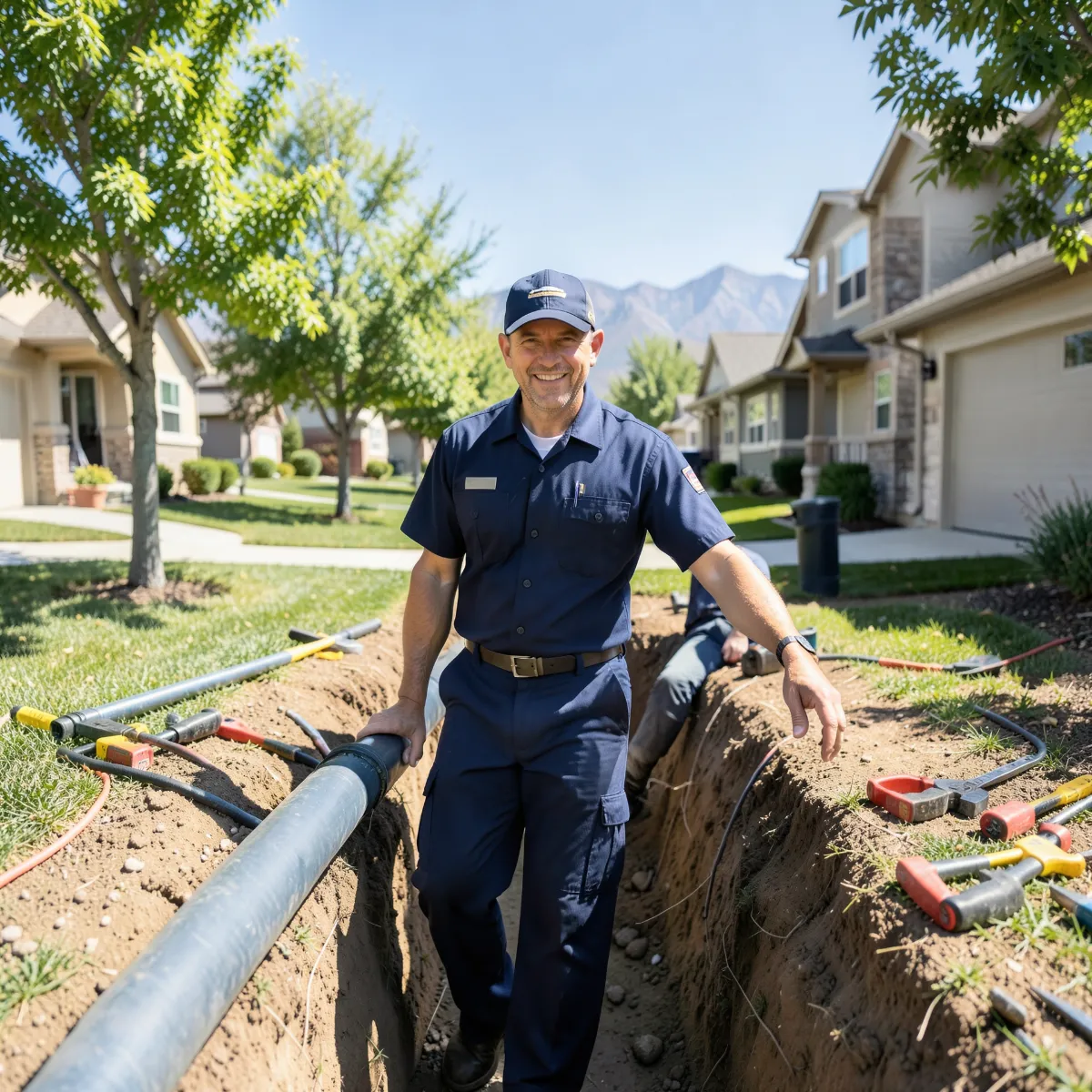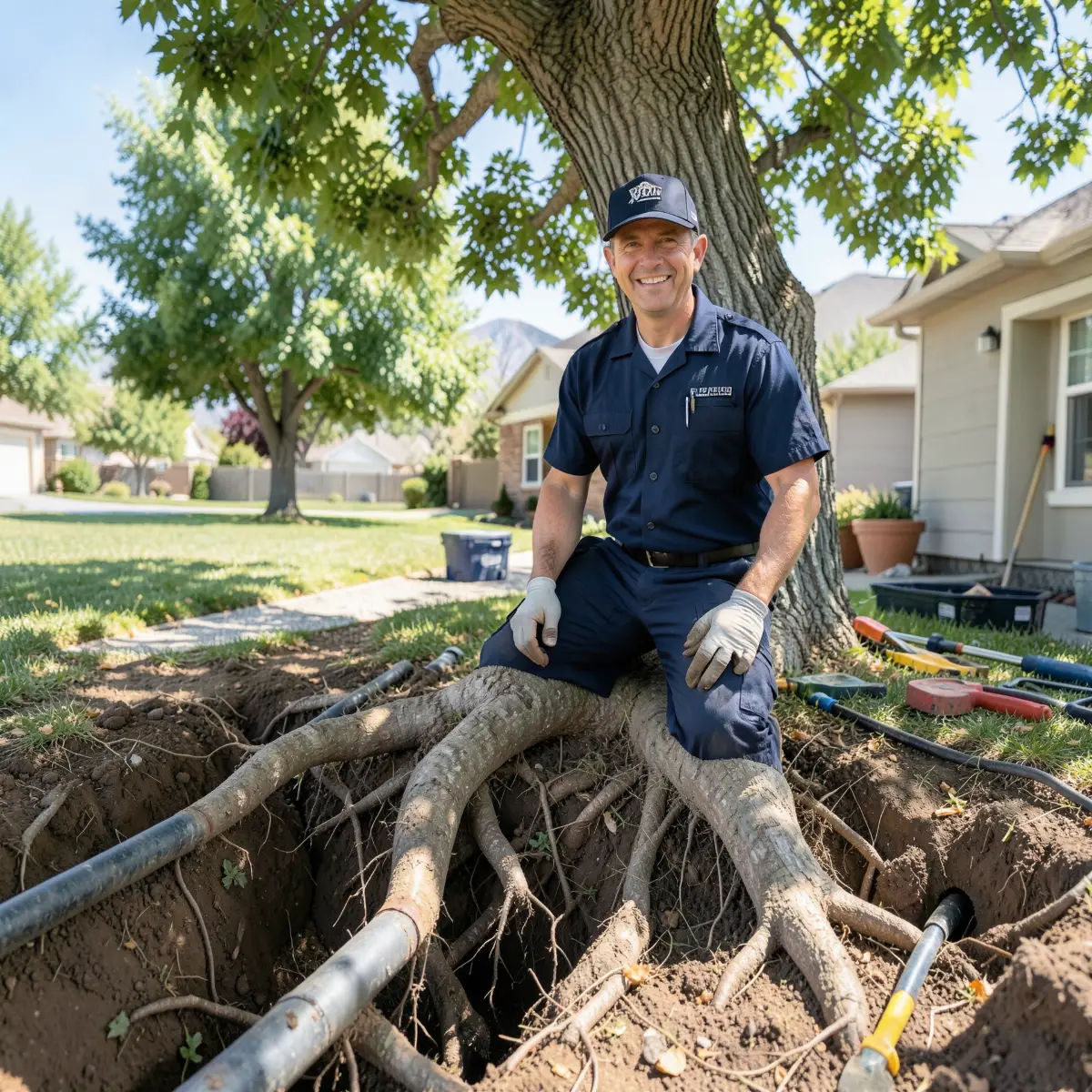
Arvada's tree canopy — the cottonwoods along the creek corridors, the silver maples lining older residential streets, the elms in established front yards — is genuinely beautiful. It is also one of the most persistent contributors to sewer problems in the city. Tree roots and sewer laterals have been in conflict since the first lateral was laid in Arvada, and the roots have a lot of advantages.
The pattern is almost always the same: intermittent slow drains, a clear scope showing roots at a joint, a clearing, six to eighteen months of quiet, and then the call again. Breaking the cycle requires understanding how roots operate — and committing to the right solution rather than the temporarily cheaper one.
How roots find and enter sewer lines
Tree roots follow moisture and nutrients. The water vapor escaping from a sewer lateral — even a well-sealed modern plastic pipe, and especially an older clay or Orangeburg lateral — creates a moisture gradient in the soil that roots reliably track. The root system is not looking for your pipe specifically; it is following a chemical trail toward what it needs.
Entry happens at the weakest point in the pipe wall. For clay tile laterals, that is the bell-and-spigot joint — a socket connection held with mortar or a rubber gasket that loosens over decades of soil movement. The root enters as a single fine hair root and, once inside, branches aggressively into the nutrient-rich wastewater stream. Over months and years, what started as a hairline infiltration becomes a root mass that catches toilet paper and debris on every flush.
Modern PVC pipe is more resistant — the joints are solvent-welded and do not gap in the same way — but even PVC is not immune. Roots find longitudinal cracks from improper installation, shifted fittings, or external mechanical damage. In Ralston Valley, where mature trees near Ralston Creek have extensive root systems, even relatively newer plastic laterals can develop root issues at compromised joints.
Warning signs of root intrusion
Root intrusion rarely announces itself loudly until the root mass is significant. The early signs are easy to dismiss: a bathroom drain that is slightly slower than it used to be, a toilet that takes two flushes when one used to work, a floor drain that bubbles occasionally when the washer runs. These are early-stage intrusion signs and worth taking seriously.
As the root mass grows, the symptoms become harder to ignore: multiple fixtures slow simultaneously, gurgling from drains and toilets, and eventually sewage backup at the lowest fixture in the house — typically a basement floor drain or ground-floor tub. By this point the root mass has grown to the point of near-complete restriction.
One diagnostic clue is seasonality. Root intrusion often worsens in spring when trees are aggressively pushing new growth, and in late summer during drought when roots extend farther seeking moisture. If your slow-drain season has a pattern, that pattern is telling you something.
- Slow drains at the lowest fixture in the house
- Gurgling sounds from toilets or floor drains when another fixture runs
- Toilet requiring multiple flushes for solid waste
- Recurring slow-drain problem in the same location
- Sewage odor inside the house or near the cleanout in the yard
- Unusually lush, green growth in a strip of yard over the sewer lateral
Clearing roots vs. solving the problem
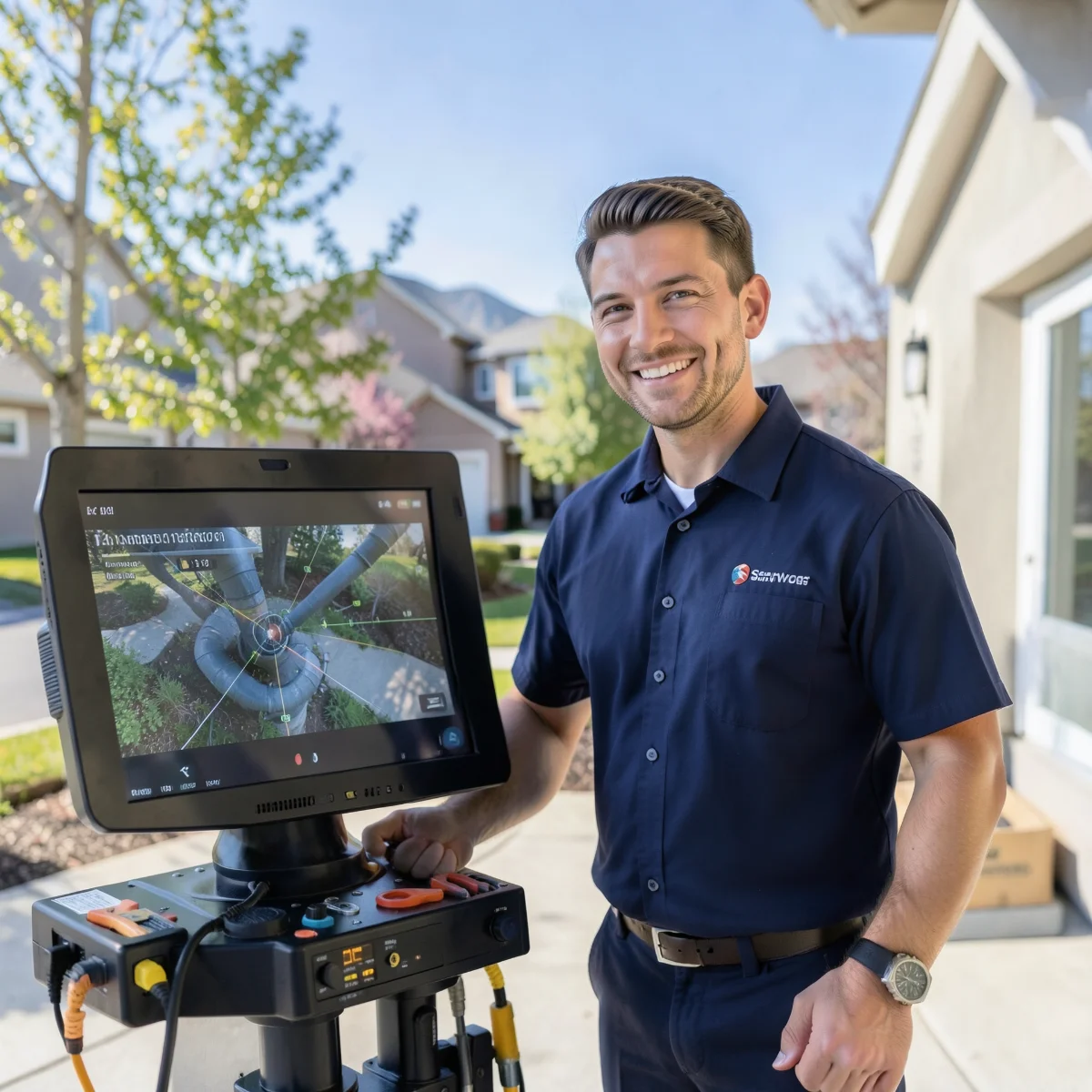
A sewer camera inspection is the essential diagnostic step. Camera inspection shows the location of intrusion, the extent of the root mass, and critically, the condition of the host pipe. That last point determines whether clearing is a viable long-term strategy or whether repair or replacement is the right answer.
If the host pipe is in good structural condition — no cracks, no belly, adequate bore — hydro jetting with a root-cutting nozzle is highly effective. Hydro jetting at 3,000+ PSI with a rotating root-cutting head shreds root mass back to the pipe wall and flushes the debris. A post-jetting camera pass confirms the pipe interior. In a structurally sound pipe, this approach combined with regular inspection can manage root intrusion for many years.
If the host pipe is cracked, severely deformed, or deteriorated — common in clay tile and Orangeburg of a certain age — clearing the roots is temporary. The pipe needs repair or replacement, and trenchless options should be the first conversation. CIPP lining seals joints permanently, eliminating the root entry point rather than just cutting back what has already entered.
Root inhibitors: what actually works
Copper sulfate and foaming RootX are the two most common chemical root inhibitors available to homeowners and plumbers. Both work by killing fine root hair at the pipe surface when applied via the cleanout or toilet. They do not eliminate established root masses and are most effective as maintenance after jetting — applied within a few weeks of a clean jetting pass while the roots are still fine growth.
They are not a substitute for camera inspection and clearing. Applied to a line with significant root mass and debris buildup, they have limited ability to reach the root tissue effectively. Think of them as maintenance between professional cleanings, not a replacement for professional service.
No root inhibitor affects roots growing outside the pipe. The tree's root system continues to push toward the pipe. The inhibitor only affects the tissue that makes contact with it inside the pipe wall. It buys time; it does not change the underlying dynamic between your trees and your lateral.
Key takeaways
- Roots enter sewer laterals through joint gaps and cracks — clay tile and older pipe are most vulnerable.
- Early signs include slightly slow drains and occasional gurgling — these are worth investigating before a backup occurs.
- Camera inspection determines whether hydro jetting or pipe repair/replacement is the right answer.
- Chemical root inhibitors are maintenance tools applied after jetting — not replacements for professional clearing.
- CIPP lining permanently seals joints, eliminating the root entry point rather than just cutting back existing roots.
Frequently asked questions
Removing the tree eliminates future root growth, but existing roots in the soil do not die immediately — they can persist for years. And roots already inside the pipe remain until the pipe is cleaned. Tree removal solves the long-term root pressure but does not repair the pipe or immediately clear the intrusion.
In a structurally sound pipe with moderate root intrusion, annual hydro jetting is a common maintenance schedule. A camera inspection after each jetting tells you how fast the roots are returning and helps calibrate the right interval for your specific situation.
Standard homeowner's policies exclude gradual damage — including root intrusion — because it is a maintenance issue rather than a sudden event. A sewer backup endorsement may cover the resulting sewage backup damage but typically not the pipe repair itself. Review your specific policy.
Local plumbing help mentioned in this article
Service areas
Need a hand from a local Arvada plumber?
Whether it is an emergency or a project you have been putting off, Arvada Pro Plumbing dispatches locally, 24/7, with upfront pricing. Call now or request service online.