A supply line that is dripping at a pinhole in a wall cavity may run for months before the evidence becomes visible on the surface. By then, the insulation is saturated, the drywall is compromised, and — depending on how long it has been wet — mold has taken hold in the wall space. The cost to repair moves from hundreds to thousands based on how late the detection happens.
In Arvada's older housing stock, hidden leaks are a particular concern. Galvanized supply lines corrode from the inside out, and the corrosion pinholes often develop at fittings and joints inside walls, under slabs, or in crawl spaces. Knowing what to look for — and understanding how professional leak detection works — is the difference between catching a problem early and discovering it during a bathroom renovation.
The water bill test: your first indicator
An unexplained increase in your water bill — with no obvious explanation like new irrigation, a filled pool, or additional occupants — is the most common first sign of a hidden leak. A supply line pinhole that drips at one drip per second wastes roughly 5–7 gallons per day, about 150–200 gallons per month. A moderate pinhole dripping continuously can waste 500+ gallons per month. That shows up clearly on a bill.
To isolate whether you have a leak: shut off every water-using fixture and appliance in the house (including the ice maker, dishwasher, and irrigation controller). Go to your water meter and check whether the dial or digital display is moving. Most residential meters have a small leak indicator — a triangle or star that rotates when any flow is detected. If the meter is moving with everything off, you have an active leak somewhere in the supply system.
Compare your bill month-over-month for the same period from the prior year, not just month-over-month within the current year. Seasonal variation from irrigation masks water-use increases when you compare adjacent months. Year-over-year comparison for the same month isolates unexpected increases more reliably.
Physical signs in the house
Warm spots on the floor — especially on a concrete slab or tile floor — that you cannot explain by sunlight or heating vents are a classic sign of a hot-water slab leak. A pinhole in a hot-water line under the slab causes constant warm water movement against the concrete, creating a noticeable warm patch above it. Slab leak repair is the correct response — the longer it runs, the more damage to the slab and subfloor.
Musty or mildew odors in areas with no history of moisture — under a sink cabinet, in a wall near a plumbing fixture, in a section of ceiling below a bathroom — point to water in a material that cannot dry out. Mold grows quickly in saturated drywall and insulation, and the odor often precedes visible damage by weeks. Do not dismiss mildew odor as a ventilation problem until you have confirmed no active water source.
Staining on walls or ceilings — brown or yellowish rings that appear and grow — means active water is tracking through the material. The source of the stain is rarely directly above it; water travels along framing members before breaking through. Finding the source requires professional investigation, not just patching the stain.
- Water bill increase with no obvious explanation — test the meter with everything off
- Warm or hot patches on floor over areas with no radiant heating
- Musty or mildew odor in enclosed areas near plumbing
- Bubbling or peeling paint on walls near supply lines or fixtures
- Staining on ceilings or walls — brown or yellowish rings or streaks
- Sound of running water with all fixtures off
- Soft or spongy floor area near bathroom fixtures or appliances
How professional leak detection works
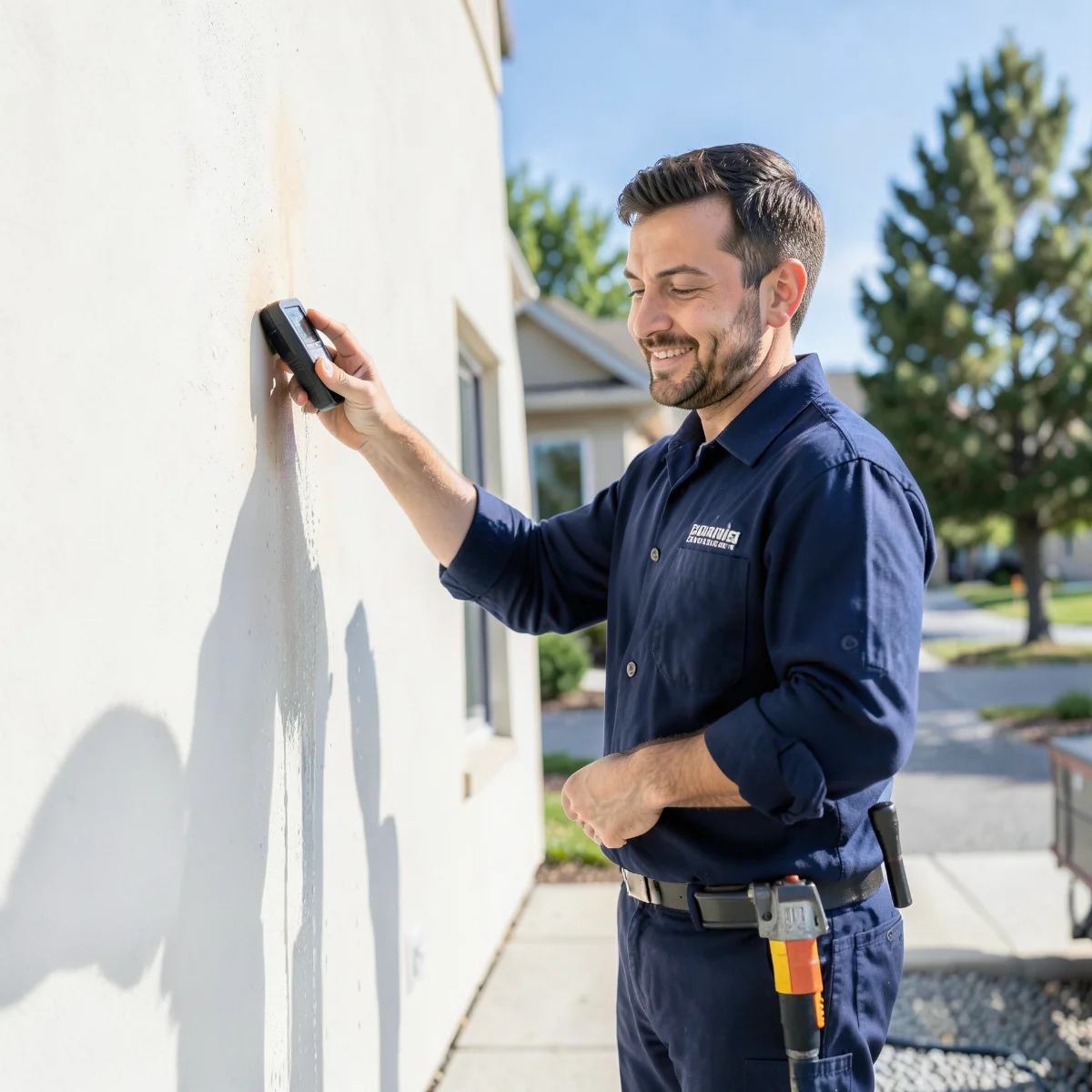
Professional leak detection uses acoustic listening equipment that amplifies the sound of water escaping under pressure through a pipe wall. A trained technician with an electronic stethoscope can isolate the sound of a supply leak in a wall or under a slab without opening anything. The sound profile of a supply-line pinhole is distinct from ambient building noise, and experienced detection typically narrows the location to within a foot or two.
Thermal imaging (infrared cameras) detects temperature differences at surfaces — a wet wall or floor section reads differently than a dry one. Combined with acoustic detection, thermal imaging provides a map of wet areas that helps confirm the leak location before any opening is made.
Modern smart leak monitors — Moen Flo, Phyn Plus, and similar whole-home devices — install at the main water line and monitor flow patterns continuously. They learn your household's normal usage pattern and alert you when flow occurs that does not match — small, continuous flows that indicate a slow leak rather than a fixture in use. These devices cannot tell you where the leak is, but they confirm one exists and alert you before it has had months to do damage.
When to call for leak detection in Arvada ZIP 80004
If you have confirmed the meter is moving with everything off, call a plumber promptly. Shut off the main water supply valve if you can, and call (207) 419-2600 for leak detection service. An active supply leak is losing water continuously and may be wetting structural materials every minute it runs.
Homeowners in 80004 and central Arvada often have mid-century galvanized supply lines that have reached the end of their reliable service life. A single detected pinhole in galvanized pipe is a reasonable indicator that other sections of the same pipe are in similar condition. Detection of one leak and repair of that section is a short-term solution; a conversation about repiping the galvanized supply lines is the honest long-term discussion.
Key takeaways
- Test your water meter with all fixtures off — steady movement indicates an active leak somewhere in the supply system.
- Warm floor patches, musty odor, and staining on walls or ceilings are physical signs worth investigating before visible water damage appears.
- Professional acoustic and thermal leak detection locates hidden leaks without speculative wall opening.
- Slab leaks require prompt attention — delay accelerates structural damage and increases repair cost significantly.
- In older Arvada homes with galvanized pipe, one detected pinhole often predicts additional failures in the same pipe system.
Frequently asked questions
Leak detection service runs broadly in the range of $150–$400 depending on the technology used, the complexity of the search, and whether the leak is accessible or requires extensive investigation. This cost is almost always far less than the cost of discovery-by-damage — finding a leak after drywall, flooring, or structural material is saturated.
No leak waits without getting worse. A pinhole that drips today will enlarge as corrosion progresses. Water that infiltrates a wall cavity or under a slab does structural damage on a continuous basis. The only variable is how long before the damage becomes visible — not whether it is occurring. Act on confirmed or suspected leaks promptly.
Yes — a slab leak shows up as persistent low-flow consumption that does not correspond to any fixture use. A smart monitor will alert you to the anomaly. However, it cannot locate the leak; that requires professional detection equipment. A smart monitor is an early-warning system that gets you to professional diagnosis faster, not a substitute for it.
Local plumbing help mentioned in this article
Service areas
Need a hand from a local Arvada plumber?
Whether it is an emergency or a project you have been putting off, Arvada Pro Plumbing dispatches locally, 24/7, with upfront pricing. Call now or request service online.