A slow kitchen drain is annoying. Slow drains in three rooms at the same time — with a toilet that gurgles when the dishwasher runs — is a warning about your main sewer line. The distinction matters because the fix is completely different, and waiting too long on a main-line blockage means sewage backing up into the lowest drain in your house.
In Arvada, the most common culprits are tree roots in the sewer lateral, grease and debris accumulation in older pipe, and — in homes built before 1980 — collapsing clay or orangeburg sewer lines. Here is how to tell what you are dealing with and what happens next.
Branch clog vs. main-line clog: how to tell the difference
A branch clog affects only one fixture or one section of the house. Clear the kitchen drain and the problem is isolated to the kitchen. A main-line clog is downstream of every branch — which means it affects all of them. Use a washing machine and the toilet backs up. Flush a toilet on the upper floor and a floor drain in the basement burbles. These cross-fixture reactions are the tell.
The bathtub test is useful: if you flush the toilet and water rises in the bathtub drain, the blockage is in the main line, not in the toilet branch. The backed-up water is finding the lowest available exit, which is often the tub because its trap sits lower than the toilet flange.
The warning signs in detail
Multiple slow drains simultaneously is the number-one indicator. One slow drain is a branch problem. Two or more on different floors or fixture types points main-line. Gurgling sounds from toilets or floor drains when you run another appliance — dishwasher, washing machine, utility sink — is also a reliable indicator. The gurgle is air being displaced from a partial blockage as water tries to push past it.
Sewer odor inside the house is worth taking seriously. A faint, intermittent sewer smell is sometimes a dry trap — a floor drain that has not been used in months and whose water seal has evaporated. But persistent odor combined with slow drains suggests a main-line problem that is backing gas up through the system.
- Multiple fixtures slow at the same time
- Toilet gurgles when the washer, dishwasher, or another toilet drains
- Bubbles in the toilet bowl without flushing
- Sewage odor persistent inside the house
- Water backing up in the bathtub or basement floor drain
- Wet, lush, or sunken patches of grass over the sewer lateral in the yard
What causes main-line clogs in Arvada
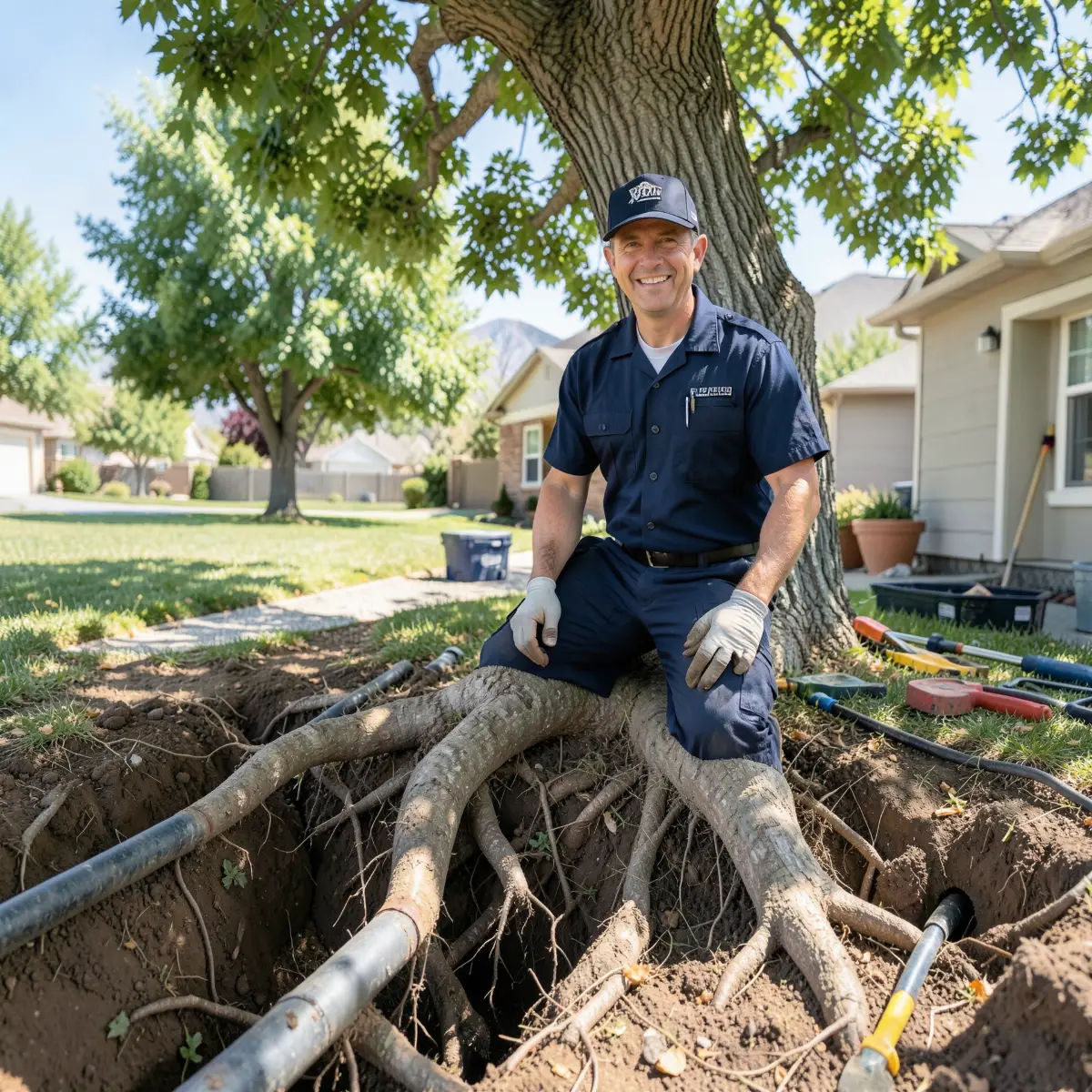
Tree roots are the dominant cause in established Arvada neighborhoods. Mature cottonwoods, silver maples, and other common Front Range trees push roots 20–40 feet from the trunk looking for moisture. Clay-soil movement — which Arvada's geology is prone to — shifts pipe joints slightly over years, and roots exploit any gap. In Ralston Valley near Ralston Creek, the combination of mature trees and moisture-seeking roots makes sewer camera inspections a regular call.
In homes built before 1960, the sewer lateral may still be clay tile — sections of fired clay pipe joined loosely at the ends. These joints are the entry point for roots, and the pipe itself becomes brittle and prone to collapse. Orangeburg pipe (a compressed tar-paper product used as a cheap alternative in the 1940s–60s) softens and deforms over time, eventually restricting or collapsing entirely. Neither material responds well to snaking alone.
Grease accumulation is common in kitchen-heavy households regardless of pipe age. Grease combines with soap and hard-water scale to form a waxy buildup that snaking disrupts temporarily but rarely clears completely. Hydro jetting blasts grease and soft buildup completely off the pipe wall.
What a plumber does: camera, then the right tool
The right response to a suspected main-line clog starts with a camera inspection, not a snake. Running a snake blind into a collapsed or root-infiltrated line sometimes punches through the blockage temporarily — and sometimes pushes debris into a worse position. A sewer camera shows what you are actually dealing with before any tool goes down the line.
If the problem is roots, hydro jetting combined with a root-cutting head clears the line and cuts roots back to the pipe wall. If the problem is a collapsed or severely deteriorated section, sewer line repair — whether spot repair or full lateral replacement — is the lasting fix. Snaking a collapsed section only delays the next call by a few months.
Key takeaways
- Multiple fixtures slow at once, cross-fixture gurgling, and backing water all point to the main sewer line, not a branch.
- Stop using water in the house the moment sewage backs up into a floor drain or tub.
- Tree roots are the leading cause of main-line problems in Arvada's established neighborhoods.
- Camera inspection before snaking is the diagnostic step that prevents wasted effort and repeated service calls.
- Clay tile and orangeburg sewer pipe — common in pre-1960 Arvada homes — require evaluation, not just clearing.
Frequently asked questions
Consumer-grade drain snakes are designed for branch clogs, not main sewer laterals. A main-line snake (closet auger or drain machine) requires experience to use without damaging pipe — especially older clay or orangeburg. For anything beyond a single branch clog, professional service is the right call.
In older Arvada homes with known root intrusion, annual hydro jetting is reasonable. In newer homes with no history of problems, every 3–5 years is a common professional recommendation, though a camera inspection can tell you definitively what your specific pipe needs.
Standard homeowner's policies usually exclude sewer backups. A separate sewer/water backup endorsement — which most insurers offer as an add-on — covers the cleanup and damage. Given the cost of a sewage cleanup event, this endorsement is typically worth the premium.
Local plumbing help mentioned in this article
Service areas
Need a hand from a local Arvada plumber?
Whether it is an emergency or a project you have been putting off, Arvada Pro Plumbing dispatches locally, 24/7, with upfront pricing. Call now or request service online.