Ask yourself right now: where is your home's main water shut-off valve, and when did you last test it? If the answer to either part of that question is 'I don't know,' you have a five-minute task to complete before any plumbing emergency does the teaching for you. A burst pipe, a failed washing machine hose, a broken supply line under a sink — every one of these emergencies gets dramatically worse if you cannot stop the water within the first few minutes.
This is not complicated knowledge. It is the kind of thing every homeowner should be able to do in the dark, half-asleep, with water spraying in the background. This post walks through finding your shut-off, testing it, knowing when to use the street curb stop instead, and the one reason many Arvada homeowners discover their valve doesn't work when they need it most.
Where to find the main shut-off valve
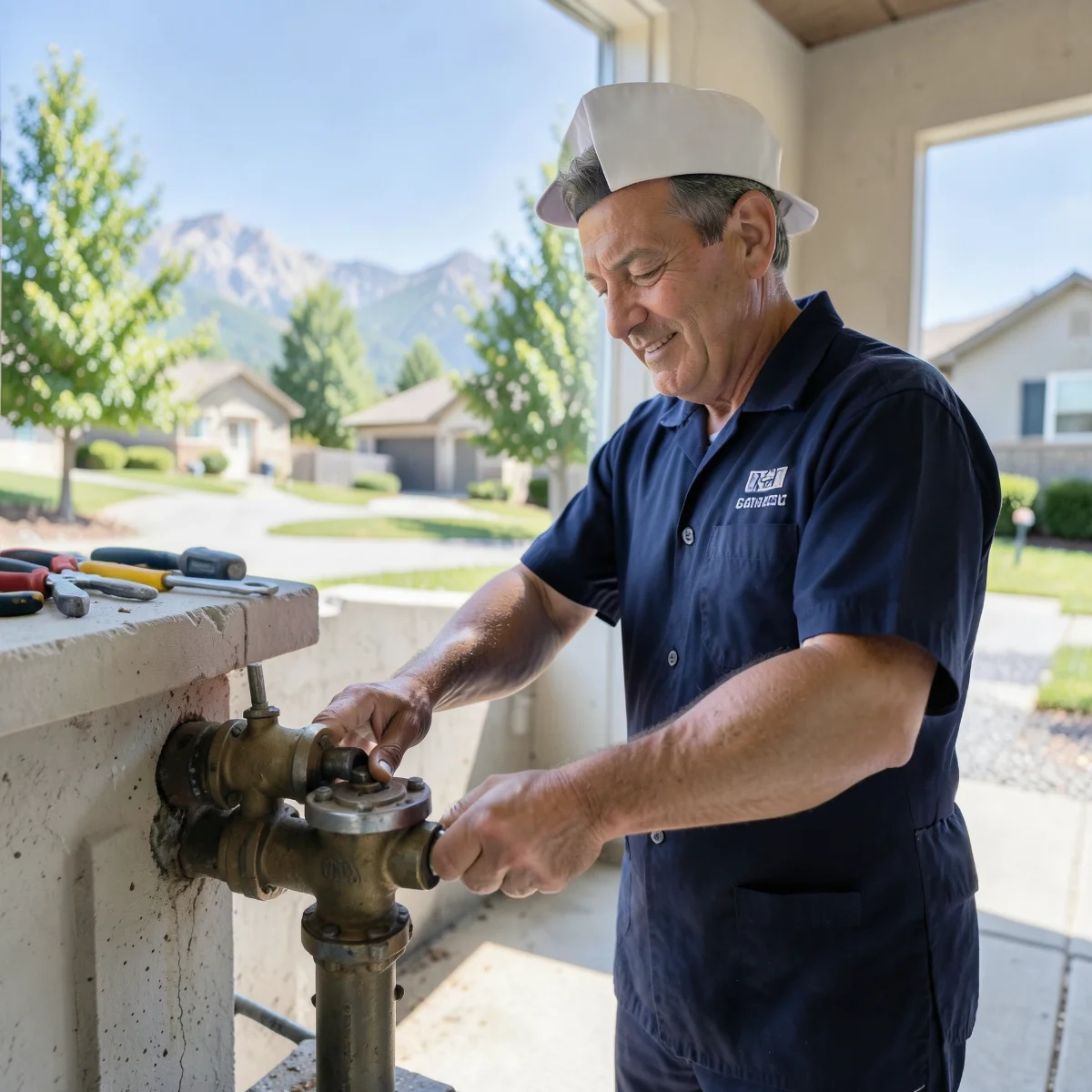
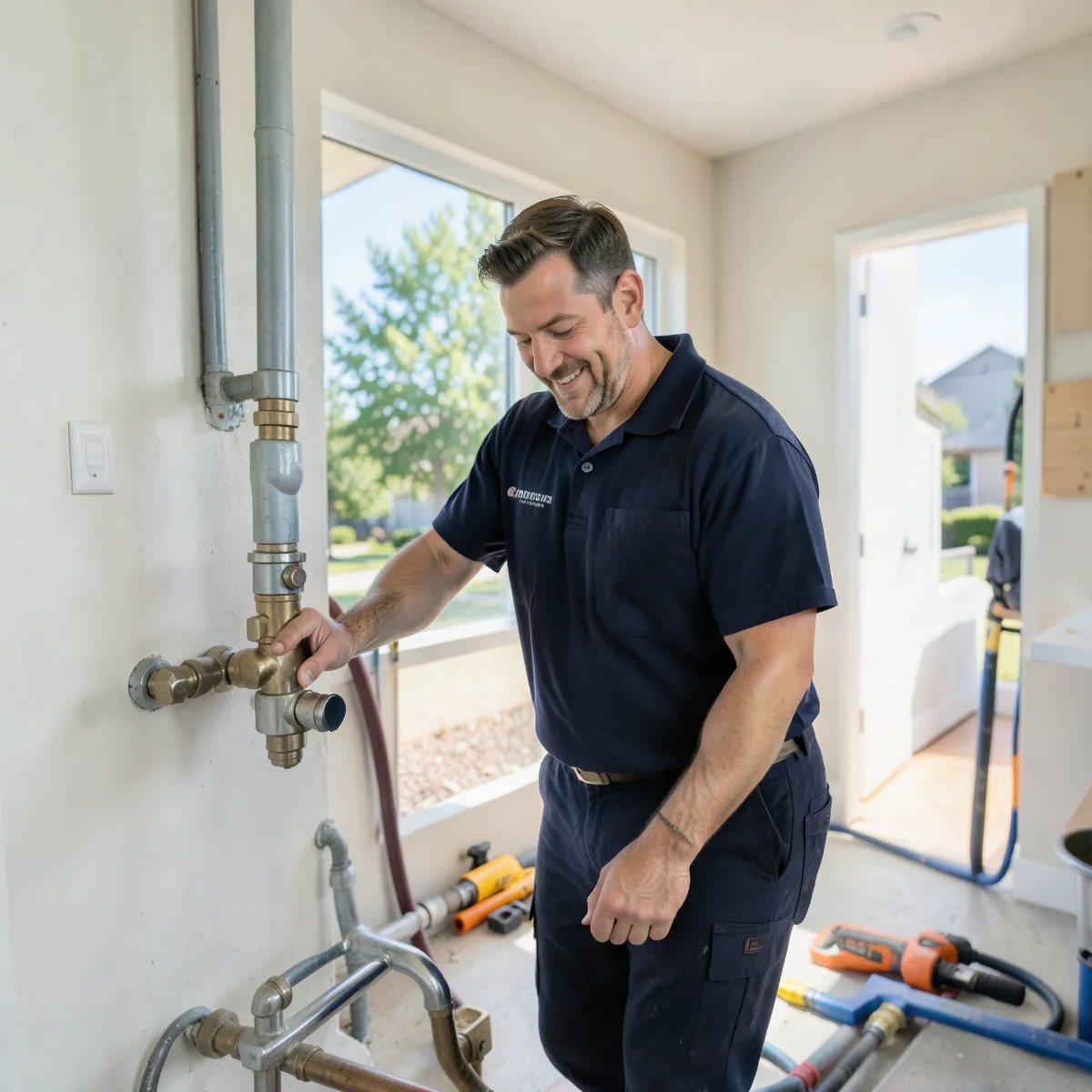
In Arvada, the main water shut-off is almost always in one of a few places. In homes with a basement — which describes most of Arvada's housing stock — it is typically on the interior wall that faces the street, at or near the point where the water service line enters the house from underground. Look for a pipe coming through the foundation wall and a gate valve (round wheel-style handle) or a ball valve (lever handle) near where that pipe enters the conditioned space.
In homes without a basement, check the utility closet, the mechanical room, the crawl space access, or near the water heater. Townhomes and condos may have the shut-off inside a wall panel in a hallway or utility area. If your home was built in the 1990s or later, there is often a pressure-reducing valve (PRV) near the main shut-off — that assembly makes it easier to find.
In Olde Town Arvada and other older parts of the city, some homes have original gate valves that are decades old. These can look functional but may not fully stop water flow when closed. More on that below.
- Basement homes: interior wall facing the street, near the service line entry point
- No-basement homes: utility closet, mechanical room, near the water heater
- Townhomes/condos: wall panel in hallway or utility area
- Look for a round wheel handle (gate valve) or lever handle (ball valve)
How to test your shut-off valve right now
Testing the valve is a two-minute task. Turn it fully clockwise (gate valve) or rotate the lever 90 degrees so it is perpendicular to the pipe (ball valve). Then go to the faucet closest to the valve — typically a utility sink in the basement or a laundry sink — and open the hot and cold. If flow stops completely, the valve is working. If it slows but doesn't stop, or doesn't slow at all, the valve is failing.
Gate valves — the wheel-handle style common in Arvada homes built before the 1990s — are the most likely to fail after years without use. Hard-water scale deposits in the valve body, the brass stem corrodes, and when you finally turn it in an emergency, it either won't move or turns freely without actually stopping flow. You find this out at the worst possible moment.
If your valve is suspect, call a plumber to replace it on a non-emergency basis. Ball valves are far more reliable — they either work or they don't, and they don't degrade as gradually as gate valves. The repair is inexpensive; the insurance value is significant. If you live in Olde Town or any home built before 1985, testing the shut-off now is especially important.
The street curb stop: your backup option
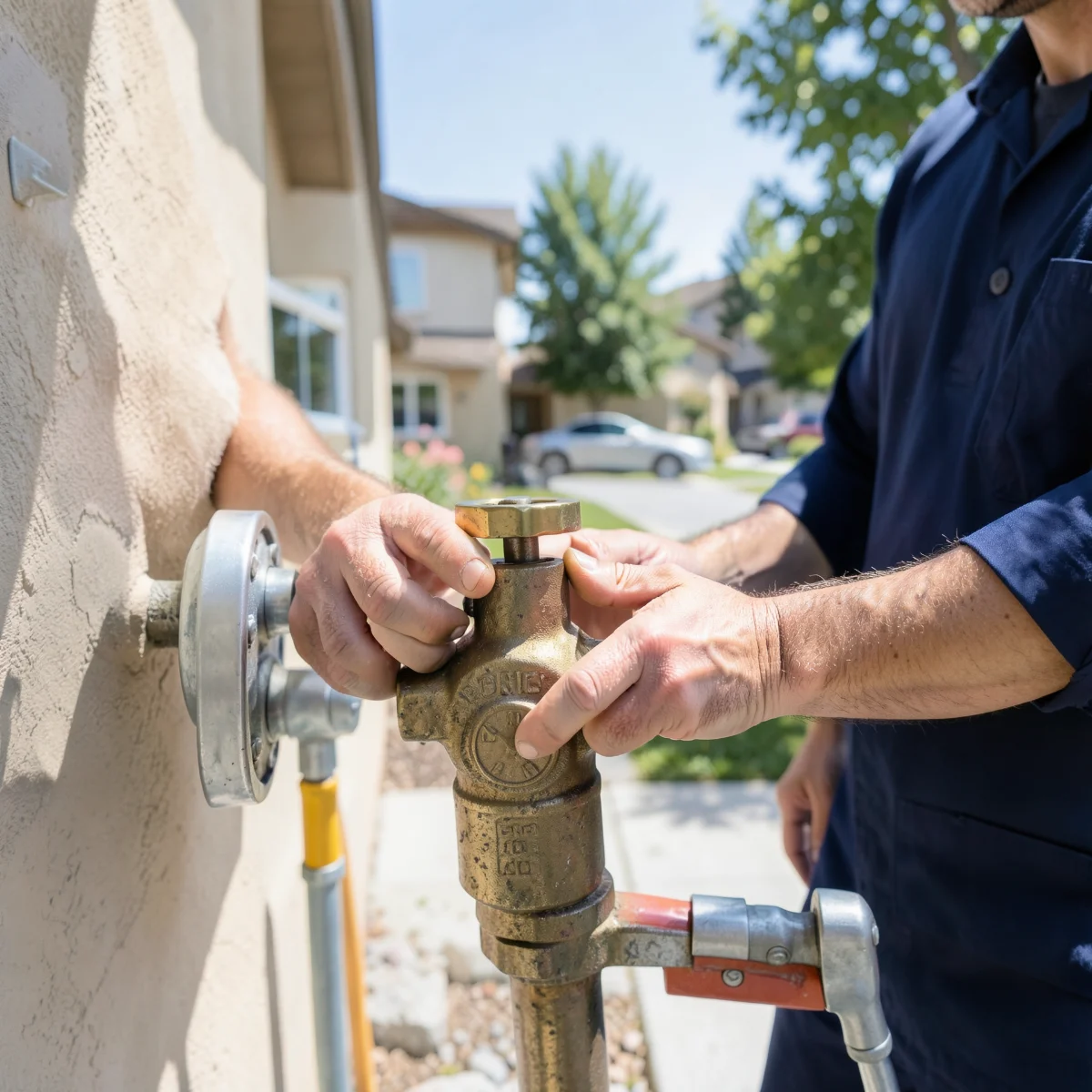
If the interior main shut-off fails or you cannot locate it, there is a curb stop (also called a curb shut-off or street valve) at or near the property line — usually under a round metal cover in the sidewalk or parkway strip. This is the valve the city uses to shut off service to your home.
Closing the curb stop requires a special T-handle or meter key tool — a long rod with a socket end that fits the valve stem several inches underground. These tools cost around $20–$30 at hardware stores. In a true emergency, you can also call the city utility to close it if you cannot locate or operate the curb stop yourself.
For a burst pipe repair situation or a severely leaking supply line, getting the curb stop closed is the priority if the interior valve has failed. Every minute the water runs means more water in the structure.
Individual fixture shut-offs: the other valves to know
The main shut-off stops water to the entire house. For isolated problems — a toilet that is overflowing, a supply line under the sink that has let go — the fixture shut-off (also called an angle stop) closes only that fixture's water supply without affecting the rest of the house.
Angle stops are the small oval-handle valves behind toilets and under sinks. Test these annually by turning them fully clockwise and confirming water to that fixture stops. In Arvada's hard-water environment, angle stops that have not been operated in years are frequently stuck or fail to fully close. Finding this out during a calm test is far better than discovering it while your bathroom floor is flooding.
For emergency plumbing situations involving a single fixture, closing that fixture's angle stop and leaving the main on is the right move — it limits disruption to the rest of the household while you wait for service.
After an emergency: what to tell the plumber
When the plumber arrives, have three pieces of information ready: where the water first appeared, when it started, and whether you smelled or heard anything unusual before the failure. This speeds diagnosis significantly. Also tell them whether the shut-off valve performed as expected or showed signs of partial failure — a valve that only partially closed may need replacement as part of the job.
Document everything before cleanup begins. Photos and video of the source, the spread of water, and any damaged finishes or contents support your homeowner's insurance claim. Insurance adjusters work from documentation; a half-hour of photography before you start drying pays dividends later.
Key takeaways
- Find your main shut-off valve today — the one task that can limit catastrophic water damage in an emergency.
- Test the valve: close it fully and confirm a nearby faucet goes dry. A gate valve that spins but doesn't stop flow needs replacement.
- Keep a curb-stop key (meter key) accessible — it is your backup if the interior valve fails.
- Test individual fixture shut-offs (angle stops) annually; hard-water scale seizes them over time.
- Document damage before cleanup for insurance — photos and video before anything is moved or dried.
Frequently asked questions
Condos often have a unit shut-off valve in a wall panel in the hallway or inside a utility chase — check your HOA documentation or ask building management for the location. There is also a building main, but only building management or the HOA can close that. Knowing your unit's specific shut-off location is essential.
A valve that weeps after being operated has a worn packing seal. This is a common outcome when an old valve is turned for the first time in years. Close it back down snugly (don't overtighten), then call a plumber to replace the packing or replace the valve entirely on a scheduled visit. Do not leave a leaking valve unattended.
In Arvada, the meter is typically at or near the property line and belongs to the city. Your interior main shut-off is downstream of the meter — inside the house, after the service line enters the foundation. Closing your interior valve does not affect the meter; closing the curb stop does.
Local plumbing help mentioned in this article
Need a hand from a local Arvada plumber?
Whether it is an emergency or a project you have been putting off, Arvada Pro Plumbing dispatches locally, 24/7, with upfront pricing. Call now or request service online.