Arvada sits on the Front Range where municipal water routinely measures 15–25 grains per gallon (GPG) of hardness — roughly three to four times what water treatment guidelines consider "moderately hard." You feel it every morning in the shower, you see it on your faucets, and you pay for it when a water heater dies years before it should.
Hard water is not a crisis, but ignoring it is expensive. This post breaks down exactly what scale does to each part of your plumbing system, which warning signs to take seriously, and where a water softener or whole-home water filtration system makes real financial sense.
What makes Arvada water so hard
Our water comes primarily from the South Platte and Colorado River systems via Denver Water. As snowmelt travels through limestone and sedimentary rock in the Rockies, it picks up calcium and magnesium ions — that is dissolved hardness. By the time it reaches your tap in Arvada, those ions are concentrated enough to deposit visible scale on almost any surface they contact.
Altitude plays a supporting role. Water boils at roughly 202°F here instead of 212°F at sea level, and that lower boiling point means mineral precipitation happens slightly faster inside water heaters and appliances. It is a subtle effect, but it compounds over years.
The result: Arvada homeowners typically see more aggressive scale accumulation than residents of softer-water cities. Knowing that up front lets you build maintenance habits — or invest in treatment — before the damage is done.
What scale does to your pipes and fixtures
Inside supply lines, scale narrows the bore over years. In older galvanized pipe — which was already corroding — scale accelerates the constriction. You notice low pressure first in showers and faucets at the far ends of the house, where flow has to travel farthest through increasingly narrowed pipe.
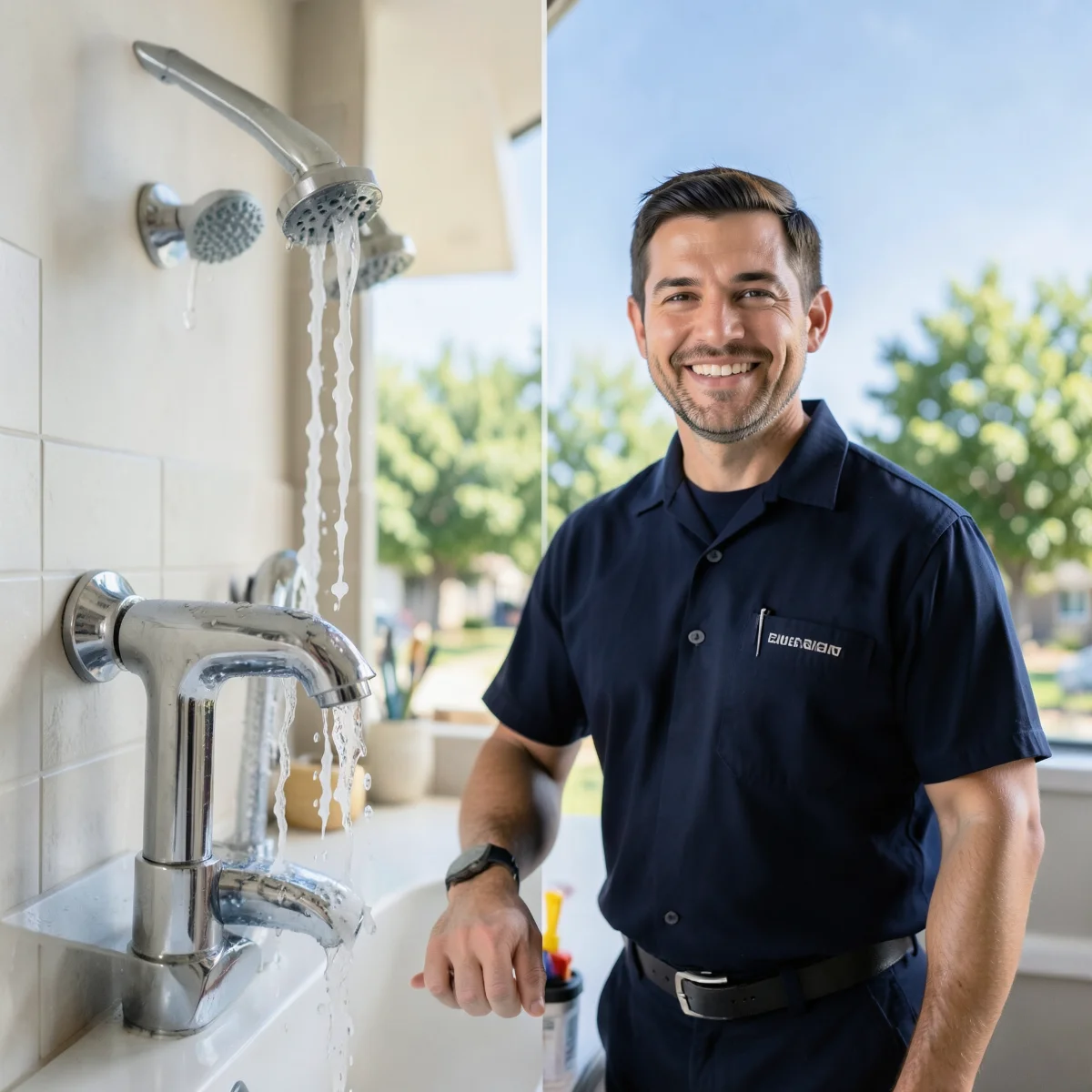
Aerators and showerheads clog fastest because they are the final pinch point. Unscrewing the aerator screen on a kitchen faucet in a hard-water home after a year or two often reveals a disc of white mineral so thick it cuts water flow nearly in half. This is a five-minute fix — but one that needs to become a routine.
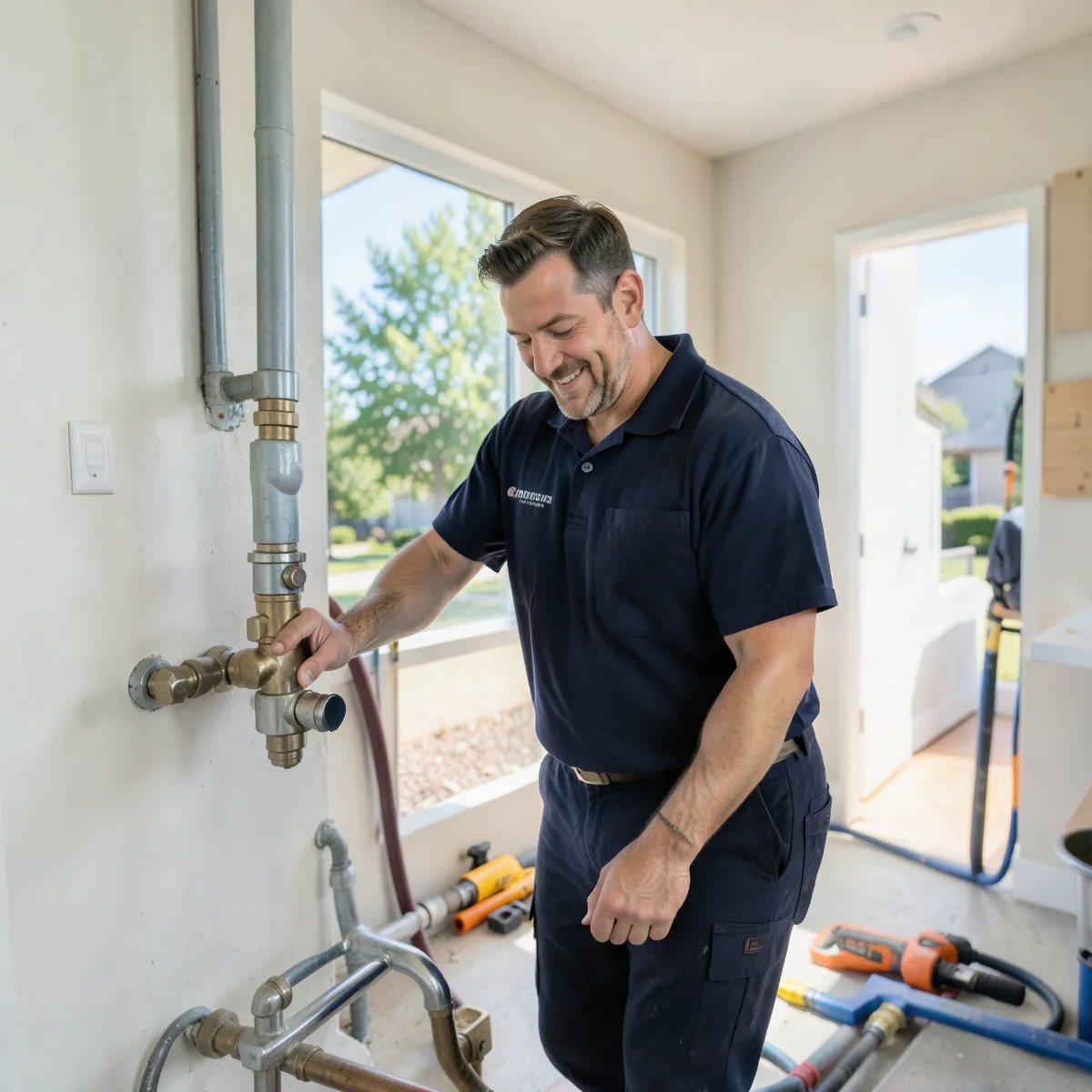
Shut-off valves are a subtler victim. Scale stiffens the seats in angle stops under sinks and toilets. A valve that has not been exercised in ten years in hard water may not fully close during an emergency. Testing and lubricating shut-offs annually is a habit worth building. If yours are seized, call before you need them.
- Aerators and showerheads: clean or replace every 12–18 months
- Angle-stop valves under sinks and toilets: exercise (quarter-turn) annually
- Dishwasher and washing machine inlet screens: inspect yearly
- Supply lines braided steel: inspect for corrosion at fittings every 3 years
Hard water and water heater lifespan
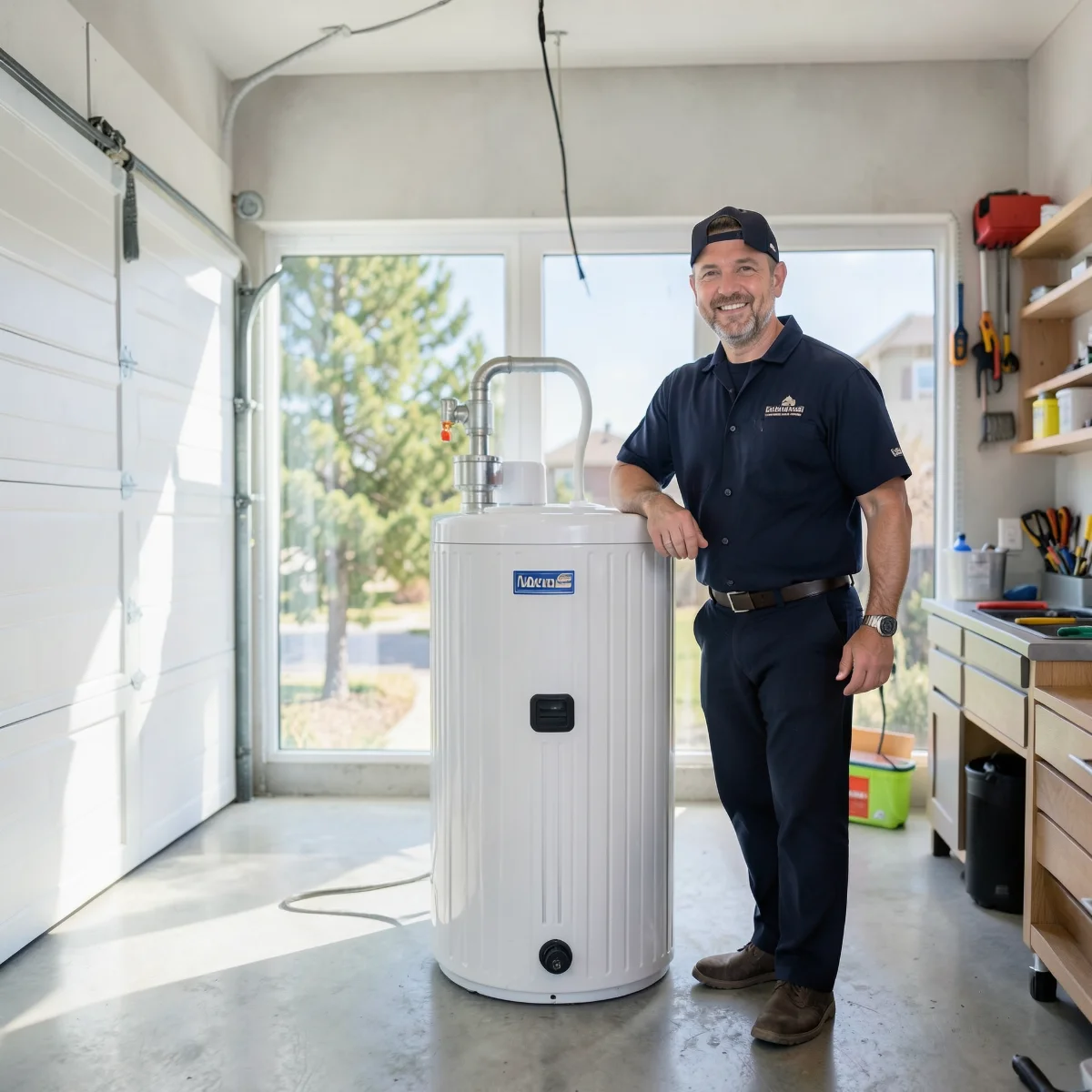
This is where hard water costs real money. Sediment — calcium carbonate that has precipitated out of solution — settles at the bottom of your tank. Once an inch or two builds up, it acts as an insulating blanket between the burner and the water. The burner runs longer and hotter to compensate, stressing the tank lining and burning out elements faster in electric units.
The industry average tank heater lifespan is 8–12 years nationally. In Arvada, with no flushing or treatment, expect the low end of that range — sometimes 6–8 years. An annual flush that removes accumulated sediment can legitimately add years to the unit.
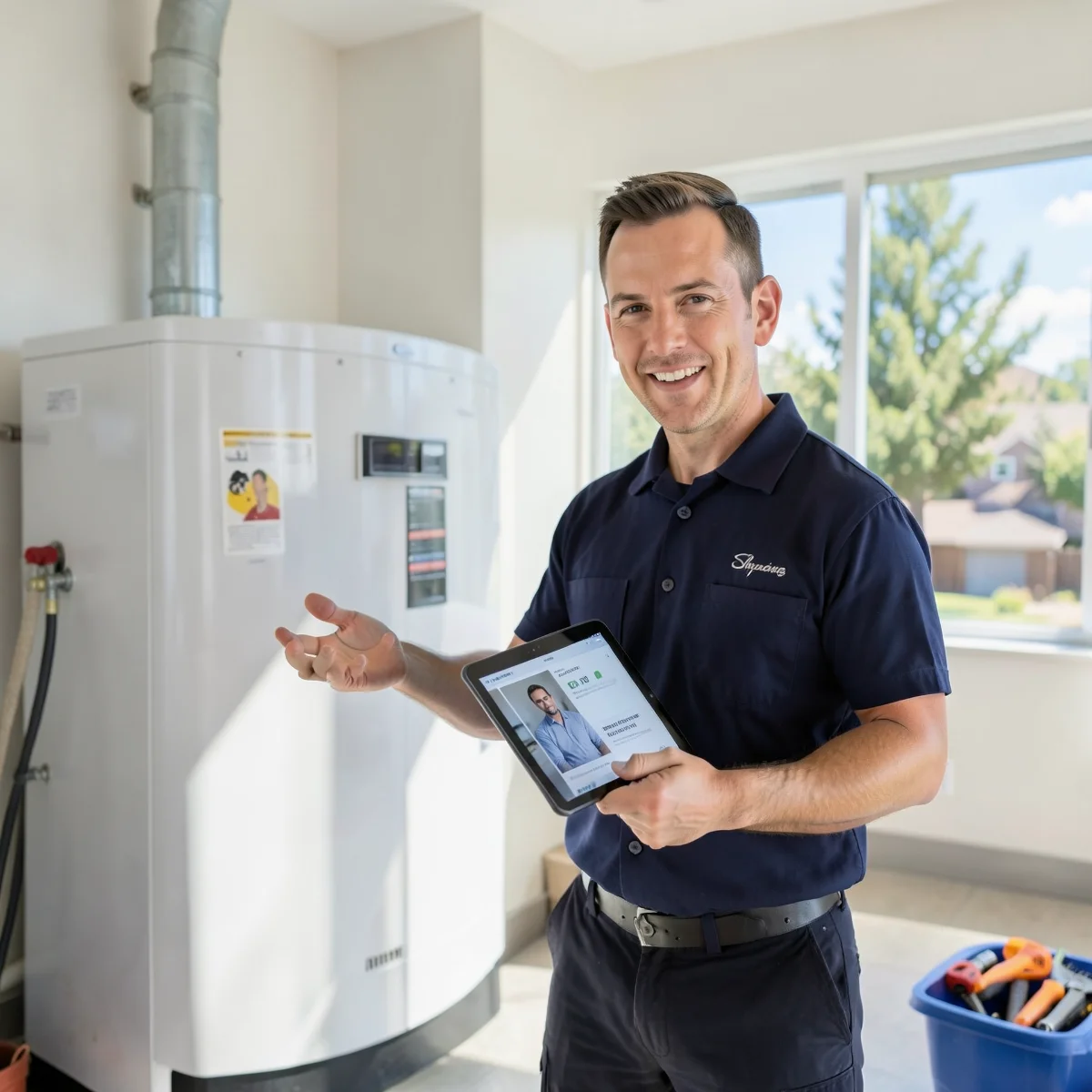
Tankless units are not immune. At 5,300-ft altitude they are already derated from their rated BTU output; add scale on the heat exchanger and efficiency drops further, sometimes triggering error codes. If you have a tankless heater, a descaling flush every 1–2 years is not optional — it is maintenance the manufacturer requires to keep the warranty valid.
Water softeners vs. filtration: which is right for you
A water softener uses ion exchange to swap calcium and magnesium ions for sodium, removing hardness at the point of entry. It is the most effective single solution for protecting pipes, fixtures, and appliances. Salt-based softeners are the gold standard; salt-free conditioners (template systems) alter the crystalline form of minerals so they are less sticky but do not remove them. For Arvada's hardness levels, ion-exchange softeners outperform conditioners on appliance protection.
Whole-home water filtration systems address a broader set of concerns — sediment, chlorine taste, and in some cases specific contaminants — but do not soften water unless paired with a softener or specifically designed for hardness. They are often the right add-on for households that want both scale protection and improved taste.
Near Golden, water conditions are similar and the calcite-heavy geology of the foothills can push hardness even higher in some service areas. If you are in that corridor, a water test before selecting a treatment system pays for itself — sizing the resin bed correctly to your actual GPG means lower salt consumption and longer equipment life.
Maintenance steps you can do right now
You do not need a full treatment system to start protecting your plumbing today. Remove and soak aerators in white vinegar overnight — this dissolves most light-to-moderate scale. Do the same for removable showerheads. Wipe fixture exteriors with a 50/50 vinegar-water solution to slow visible buildup.
Flush your water heater annually. The process: turn the heater to pilot or the lowest setting, connect a garden hose to the drain valve, open a hot-water tap somewhere in the house to prevent a vacuum, and let the tank drain until the water runs clear. Refill, then restore normal temperature. If the drain valve weeps or won't close after draining, replace it before you need it in an emergency.
Key takeaways
- Front Range water in Arvada commonly measures 15–25 GPG — aggressive enough to shorten appliance life noticeably.
- Annual water heater flushes remove sediment and can add meaningful years to the unit's lifespan.
- Salt-based ion-exchange softeners are the most effective protection against scale damage in the Arvada hardness range.
- Aerators, showerheads, and shut-off valves need regular attention in hard-water homes — don't wait until flow stops.
- Altitude derating already stresses tankless heaters; scale on the heat exchanger compounds the problem, so annual descaling is essential.
Frequently asked questions
The simplest way is an inexpensive test strip from a hardware store. You can also request your water utility's annual quality report, which includes hardness readings. A plumber can also test on-site when scoping a softener installation.
Most manufacturers encourage softened water and some actually require it for warranty compliance. Check your heater's documentation. If your unit specifies an inlet hardness maximum, exceeding it without treatment can void the warranty.
At typical Arvada hardness levels, the sodium added by ion exchange is well under 100 mg per serving — below the threshold most people can detect. If you are sensitive to sodium, a small reverse-osmosis unit at the kitchen tap removes it entirely.
Local plumbing help mentioned in this article
Service areas
Need a hand from a local Arvada plumber?
Whether it is an emergency or a project you have been putting off, Arvada Pro Plumbing dispatches locally, 24/7, with upfront pricing. Call now or request service online.