Low water pressure is one of those problems that homeowners tolerate for months before deciding to investigate. The weak shower, the slow-filling bathtub, the kitchen faucet that barely gets dishes clean — it all adds up to a daily frustration that also signals something worth diagnosing. In Arvada, the causes are specific to the local environment, and guessing at the fix without a proper diagnosis almost always means opening the wrong valve, adding a filter that does not help, or — worst — missing a leak that is quietly doing structural damage.
The good news: most low-pressure problems in Arvada homes trace back to one of four sources, and each is identifiable without major diagnostic work.
The pressure-reducing valve: first thing to check
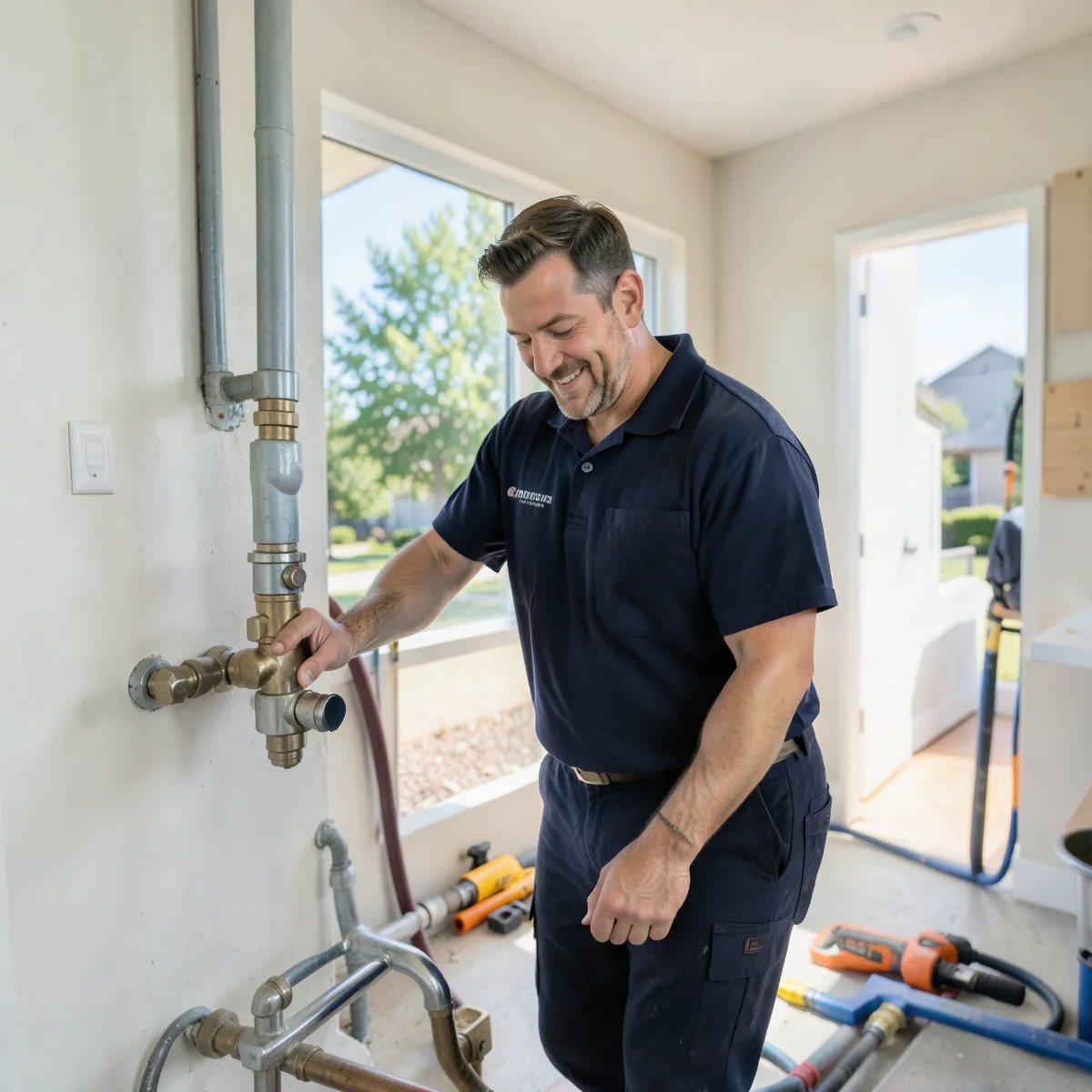
Most Arvada homes have a pressure-reducing valve (PRV) installed on the main water line where it enters the house — typically in the mechanical room or basement. The PRV limits incoming city water pressure (which can vary widely, sometimes over 100 PSI) to a safe residential range, usually 50–80 PSI. Over time, the diaphragm inside a PRV wears out or the internal seat becomes debris-fouled, causing the valve to restrict flow below the set point.
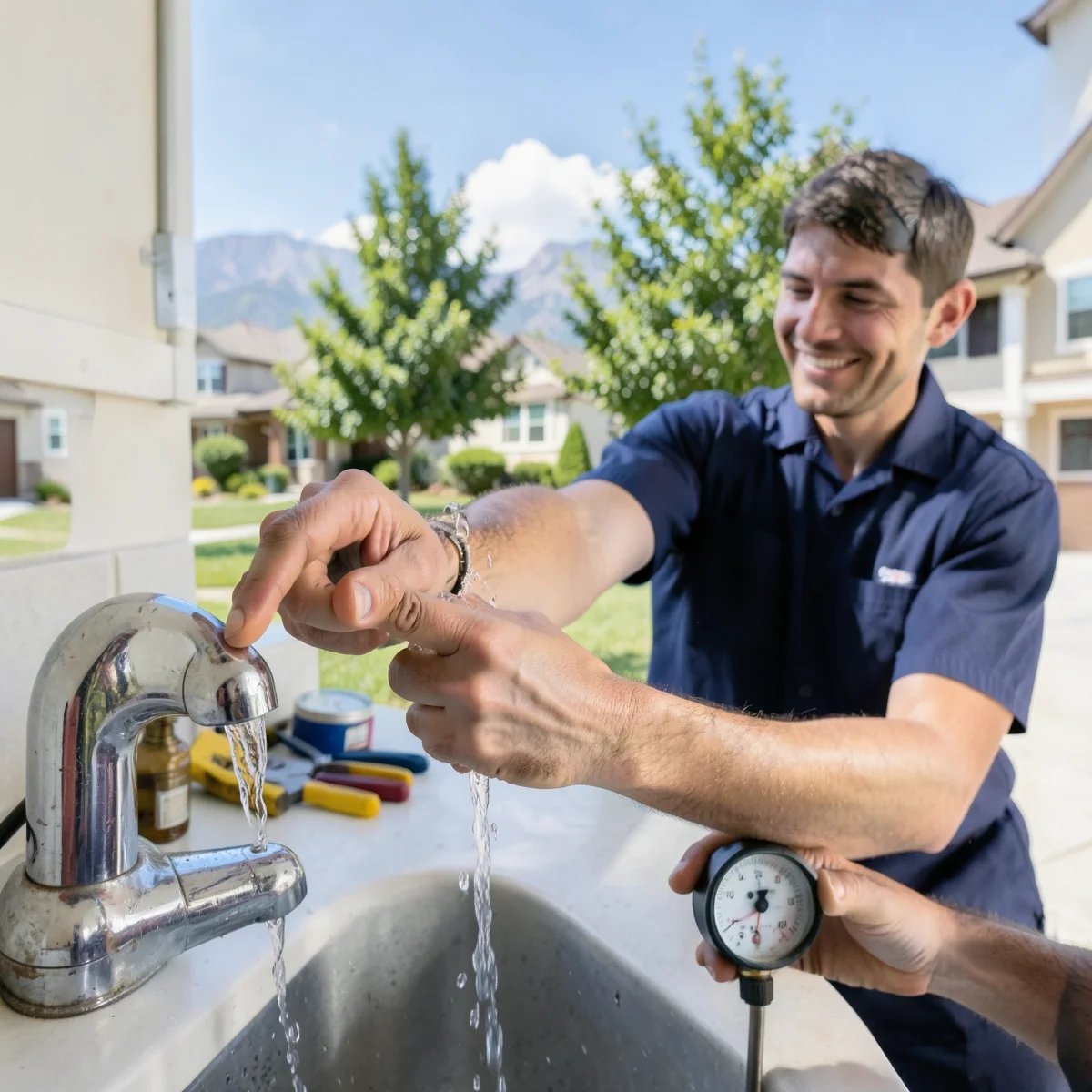
A simple gauge test tells the story. A pressure gauge threaded onto an outdoor hose bib gives you a static reading in seconds. Below 40 PSI at the hose bib generally confirms a supply-side issue. If your reading is in the 20s or 30s, the PRV is the most likely culprit in a home that had normal pressure previously.
Water pressure repair that involves PRV replacement also includes testing the new set point to confirm it is within code range; Jefferson County residential code caps residential pressure at 80 PSI to protect fixtures and connections from stress.
Scale buildup in older pipe
In pre-1980s homes with original galvanized steel supply lines, hard-water scale is a slow but relentless pressure killer. Galvanized pipe corrodes from the inside out, and that corrosion mixes with mineral scale to form a rough, narrowed bore over decades. A 3/4-inch line that once carried full flow may now pass water through an effective bore of 1/2 inch or less.
The pressure loss from scale is typically gradual and uneven — you will notice it most in fixtures at the far ends of the system, where water has traveled through the most pipe. The shower on the second floor or the bathroom at the end of a long hallway goes weak before the kitchen faucet near the main line entry does. That pattern is diagnostic: if pressure is fine close to the meter but poor far from it, the pipe is the problem, not the PRV.
Scale-narrowed galvanized supply lines have no meaningful cleaning option. The only lasting fix is repiping with copper or PEX. It is a significant project, but one that restores water quality and pressure simultaneously and eliminates future corrosion concerns. For homes in Scenic Heights and similar established Arvada neighborhoods built in the 1950s–70s, a repipe is often the correct long-term answer.
A hidden leak on the supply side
A leak between the meter and the house — in the yard line or at a service connection — steals pressure before it ever reaches your plumbing. The symptom is pressure that seems fine at the meter but is notably lower at the house. The yard between the meter and the foundation may show wet patches, unusually lush grass, or soft soil — subtle signs that water is escaping underground.
Indoor hidden leaks rarely cause significant whole-house pressure loss on their own, but they do show up as a spiking water bill alongside any pressure issue. A combination of poor pressure and an unexplained increase in consumption points toward a supply-side leak worth investigating.
Professional leak detection uses acoustic and electronic equipment to locate supply-line leaks without opening walls speculatively. If you suspect a leak and are seeing both low pressure and high bills, this is the diagnostic step to take before anything else.
Fixture-level causes: aerators and showerheads
Not all low-pressure complaints are whole-house issues. If pressure is weak at one faucet or showerhead while other fixtures run normally, the problem is almost always mineral scale at the fixture itself. Aerators — the screened fittings at the tip of faucets — clog with hard-water deposits within 12–18 months in Arvada homes without a softener. Unscrewing the aerator and soaking it overnight in white vinegar dissolves most accumulation.
Showerheads scale up similarly. Remove the head, soak it in vinegar, and use a toothpick to clear individual nozzle holes. If the showerhead is more than 5–6 years old and has never been descaled, replacement is often more practical than cleaning.
Fixture-level scale is a symptom of the broader hard-water problem, not a standalone issue. It will return on the same schedule unless you address the source. Cleaning aerators is maintenance; softening the water is the solution.
- Test pressure with a gauge at the hose bib before doing anything else
- Check all fixtures — if pressure is low everywhere, the PRV or supply line is the issue
- If pressure is low only at one fixture, clean the aerator or showerhead first
- Compare pressure near the main entry vs. fixtures far from it — large difference means scale in pipe
- Monitor the water bill — rising consumption plus low pressure often means a hidden leak
Key takeaways
- A pressure gauge test at the hose bib takes two minutes and immediately points you toward a supply-side or fixture-level cause.
- PRVs typically last 10–15 years; a failing PRV is the single most common cause of sudden whole-house pressure loss in established Arvada homes.
- Scale in galvanized pipe is a gradual, progressive narrowing — the only lasting fix is repiping with copper or PEX.
- Weak pressure at one fixture with normal pressure elsewhere is almost always a clogged aerator or showerhead.
- Low pressure combined with a spiking water bill suggests a supply-side leak that needs professional leak detection.
Frequently asked questions
The standard residential range is 40–80 PSI, with 55–65 PSI considered ideal. Below 40 PSI you will notice weak flow; above 80 PSI you risk stressing fixtures, supply lines, and connections. Jefferson County code limits residential pressure to 80 PSI max.
Persistently low pressure causes some appliances to function poorly — washing machines may not fill correctly, dishwashers may run inefficient cycles, and ice makers may not produce at full capacity. Below about 20 PSI, some appliances display fault codes or shut down entirely.
Yes. City supply pressure can drop during high-demand periods, main breaks, or infrastructure work. If your neighbors are also experiencing low pressure at the same time, call the utility first to rule out a system-wide event. If only your home is affected, the cause is in your system.
Local plumbing help mentioned in this article
Service areas
Need a hand from a local Arvada plumber?
Whether it is an emergency or a project you have been putting off, Arvada Pro Plumbing dispatches locally, 24/7, with upfront pricing. Call now or request service online.