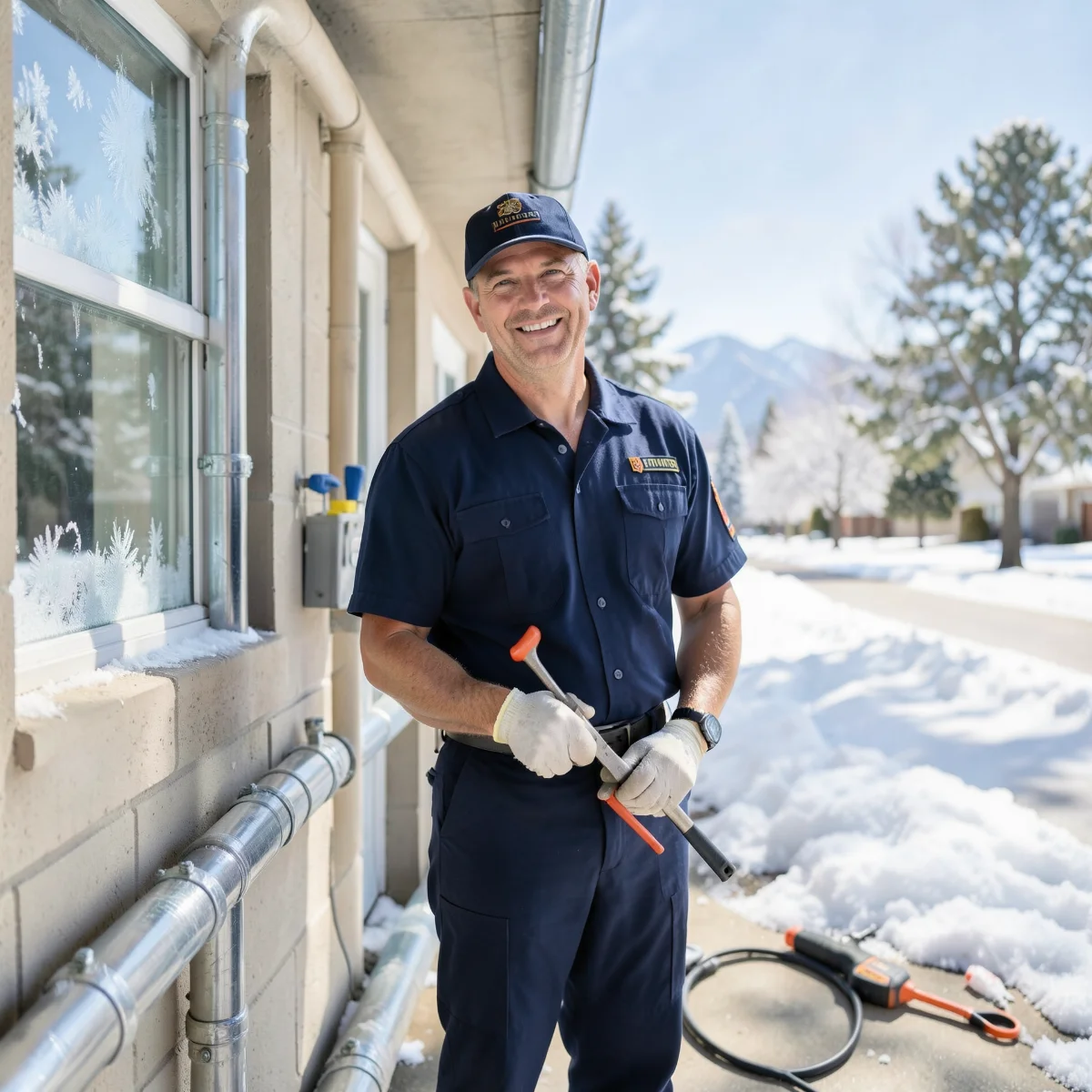
Arvada does not get the sustained weeks of subzero cold that parts of northern Colorado see, but that is almost beside the point. The real danger is the diurnal swing: a 55°F afternoon in late October followed by a 12°F night, with wind chill driving the effective temperature against your exterior walls well below zero. Pipes that never freeze in Minneapolis sometimes burst here simply because no one thought the October temperature drop was serious enough to prepare for.
After too many January calls involving flooded basements and soaked drywall, the advice is direct: treat every fall like a cold snap is already two weeks away. The prevention list is short and inexpensive. The repair bill is not.
Where Arvada pipes actually freeze
Pipes do not freeze equally. The vulnerabilities are predictable: exterior walls with little insulation, crawl spaces with vents left open after summer, unheated attached garages with supply lines to a laundry sink or hose bib, and any pipe in a cabinet on an exterior wall that stays closed all winter with no heat circulation.
Hose bibs are the most commonly frozen fitting in Arvada homes. Even frost-free sillcocks — which are designed to drain back past the wall — will freeze if a garden hose is left attached, because the hose traps water in the device. Disconnect hoses by early October. Every year without exception.
In Candelas and other newer developments on Arvada's western edge, homes often have long garage runs and large open floor plans that create cold zones on the periphery. Even in newer PEX plumbing, a supply line through an under-insulated soffit or exterior knee wall is at risk.
- Hose bibs and outdoor faucets (especially with attached hoses)
- Supply lines in unheated or poorly insulated garages
- Pipes against exterior walls in rarely used rooms
- Crawl-space supply lines — especially if vents are left open
- Lines running through attic spaces to upper-floor bathrooms
Before winter: the prevention checklist
Disconnect and drain all garden hoses by mid-October in Arvada — earlier in exposed or west-facing properties. If your hose bibs are not frost-free, shut off the dedicated shut-off valve inside and open the bib outside to drain any remaining water. Even frost-free models benefit from this if temps are forecast to stay below 20°F for more than two days.
Insulate exposed pipes in unconditioned spaces with foam pipe insulation — the split-foam sleeves available at any hardware store. Pay particular attention to pipes near the rim joist in the basement, where cold air infiltrates at the foundation line. Sealing those gaps with spray foam first, then adding pipe insulation, is the one-two combination that stops most freezes.
Open cabinet doors under sinks on exterior walls during cold snaps. This sounds trivial, but allowing the conditioned air in the room to circulate around supply lines under the kitchen sink — which usually sits against an exterior wall — makes a real difference when it's 5°F outside.
What to do when a pipe freezes
If you turn on a tap and nothing comes out — or a trickle comes out — in weather that has been below freezing, you likely have a frozen pipe. Do not panic yet: a frozen pipe is not a burst pipe. The damage happens when it thaws, especially if the ice already split the pipe wall.
First, shut off the main water supply valve. This is the single most important step, and the reason you should know where that valve is before any emergency. If the pipe thaws and it has already cracked, having the main off prevents a flood. Then call a pro. Applying a hair dryer or heat lamp to suspect areas is a reasonable temporary measure on accessible pipes only — never use an open flame, and never apply direct heat to a pipe you cannot see.
Burst pipe repair situations develop fast once a frozen section thaws. If you hear water running behind a wall or see drywall bubbling after a freeze event, treat it as an emergency and call (207) 419-2600 immediately.
After the thaw: assessing for damage
Once a freeze event passes, inspect methodically. Check every accessible pipe in the areas that were at risk. Look for hairline cracks, frost bloom on the pipe exterior (indicates ice formation inside), and mineral deposits leaking out of a joint. Run water slowly at each fixture and check the cabinet floors and the ceiling below while doing so.
A slow drip from a pinhole is easier to manage than ignoring it and finding a saturated subfloor. Many freeze-related failures show up as very slow weeps that don't become apparent for 24–48 hours after the thaw. Walk the house again the following day.
Key takeaways
- Disconnect garden hoses every fall without exception — even frost-free hose bibs freeze with a hose attached.
- The main shut-off valve location should be memorized by everyone in the household before winter arrives.
- Pipe insulation on rim joist pipes and crawl-space lines is inexpensive insurance against Arvada's rapid temperature swings.
- If a pipe freezes, shut off the main first, then apply gentle heat — never open flame — to accessible sections.
- Inspect for leaks 24–48 hours after a thaw event, not just immediately, because some pinhole failures develop slowly.
Frequently asked questions
Pipes typically freeze when sustained temps reach the low 20s°F or below, especially with wind chill. In Arvada's climate, the risk window runs from late October through early March. Watch for overnight lows below 25°F as your cue to add precautions.
Yes — a slow drip (not a stream) on faucets served by pipes against exterior walls keeps water moving, which dramatically reduces freeze risk. This is most valuable for kitchen and bathroom sinks on exterior walls. Hot and cold both benefit.
No. PEX is more flexible than copper and can expand somewhat without splitting, which makes it more forgiving than rigid pipe. But severe or prolonged freezing will still burst PEX. The location of the pipe matters more than the material.
Local plumbing help mentioned in this article
Service areas
Need a hand from a local Arvada plumber?
Whether it is an emergency or a project you have been putting off, Arvada Pro Plumbing dispatches locally, 24/7, with upfront pricing. Call now or request service online.