Plumbing downtime in a commercial setting is not an inconvenience — it is a revenue event. A blocked grease trap that shuts down a restaurant kitchen during dinner service, a failing commercial water heater in a hotel or fitness facility, or a backed-up restroom in a retail space costs money in ways a homeowner's equivalent problem does not. The pressure to resolve it fast — and to prevent it from happening again — is different in kind.
In Olde Town Arvada and the surrounding commercial corridors, older buildings with aging infrastructure carry a specific set of risks: galvanized supply lines, original drain systems, and plumbing that was sized for a previous tenant's use pattern that may not match the current one. Knowing where your system is vulnerable — and having a plumber you trust before the emergency — is the only real risk management.
Grease trap management: the most common restaurant failure
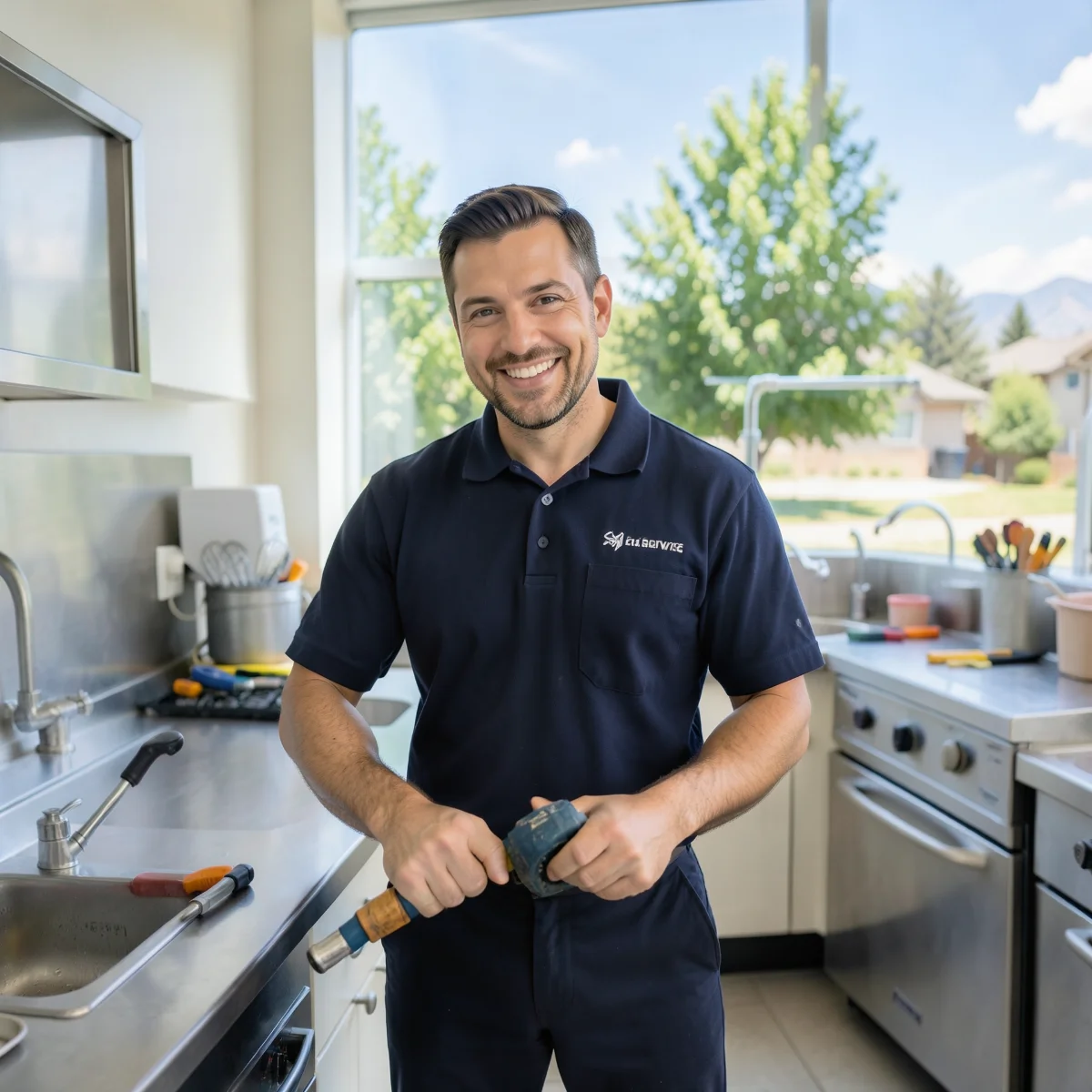
Grease traps intercept fats, oils, and grease before they enter the municipal sewer. They are legally required for food service establishments in Arvada, and they are the single most common source of health code violations and emergency drain calls in commercial kitchens. A full or non-functional grease trap backs grease into the drain system, producing sewer odors, slow drains, and eventually a backup that closes the kitchen.
The cleaning schedule for a grease trap depends on its size, the volume of food preparation, and the types of food being cooked. The 25% rule is the common industry guideline: when the combined depth of grease and solids reaches 25% of the trap's total liquid depth, it needs service. For high-volume kitchens, this can be every 1–4 weeks. For lighter-use facilities, monthly to quarterly.
Grease trap cleaning is not a DIY task at commercial scale. It requires proper containment and disposal through a licensed waste hauler under Jefferson County requirements. Some facilities have grease trap service logs reviewed during health inspections — the documentation matters as much as the cleaning itself. A scheduled service agreement with a licensed plumber ensures neither the cleaning nor the paperwork falls through.
Backflow prevention: compliance and protection
Commercial properties in Arvada with irrigation systems, fire suppression, commercial kitchen equipment connections, or specific industrial uses are required to install and annually test backflow prevention assemblies. A backflow preventer stops contaminated water from flowing back into the public supply — protecting both your business and the municipal water system.
Annual testing by a certified backflow tester is required by Jefferson County for most commercial assemblies. Test results are submitted to the water utility; failure to test or a failed assembly can result in service shutoff. This is a compliance matter, not just a maintenance best practice.
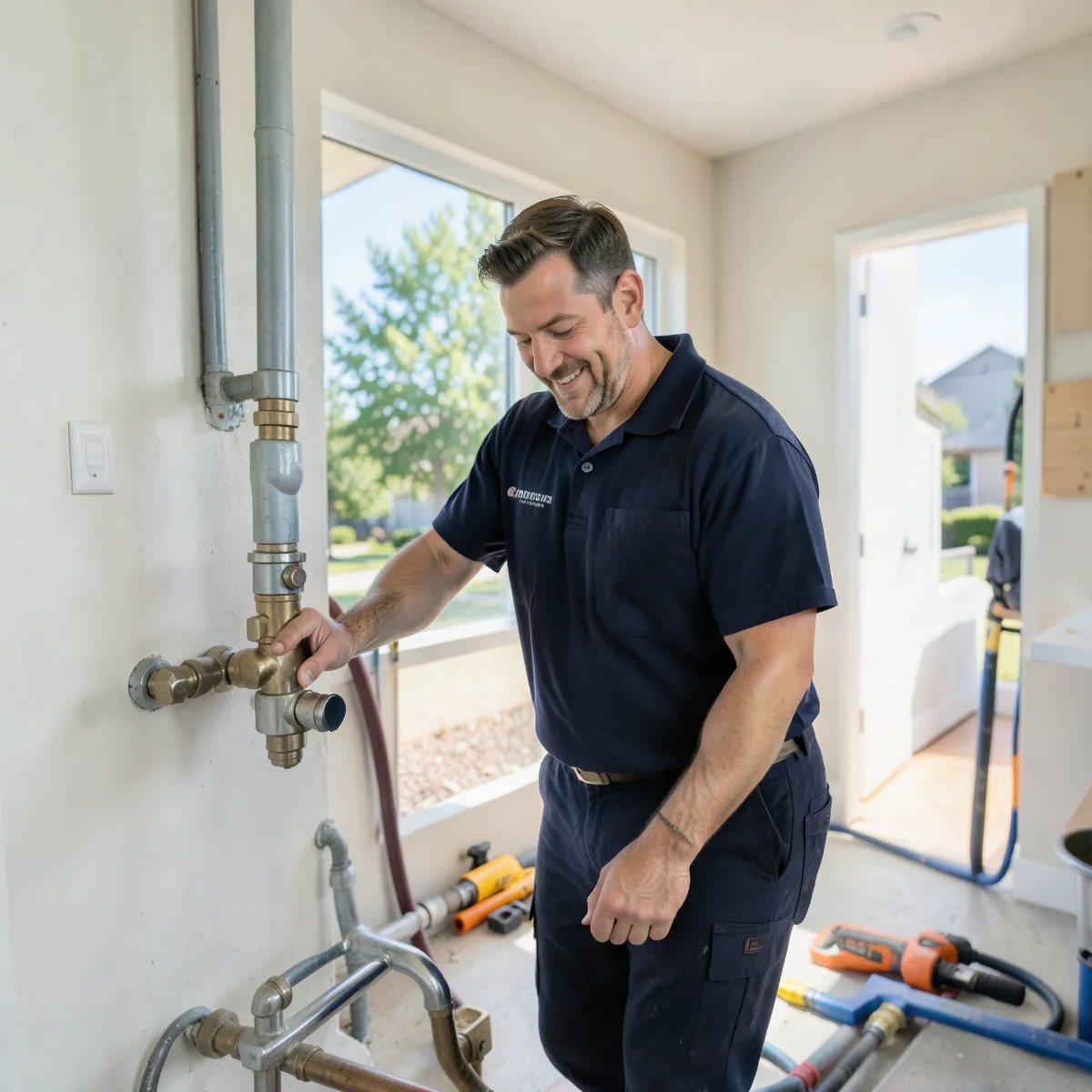
Commercial plumbing service from a plumber who handles both installation and certified testing simplifies the compliance calendar. Rather than tracking multiple contractors, one vendor relationship covers the installation, testing, repairs, and documentation submission — which is especially useful for property managers overseeing multiple commercial tenants.
Commercial water heaters: sizing and maintenance
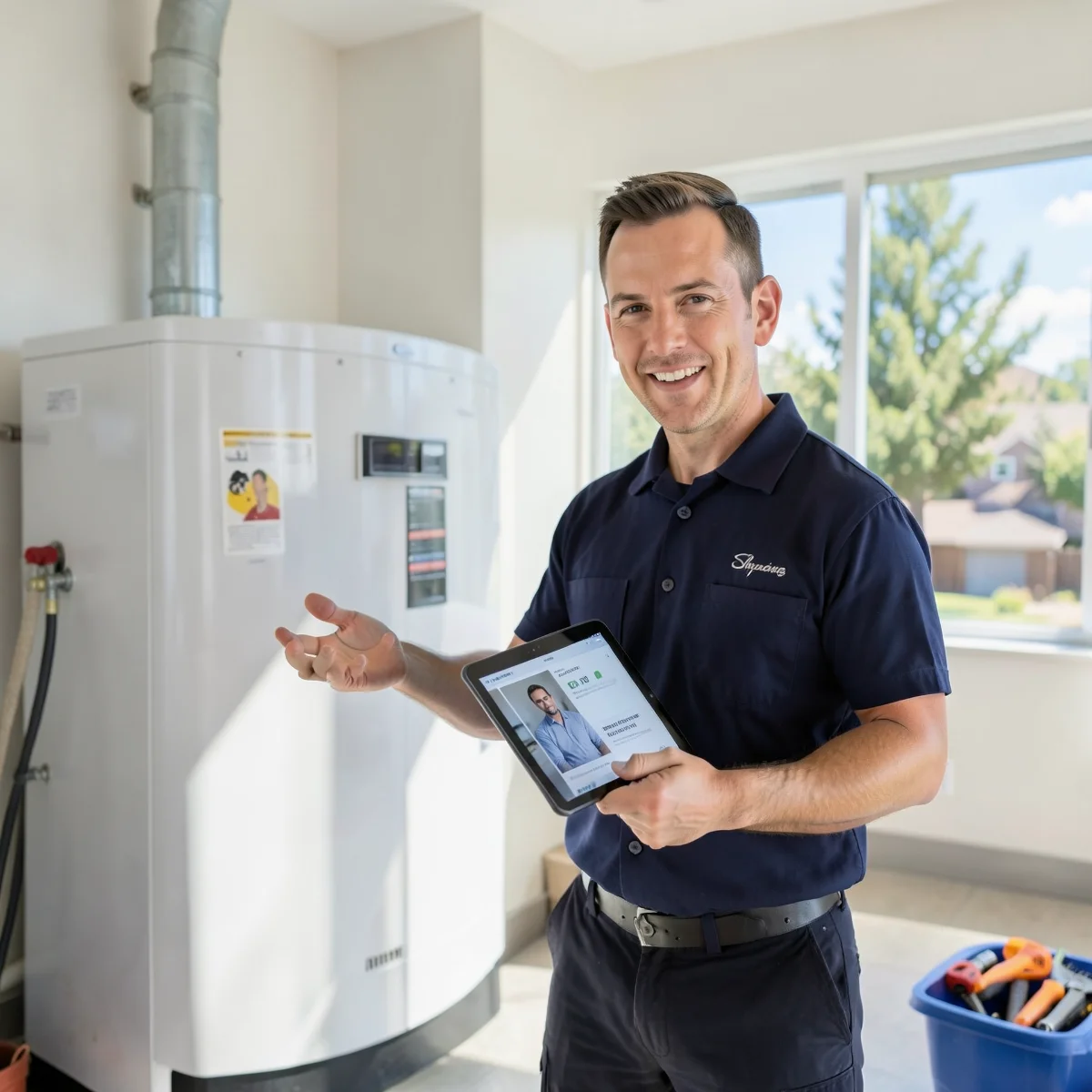
Commercial water heaters fail differently than residential ones — the demand is higher, the recovery requirements are more specific, and the cost of failure is immediate and tangible. Sizing is critical: a water heater that was right for the previous tenant's use pattern may be inadequate for the current one.
For food service and healthcare applications, hot water must reach specific temperature minimums — often 120°F at fixture points, and higher for sanitizing applications. A commercial water heater struggling with hard-water scale or sediment buildup may not maintain those temperatures under peak load even though it appears functional during off-peak hours.
Arvada's hard-water scale affects commercial equipment on the same timeline as residential — or faster, given higher daily throughput. Annual descaling of tankless commercial units is essential. For tank-type commercial units, a comprehensive maintenance visit that includes sediment flush, anode rod inspection, T&P valve testing, and pressure check is the correct service scope. Call (207) 419-2600 to set up a commercial maintenance plan.
Drain maintenance and proactive camera inspection
Commercial drain lines — particularly in food service and older Olde Town buildings — carry higher load than residential lines and require more frequent attention. A main drain line on the edge of restriction during lunch rush may not show symptoms during off-hours, and a kitchen manager who reports intermittent slow drains is describing a line accumulating toward a backup, not one that is currently clogged.
Proactive hydro jetting of commercial kitchen drain lines on a scheduled basis — typically annually for high-volume operations — removes grease film and hard-water scale that snaking leaves behind. Combined with a camera scope, it provides a current picture of pipe condition. In older Olde Town buildings where original cast-iron drain lines may be 60–80 years old, the camera tells you whether you are maintaining a functional line or approaching a repair conversation.
Priority dispatch for commercial customers — where your service call goes to the front of the queue because a business is closed or significantly impaired — is worth asking about when you establish a vendor relationship. Knowing you have priority access during a commercial plumbing emergency is worth as much as the maintenance plan itself.
Key takeaways
- Grease trap cleaning is required, not optional — follow the 25% rule and keep service records for health inspection compliance.
- Annual backflow testing is a Jefferson County legal requirement for most commercial assemblies; non-compliance can trigger service shutoff.
- Commercial water heaters sized for a previous tenant's use pattern may be inadequate for the current operation — confirm sizing when you take over a space.
- Proactive scheduled drain maintenance in commercial kitchens is far cheaper than emergency service during business hours.
- Establishing a priority dispatch relationship with a local plumber before an emergency is one of the best risk management moves a business can make.
Frequently asked questions
Follow the 25% rule: when the combined grease and solids layer reaches 25% of the trap's liquid depth, clean it. For high-volume food service, this may be every 1–4 weeks. Lighter-use operations may go monthly or quarterly. Your service provider should measure and document the level at each visit.
A failed backflow assembly must be repaired or replaced and retested before the water utility will mark it compliant. Continued operation with a failed assembly is a code violation. Repairs should be completed promptly — the utility has authority to shut off service for persistent non-compliance.
Yes, if the plumber is licensed and experienced in commercial work. Commercial and residential plumbing codes differ in some requirements, and commercial fixture specifications and load demands are different. Confirm that any plumber you engage for commercial work has done comparable commercial projects — not just residential experience.
Local plumbing help mentioned in this article
Need a hand from a local Arvada plumber?
Whether it is an emergency or a project you have been putting off, Arvada Pro Plumbing dispatches locally, 24/7, with upfront pricing. Call now or request service online.